
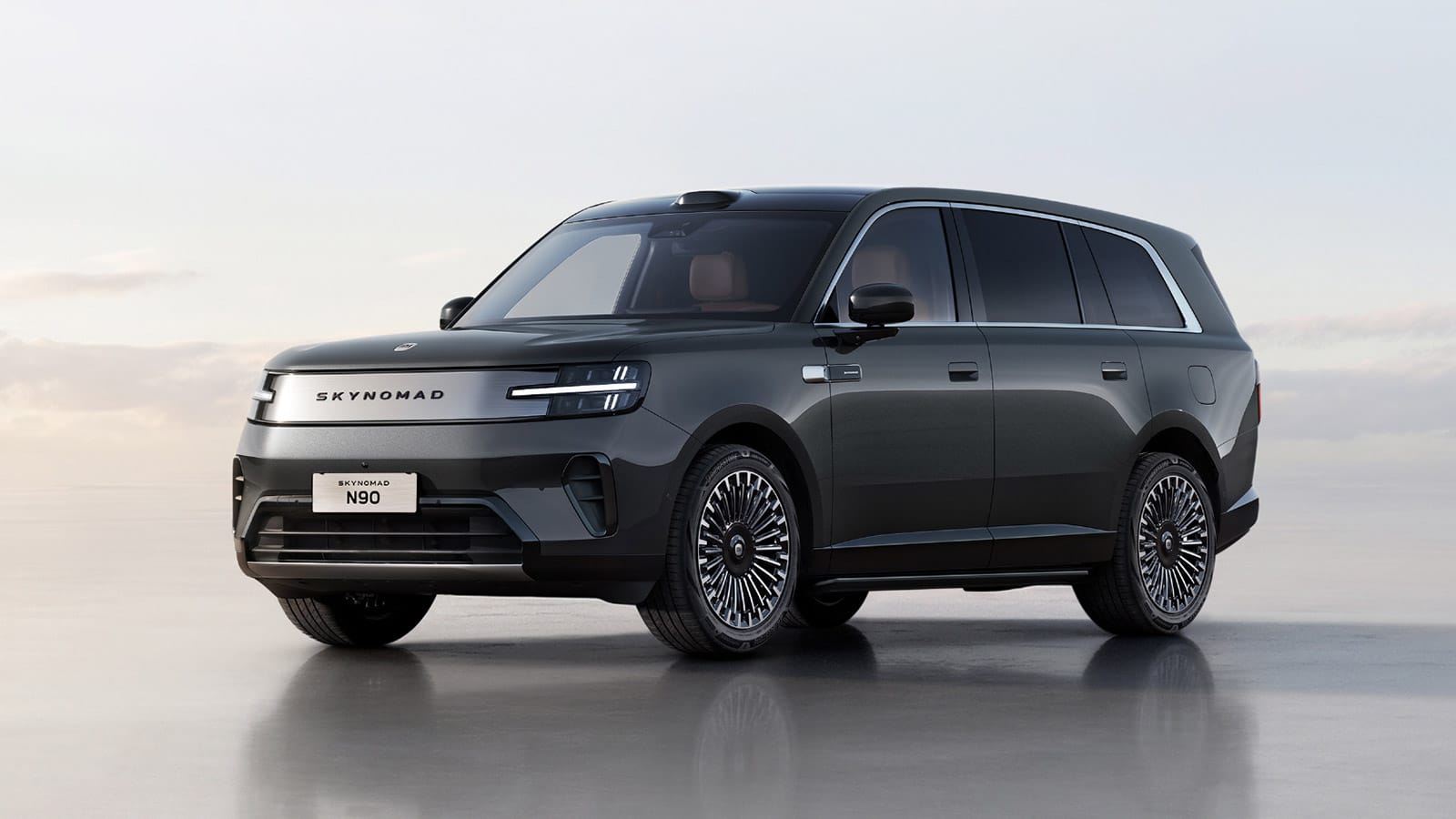
Xiaomi has disclosed additional specifications for its upcoming Sky Nomad lineup, revealing that its first extended-range sport utility vehicles (SUVs) will offer a maximum CLTC all-electric driving range of 505 kilometers and battery capacities of up to 76 kWh.
The company said the Sky Nomad series is designed to maximize electric driving for everyday use while employing a gasoline-powered range extender to reduce charging concerns during long-distance travel.
The specifications position some Sky Nomad variants close to mainstream battery electric vehicles (BEVs) in terms of pure-electric driving capability, allowing many users to complete daily commuting without activating the range extender.
Large Battery Targets Everyday Electric Driving
According to Xiaomi, the lineup delivers a maximum electric range of 505 kilometers under China’s CLTC testing standard.
The company had previously announced a maximum WLTC electric range of 380 kilometers, together with minimum fuel consumption of 5.7 liters per 100 kilometers when operating in charge-depleted mode.
While the WLTC cycle incorporates urban, suburban and highway driving conditions and is generally considered closer to real-world usage, the CLTC standard features lower average driving speeds and typically produces higher electric range figures that better reflect urban commuting in China.
By combining a large battery with an extended-range powertrain, Xiaomi aims to allow drivers with convenient charging access to rely primarily on electricity during daily use while retaining the flexibility of gasoline-generated electricity for longer journeys.
Xiaomi Expands Beyond Pure Electric Vehicles
The Sky Nomad family marks Xiaomi’s first move beyond an exclusively battery-electric vehicle portfolio.
Rather than creating a separate brand, Xiaomi is positioning Sky Nomad as a second product series alongside the SU7 sedan and YU7 SUV, targeting buyers seeking intelligent, spacious and configurable family-oriented SUVs.
Recent filings published by China’s Ministry of Industry and Information Technology (MIIT) show that the initial lineup will include the N70 and N90 models, both equipped with extended-range electric powertrains.
The vehicles use a 1.5-liter gasoline engine supplied by Harbin Dongan Auto Engine as a range extender. The engine delivers a maximum net output of 112 kilowatts and functions solely as a generator, while electric motors remain responsible for driving the wheels. The models have a top speed of 190 kilometers per hour.
Entering a Highly Competitive Segment
With the N70 and N90, Xiaomi is entering China’s increasingly competitive mid-to-large and full-size family SUV markets, where extended-range electric vehicles have gained significant popularity.
The segment is currently led by manufacturers including Li Auto and Huawei-backed Aito, both of which have established strong positions through extended-range SUV offerings.
To improve reliability ahead of launch, Xiaomi said it has conducted extensive validation of the Sky Nomad platform.
As of June 30, the company had deployed 566 test vehicles, which collectively completed more than 4.28 million kilometers of road testing across extreme cold, high-temperature, high-altitude and hot-humid environments.
Testing covered battery systems, chassis performance and the operation of the range extender under demanding conditions, including cold-weather starts, prolonged high-altitude driving and operation after battery depletion.