
Frequent use of high-power fast charging can accelerate electric vehicle battery degradation, but the overall effect remains modest and generally within manufacturer warranty limits, according to a new study by Geotab.
The Canada-based telematics and fleet management company analysed battery health data from more than 22,700 electric vehicles across 21 brands, using several years of aggregated real-world usage information. The study found that average annual battery degradation rose to about 2.3%, up from 1.8% recorded in 2023, a change Geotab attributes in part to the increasing use of high-power DC fast chargers.
See also: Design Plays Key Role in Attracting EV Buyers, Research Indicates
“EV battery health remains strong, even as vehicles are charged faster and deployed more intensively,” said Charlotte Argue, Senior Manager, Sustainable Mobility at Geotab. “Our latest data shows that batteries are still lasting well beyond the replacement cycles most fleets plan for.”
Battery degradation refers to the gradual, permanent loss of capacity in an EV’s traction battery, which reduces driving range over time. Most manufacturers typically guarantee that batteries will retain at least 70% of their original capacity after eight years or up to 160,000 kilometres. Geotab said its findings suggest that real-world degradation generally remains well below those thresholds.
See also: Study Finds Modern EV Batteries Retain Most Driving Range After Three Years
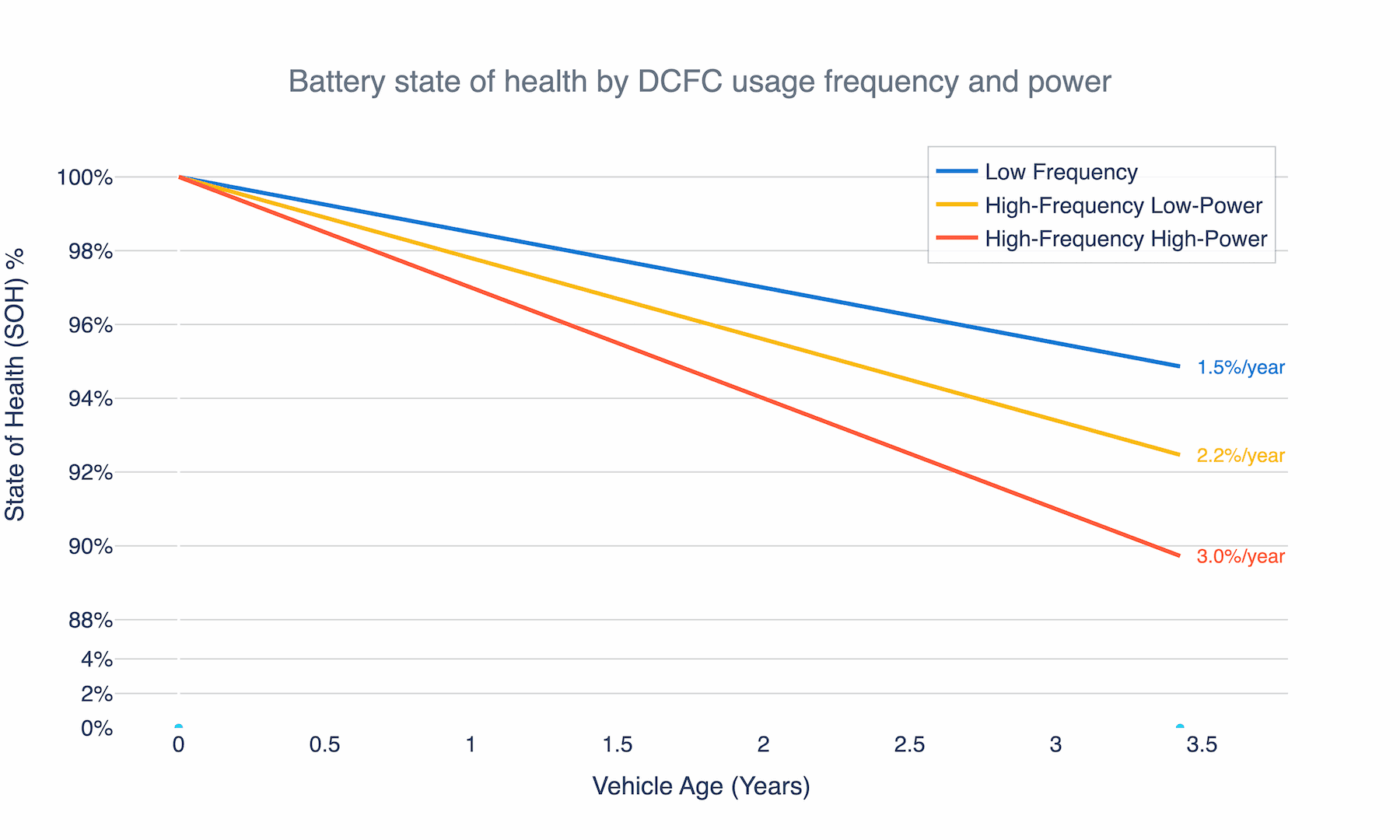
The analysis indicates that charging behaviour has become a key factor influencing battery wear. Vehicles that relied primarily on AC charging or lower-power DC charging showed average degradation of about 1.5% per year, while those frequently using DC fast charging above 100 kilowatts experienced faster degradation of up to 3.0% annually. Even so, Geotab said the difference does not support the view that fast charging alone severely damages batteries.
Over a typical eight-year ownership period, the data suggests that vehicles charged mainly with AC power could lose around 12% of capacity, while those with mixed charging habits may lose about 17%. Vehicles that regularly use high-power DC fast charging could see capacity loss of up to 22%, leaving them with roughly 78% state of health—still above the common 70% warranty threshold.
See also: Global Battery Price Decline Moderates After 8% Drop in 2025, Says BloombergNEF
“For fleets, the focus should be balance,” Argue said. “Using the lowest charging power that still meets operational needs can make a measurable difference to long-term battery health without limiting vehicle availability.”
Geotab also found that higher vehicle utilisation contributed to slightly faster degradation, with frequently used vehicles ageing about 0.8 percentage points faster per year than lightly used ones. Climate had a smaller effect, with vehicles operating in hotter regions showing about 0.4 percentage points more annual degradation than those in temperate environments.