
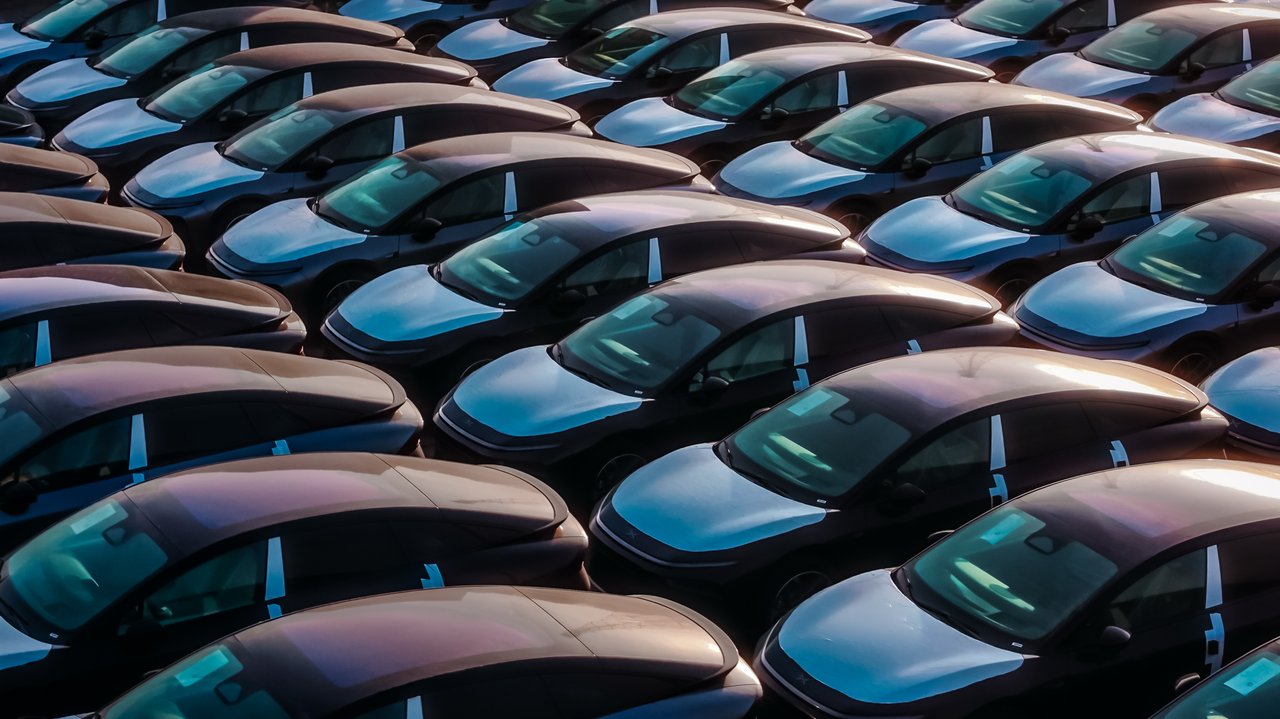
China’s new energy vehicle (NEV) market recorded a sharp decline in January, with domestic registrations falling 19% year-on-year to 643,000 units, as seasonal weakness and revised subsidy policies weighed on demand.
According to the China Association of Automobile Manufacturers (CAAM), total wholesale NEV sales — which include vehicles produced in China for both domestic use and export — reached 945,000 units in January 2026. That figure was broadly stable compared with 944,000 units a year earlier, representing a marginal increase of 0.1%. However, sales were down 44.7% from December 2025, when more than 1.7 million NEVs were sold.
See also: China Moves to End Power-Only EV Door Handles After Safety Review
The apparent stability in wholesale figures was driven by exports. Overseas shipments doubled year-on-year to 302,000 units, marking a 100% increase and a slight 0.5% rise from the previous monthly record set in December. January marked the third consecutive month in which exports exceeded 300,000 NEVs. The data did not provide a breakdown by drivetrain for exported vehicles.
Domestic sales, by contrast, declined to 643,000 units, 18.9% lower than the same month in 2025 and 54.4% below December levels. Since March 2025, domestic monthly NEV sales had consistently surpassed one million units, but January’s result was closer to January 2024 levels.
See also: China Mandates Automatic Emergency Braking for All Light-Duty Vehicles From 2028
January and February are traditionally among the weakest months for China’s automotive market, partly due to the multi-day Lunar New Year holiday, when many consumers travel rather than make large purchases. In addition, policy adjustments have influenced buying behavior. From 2026, NEV buyers are subject to a 5% purchase tax, compared with a previous exemption from the standard 10% tax. Changes to trade-in subsidies also took effect at the start of the year.
By drivetrain type, battery-electric vehicles accounted for 597,000 units in January, up 4.0% year-on-year, while plug-in hybrids totaled 348,000 units, down 5.9%. Fuel cell vehicle sales remained in the triple-digit range.
See also: China EV Sector Faces Mounting Cost Pressures as Taxes and Input Prices Rise
Across all powertrains, wholesale vehicle sales reached 2.346 million units, down 3.2% from a year earlier. NEVs represented 40.3% of total wholesale sales in January, up from 39.0% a year ago but below the more than 52% share recorded in December.
Market performance in the coming months will indicate whether sales rebound after the seasonal slowdown or whether revised tax and subsidy policies exert a longer-term impact on domestic demand.