
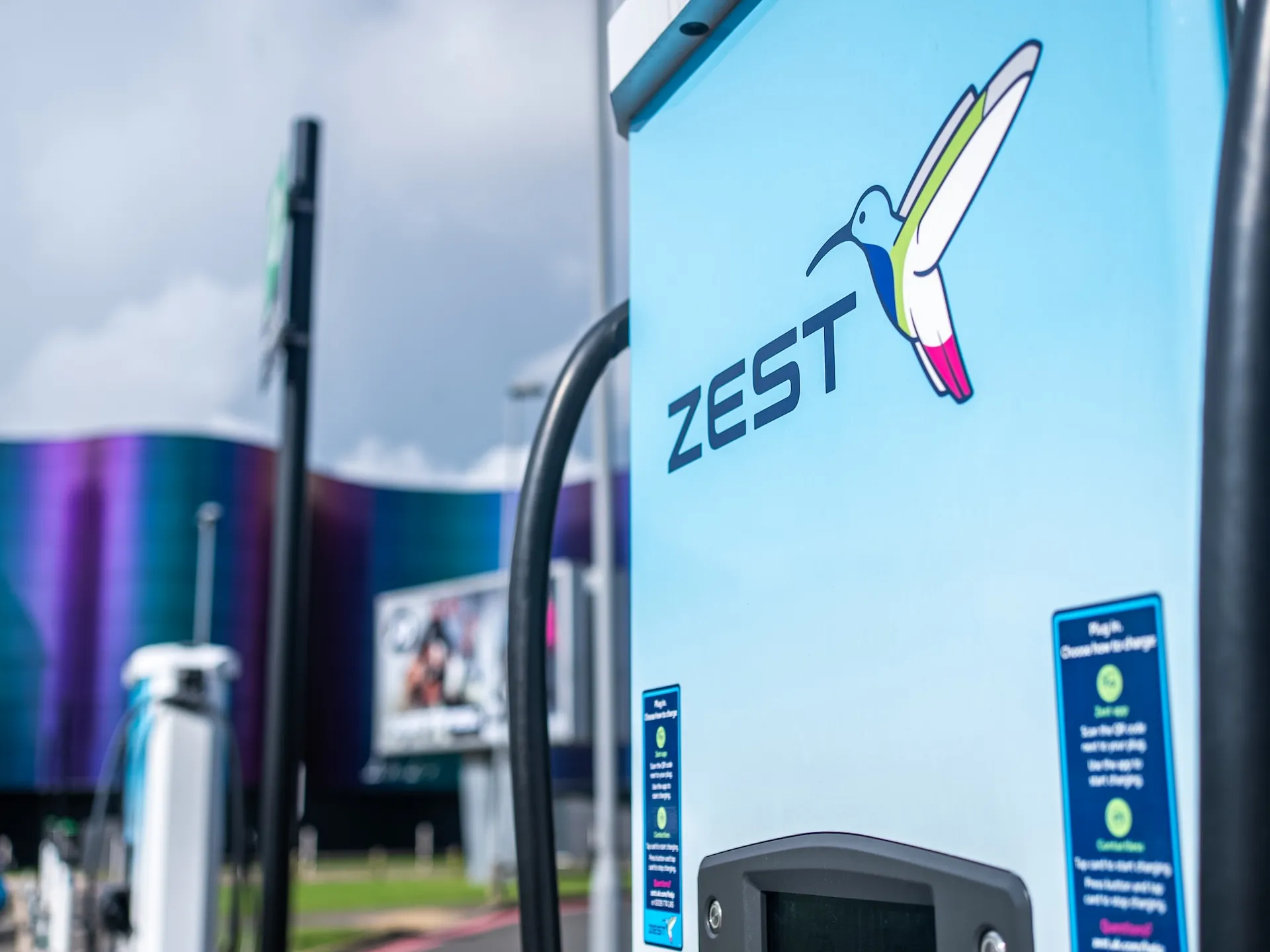
UK charge point operator Zest has deployed more than 3,000 public electric vehicle charging points nationwide, reaching the milestone just over four years after the company was established.
Founded in Leeds in 2021, Zest said each charging point represents an individual parking space, rather than multiple charging connectors serving a single bay.
Community-Focused Charging Network
The company has concentrated its rollout on locations close to where people live, work and visit, combining on-street chargers with fast AC and rapid and ultra-rapid DC charging stations.
The approach is intended to improve charging access for electric vehicle owners who do not have off-street parking or home charging facilities.
“Reaching 3,000 charging points is an important milestone, but what makes me most proud is where those charge points are located. We have focused on bringing charging into communities, helping people who don’t have a driveway access the benefits of electric driving,” said Robin Heap, Chief Executive Officer and Founder of Zest.
Partnerships Drive Expansion
Zest works with more than 30 public sector organizations as well as retailers, hospitality businesses, property owners and destination operators to expand public charging infrastructure across the United Kingdom.
The company also describes itself as the country’s first B Corp-certified charge point operator, combining commercial investment with support for the UK’s net-zero objectives.
Thousands More Charging Points Planned
Beyond the initial 3,000 charging points, Zest said it has already secured contracts covering tens of thousands of additional charging locations.
The company cited continued demand from local authorities, landowners and private-sector partners, with multiple projects currently under construction as it accelerates network expansion.
Calls for Electricity Pricing Reform
Alongside announcing the milestone, Zest urged reforms to electricity standing charges applied to public charging infrastructure.
“If we want to accelerate deployment further, one of the biggest barriers we need to address is the standing charge regime applied to public charging,” Heap said.
“Today, a significant proportion of what drivers pay goes towards fixed electricity network charges rather than the energy itself. Reforming that anomaly would lower costs for drivers, improve investment returns and help unlock even faster deployment of charging infrastructure across the UK.”