
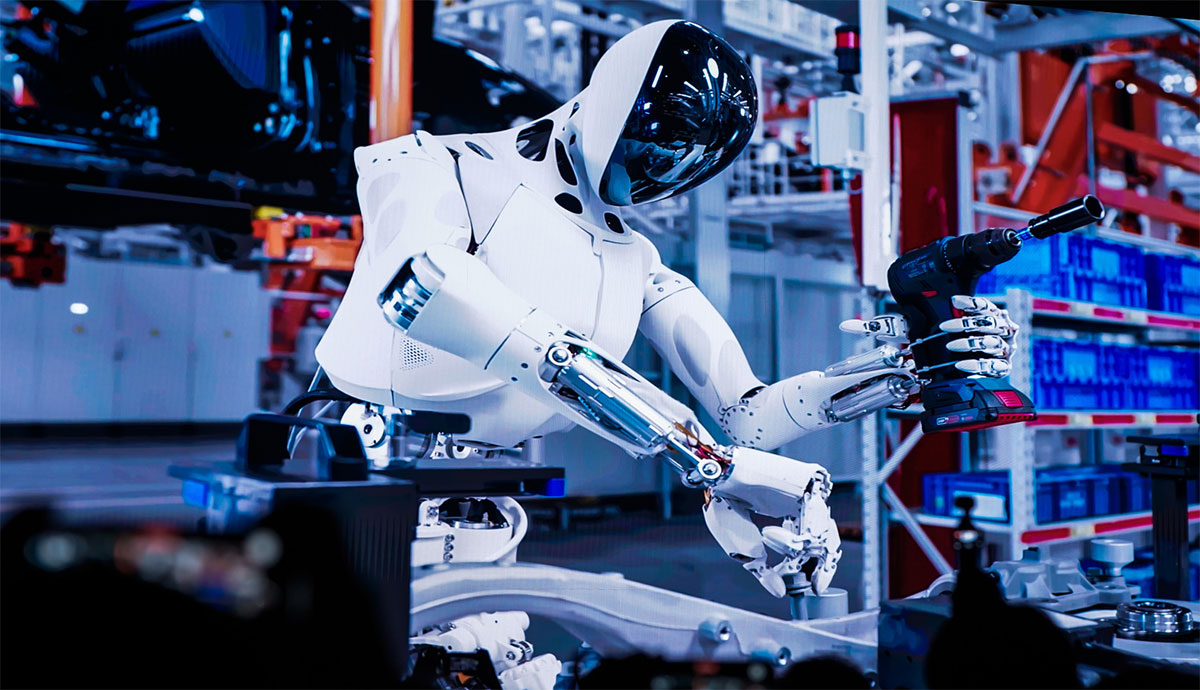
Xpeng is undertaking a major restructuring of its robotics business as the Chinese electric vehicle maker seeks to accelerate the commercialization and mass production of humanoid robots.
According to a report by 21jingji, the company’s robotics center has established nine new second-tier departments, while Xpeng chairman and chief executive officer He Xiaopeng has assumed direct responsibility for the product department after taking personal charge of the robotics division.
Expanded Robotics Organization
The newly created departments include embodied systems engineering, general foundation models, embodied intelligence, control and safety development, data closed-loop operations, product matrix, project management, and brand marketing.
Earlier this month, He announced in an internal letter that he would personally serve as the “CEO” of Xpeng’s robotics business to accelerate its commercialization.
He described the move as an important milestone in Xpeng’s transformation from a smart electric vehicle manufacturer into what he called a “physical AI company.”
According to He, he has devoted at least one full day each week over the past year to robotics, participating directly in strategic planning, technical discussions and key business decisions.
Leveraging Automotive Technologies
The restructuring reflects Xpeng’s strategy of sharing technology and engineering resources between its automotive and robotics businesses.
Gu Jie, who heads the embodied systems engineering department, also serves as Xpeng’s powertrain chief and previously led development of the company’s super extended-range technology.
Meanwhile, Liu Xianming, who leads the general foundation model department, also heads Xpeng’s general intelligence center, highlighting the company’s effort to integrate artificial intelligence capabilities across multiple business units.
Vision-Language-Action (VLA) models and world models, two emerging AI technologies, are expected to play central roles in both autonomous driving and humanoid robotics by enabling machines to better understand their surroundings and interact with the physical world.
Following the Computer Vision and Pattern Recognition Conference (CVPR) 2026, Liu said the two technologies complement one another, with VLA learning from human behaviour while world models learn how environments evolve over time.
Industry-Wide Shift Toward Robotics
Xpeng is not alone in expanding its robotics ambitions.
According to the report, Li Auto reorganized its intelligent systems division earlier this year into separate teams covering humanoid robots, software bodies and foundation models before adding additional embodied engineering, interaction and behaviour departments in May.
Industry executives increasingly believe automotive manufacturers possess significant advantages in robotics because of their experience in large-scale manufacturing, supply chain management, quality control and commercialization.
An executive at a humanoid robotics company told 21jingji that the artificial intelligence infrastructure developed for autonomous driving can also support robot training, making computing infrastructure as important as the AI models themselves.
Focus on Commercialization
The report described 2026 as the first year of humanoid robot commercialization, with competition shifting from technology demonstrations toward manufacturing capability, production scale and customer deliveries.
According to He, Xpeng’s robotics business now combines expertise from across the company, including hardware engineering, AI large models, supply chain management, precision manufacturing and marketing.
He said closer collaboration across these functions is essential as the company moves toward mass production, enabling Xpeng to leverage its existing automotive capabilities to compete in the emerging humanoid robotics market.