
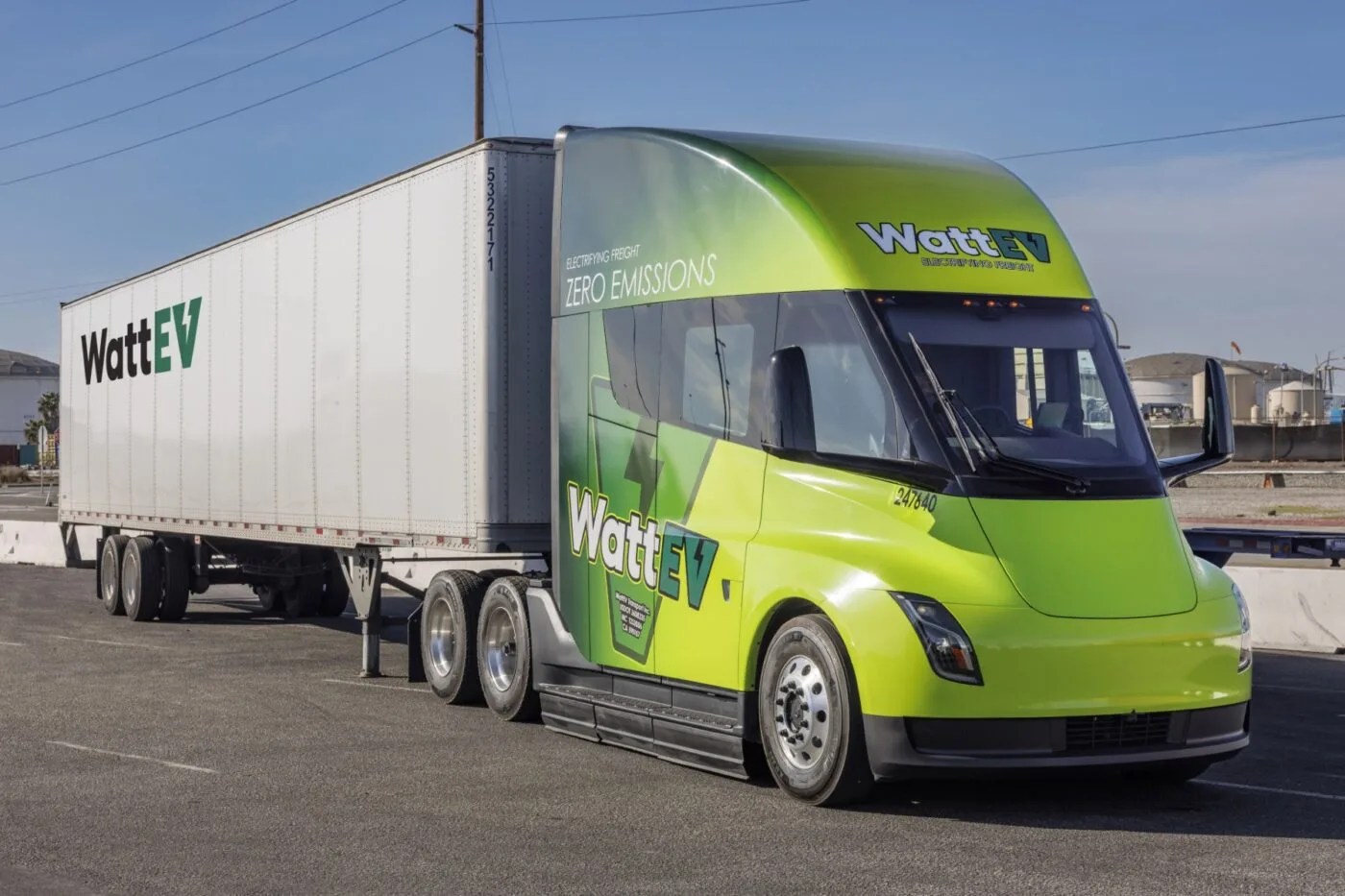
WattEV is expanding its electric truck charging infrastructure with the development of three new megawatt charging depots in Southern California. The sites will feature a total of 29 high-capacity Megawatt Charging System (MCS) chargers, supporting up to 100,000 charging sessions per year.
The Otay Mesa location, situated near the U.S.–Mexico border, is being developed in partnership with San Diego Gas & Electric (SDG&E) and will include seven MCS chargers. The site is strategically positioned to serve cross-border freight traffic.
Along the I-15 corridor, the Baker site will deploy ten MCS chargers to support long-haul routes to Southern Nevada. This project is being developed in cooperation with Southern California Edison (SCE).
At the Port of Long Beach, WattEV plans to install twelve MCS chargers as part of a facility upgrade. The site will incorporate advanced power infrastructure developed by Charge America, WattEV’s technology division, including Silicon Carbide-based medium-voltage rectifiers and Solid-State Transformer (SST) systems. These SST units are designed to eliminate the need for conventional step-down transformers, simplifying installation and reducing overall costs. The compact layout mirrors diesel refueling stations, with each charger placed between lanes.
The three projects are backed by over $24 million in state grant funding and are aligned with California’s zero-emission freight transport initiatives. Each depot aims to provide charging times of 30 minutes or less for electric trucks, targeting critical freight corridors.
WattEV operates under an integrated model combining Class 8 electric trucks, high-power charging stations, and a freight optimization platform. Its Truck-as-a-Service (TaaS) program currently facilitates over 200,000 zero-emission miles per month. The company plans to deploy 12,000 electric heavy-duty trucks in California by 2030 and recently placed an order for 40 Tesla Semis. WattEV currently operates five charging depots and has 15 more under development, with a goal of reaching 100 locations by 2035.