



Umicore and Fraunhofer IPA are leading a new research project aimed at developing automated methods for safely disassembling and selectively discharging battery cells intended for recycling or reuse.
The project, named RoB@t2Cell, seeks to address one of the major technical challenges in battery recycling: handling residual electrical charge in used battery systems.
Currently, battery packs are often fully deep-discharged before disassembly to minimise safety risks. However, researchers say this process can permanently damage otherwise functional cells that could still be reused in second-life applications such as stationary energy storage.
The RoB@t2Cell consortium aims to develop a system capable of selectively discharging battery cells and modules according to their future use.
Under the proposed process, cells intended for material recycling would undergo full deep discharge, while reusable cells would be discharged more carefully to maintain their condition for refurbishment and redeployment.
According to the project partners, the approach is intended to reduce unnecessary waste of functional battery components while supporting both recycling and reuse pathways.
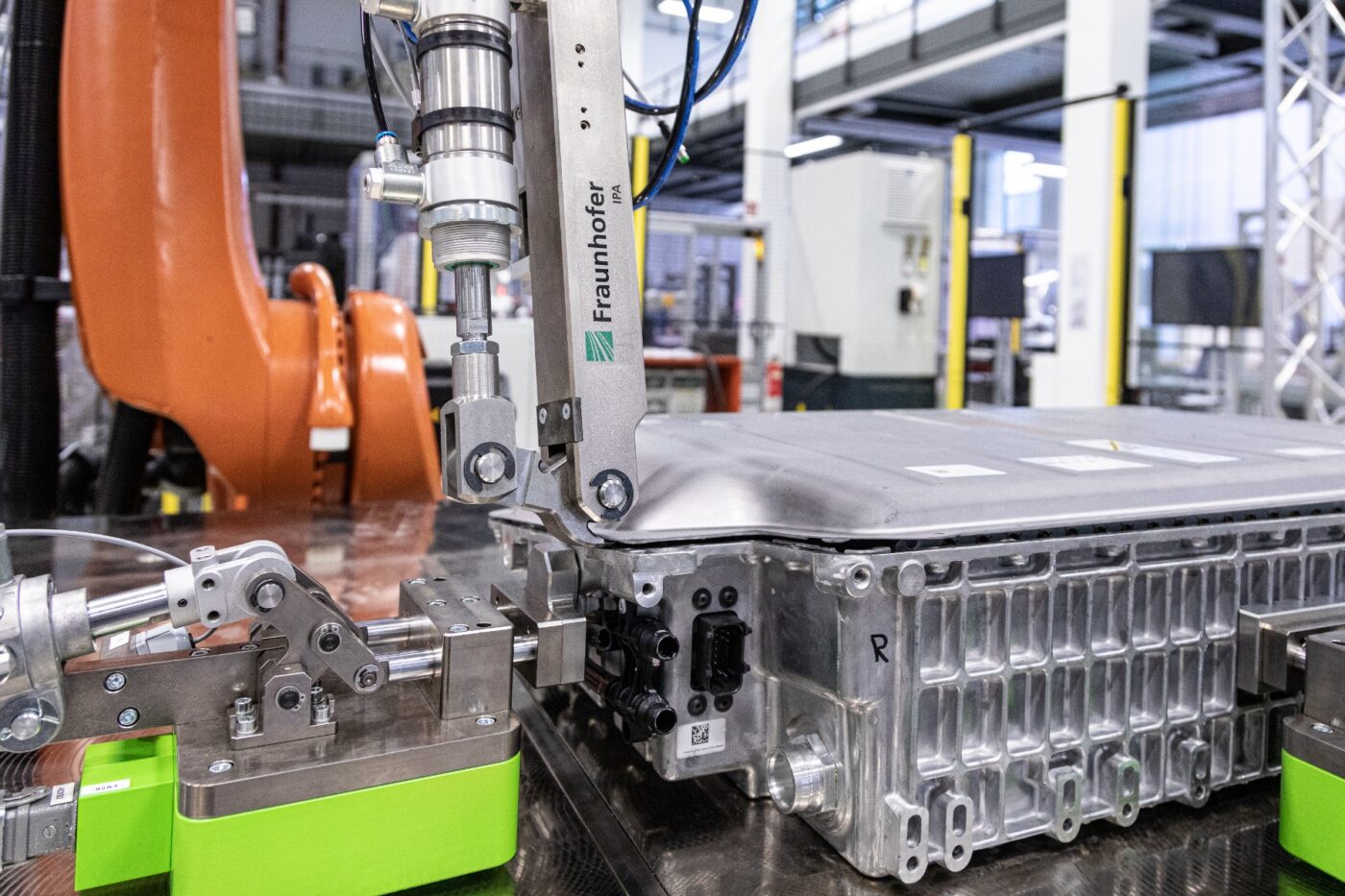
The research team is developing a system that combines automated battery contacting, intelligent diagnostics, real-time decision-making and demand-based discharge control.
The project also includes development of a robotic disassembly system capable of safely accessing battery cell terminals while meeting high-voltage and industrial safety standards.
Following the development phase, the technology will be tested in an industrial pilot application led by Umicore.
The project builds on previous work from the DeMoBa research programme, which focused on industrial disassembly processes for battery modules and electric motors.
Additional project participants include Fraunhofer IWKS, German automation specialist acp systems and the University of Stuttgart Institute for Industrial Manufacturing and Factory Operation.
Siemens and BorgWarner are participating as associate partners.
The project is receiving 5.09 million euros in funding from the German Federal Ministry for Research, Technology and Space through the country’s B@TS battery research programme.
The initiative reflects growing industry efforts in Europe to improve battery circularity and reduce dependence on raw material extraction by expanding reuse and recycling capabilities for electric vehicle batteries.