
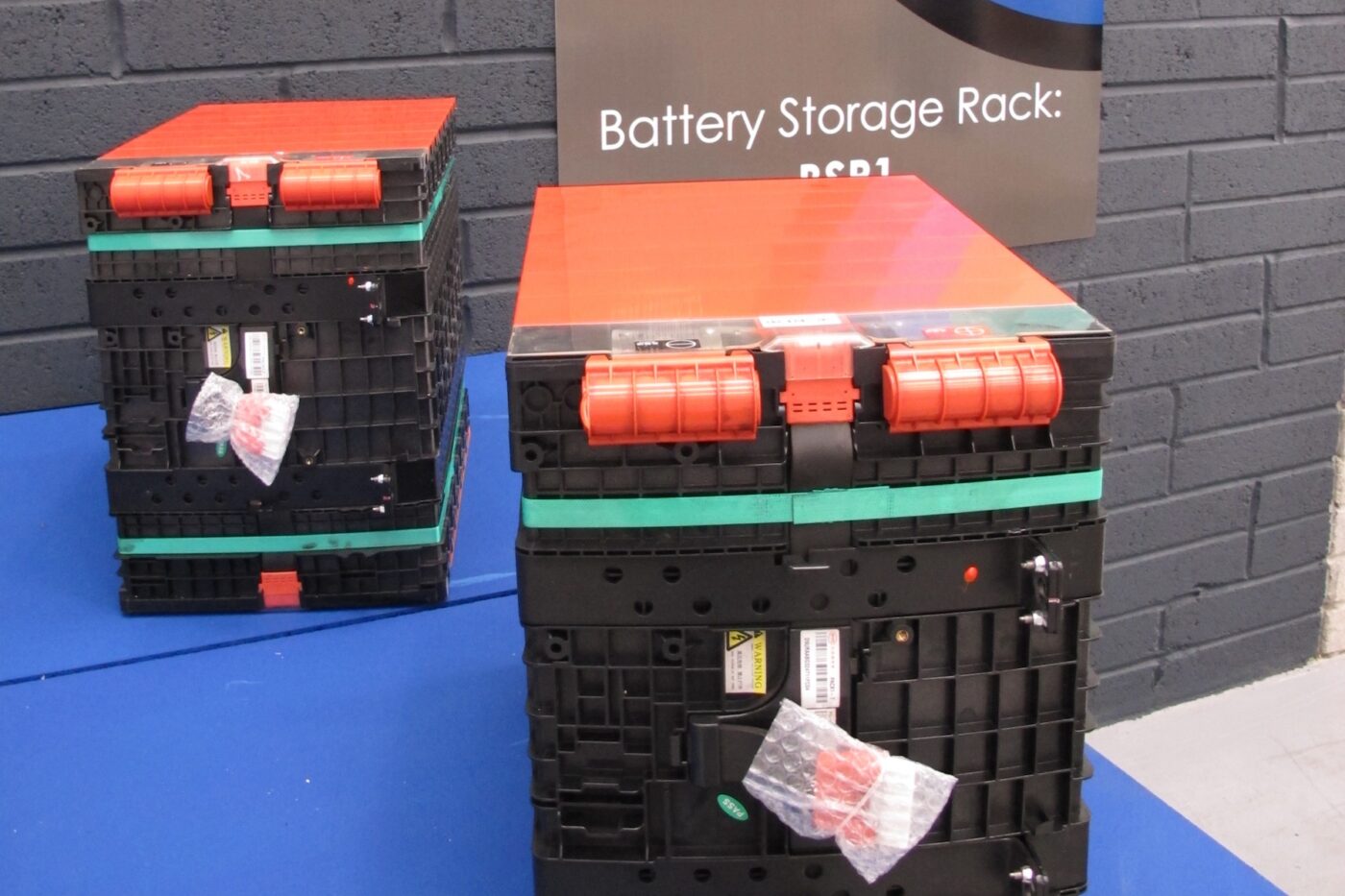
British recycling specialist Altilium has begun recycling lithium iron phosphate (LFP) batteries from electric vehicles, expanding beyond its existing nickel-manganese-cobalt (NMC) battery recycling operations.
The company employs its proprietary EcoCathode™ technology to recover over 97% of lithium and 99% of graphite from LFP batteries, making the process both commercially viable and environmentally sustainable. While LFP recycling remains at a small scale, Altilium is preparing for large-scale operations with its planned ACT 4 facility.
See also: Altilium and LevertonHELM Partner to Strengthen UK’s Lithium Supply Chain
“The rise of LFP batteries presents both challenges and opportunities for recyclers,” said Dr. Christian Marston, Altilium’s COO. “Our advanced EcoCathode™ technology allows us to efficiently extract lithium and graphite, making LFP recycling commercially viable and environmentally essential. By expanding our capabilities to process LFP alongside NMC batteries, we are strengthening the UK’s battery supply chain and supporting the transition to a cleaner, more sustainable transport sector.”
LFP batteries are gaining market share due to their lower cost and longer lifespan, but their recycling has been less common as they contain fewer high-value metals compared to NMC batteries. The Advanced Propulsion Centre projects LFP’s share in the UK electric vehicle market will rise from 18% in 2027 to 25% in 2035. Altilium aims to address the challenge by focusing on lithium and graphite recovery, key materials for new battery production.
See also: Altilium Develops Recycled Cathode Active Materials from Electric Car Batteries
The company already processes NMC batteries from two major UK automakers and gigafactory production waste at its ACT1 and ACT2 plants in Devon. Its newly opened ACT2 facility in Plymouth can recycle 300kg of black mass daily—the equivalent of one EV battery. Meanwhile, its planned Teesside plant is set to become one of Europe’s largest battery recycling facilities, with the capacity to process waste from over 150,000 electric vehicles annually, including LFP batteries.