


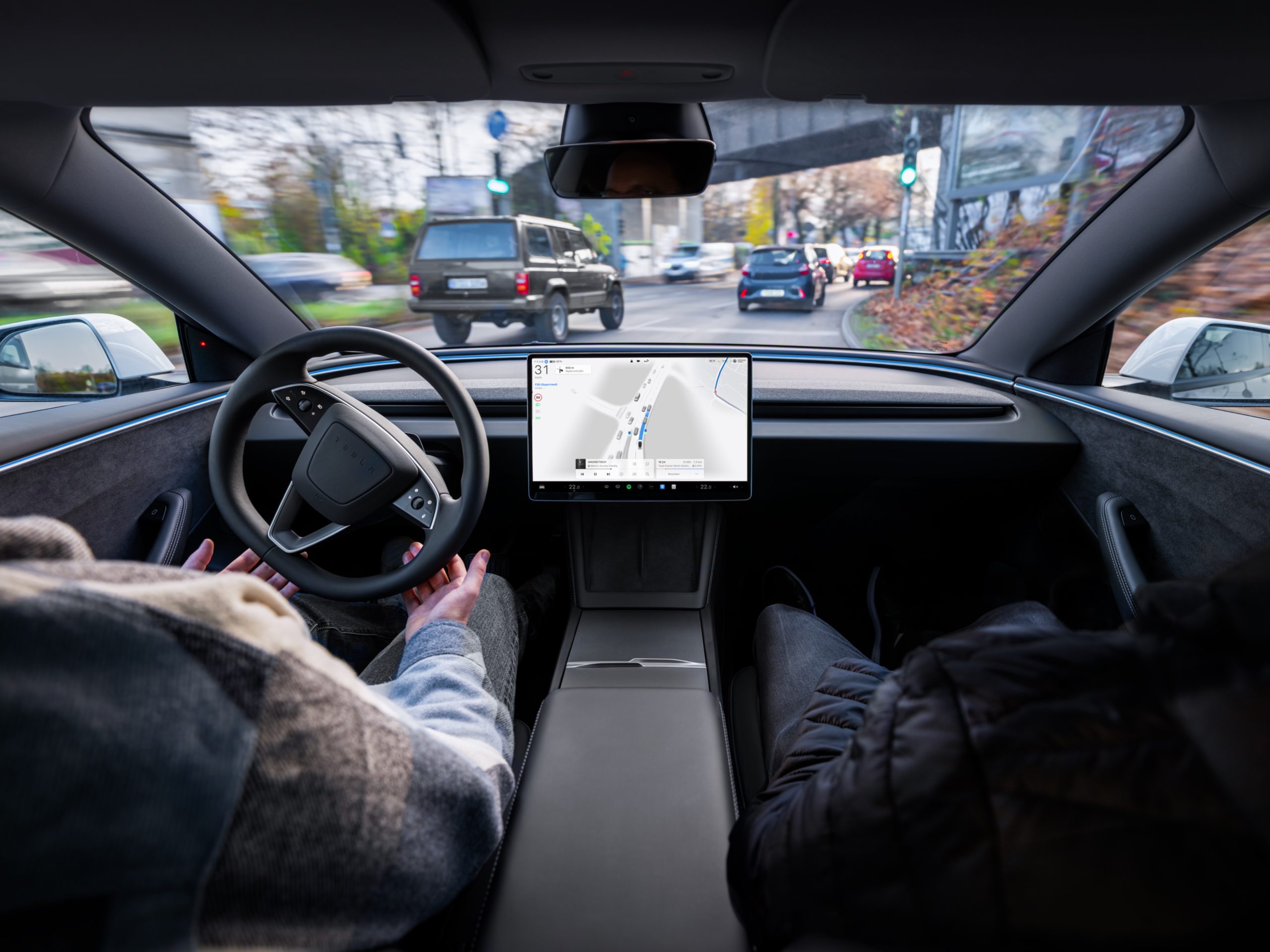
Tesla’s Full Self-Driving (FSD) technology outperformed rival autonomous driving systems in a recent internal evaluation conducted by Hyundai Motor, according to people familiar with the matter cited by South Korean technology outlet TheElec.
In the assessment, Tesla’s FSD (Supervised) system scored 90 out of 100, ranking first among all technologies tested. Systems developed by Huawei scored 70, while solutions from Mobileye and Momenta each received scores of 50, the sources said. Hyundai’s own autonomous driving system, known as Atria AI, scored 25.
See also: China-Made Tesla Model Y Surges in South Korea as EV Market Rebounds, KAMA Says
The testing was carried out by Hyundai’s Advanced Vehicle Platform division and used the Waymo Open Dataset, an industry-standard dataset commonly employed to evaluate perception, object detection, motion prediction and planning capabilities. By relying on a shared dataset and methodology, the evaluation was intended to allow direct comparison of the technical performance of different autonomous driving approaches, the sources said.
Atria AI has been under development for about a year by 42dot, Hyundai’s software and mobility subsidiary. However, the low score has prompted internal reassessment of the project, according to the report. Earlier this month, Hyundai appointed Minwoo Park as head of the Advanced Vehicle Program and chief executive of 42dot. Park previously spent nine years at Nvidia, which recently unveiled its own autonomous driving platform, Alpamayo.
See also: Tesla Adjusts South Korea Lineup, Cuts Prices and Streamlines Model 3 Offerings
Hyundai is now evaluating Nvidia’s platform as a potential alternative, the sources said. According to TheElec, Atria AI’s weak performance reflects limitations in both system architecture and data scale, with the platform relying only partially on convolutional neural networks and still using rule-based methods for some control functions.
By contrast, Nvidia’s Alpamayo platform is reported to comprise more than 10 billion parameters and to have been trained on driving data from more than 2,500 cities worldwide, underscoring the importance of large-scale, diverse datasets in modern autonomous driving development.
See also: Tesla Delivers First Cybertrucks Outside North America in South Korea
Tesla’s advantage has long been attributed to its extensive real-world data collection from vehicles in customer use, which continues to differentiate its system from competitors despite heavy investment across the industry.
Hyundai’s evaluation of Alpamayo is said to be at an early stage, and the automaker has not made a final decision on its next steps. The sources said Hyundai is also considering retaining the Atria AI brand while potentially basing future development on Nvidia’s underlying technology, depending on the outcome of further testing.


