





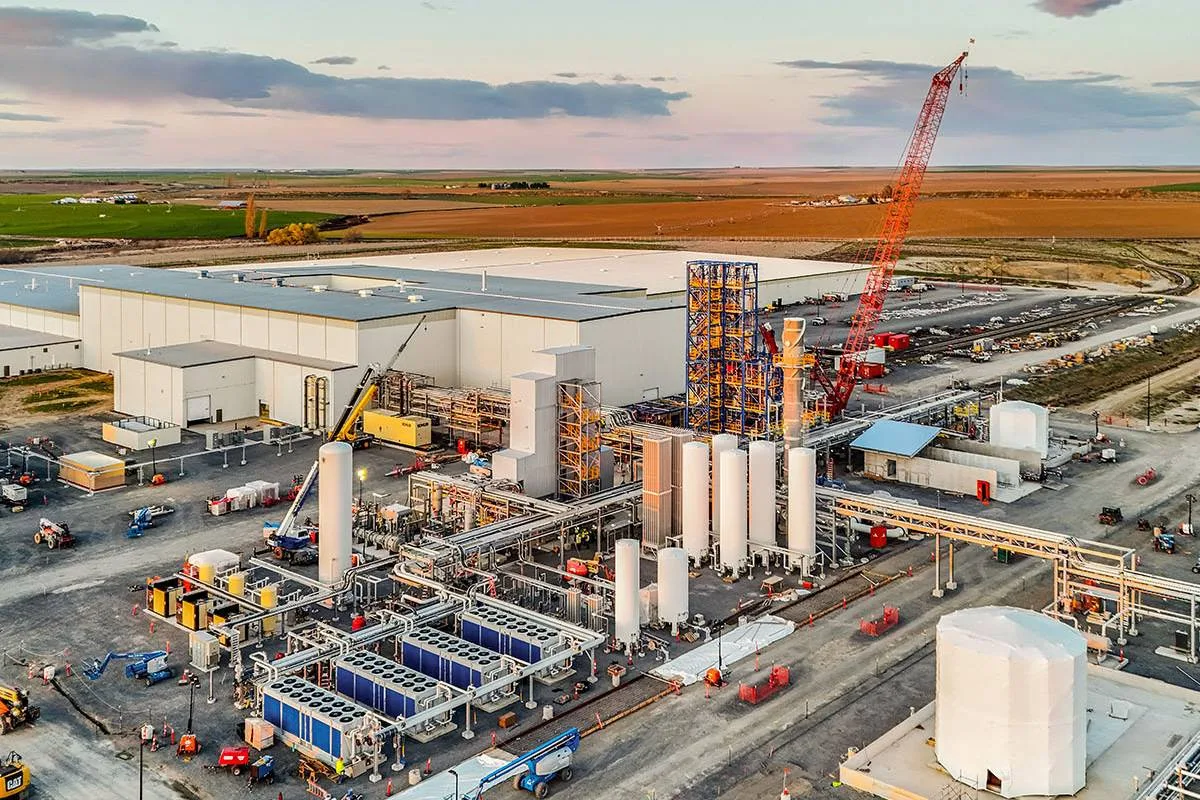
U.S. battery materials company Sila has raised $300 million in private funding to expand production of its silicon-carbon (Si/C) anode technology, with the investment supporting additional manufacturing capacity at its facility in Moses Lake, Washington.
The California-based company said the funding will be used to increase production of its Titan Silicon anode material and advance the second phase of expansion at the Moses Lake plant, which began operations in late 2025.
Battery Startup Sila Opens First Large-Scale Silicon Anode Plant In U.S.
Funding Supports Manufacturing Expansion
Sila said its Moses Lake facility currently has an annual production capacity equivalent to battery materials for approximately 2 GWh of batteries.
The company plans to expand the site in multiple phases over the next five years, targeting total production capacity of up to 250 GWh.
If completed as planned, Sila said the facility would become one of the world’s largest anode material production sites. The expansion is also expected to create several hundred additional jobs in Washington State.
Sila Begins Commissioning of First Battery Plant in Washington Ahead of 2025 Production Start
Investors Back Growth Plans
The funding round was led by Atreides Management and Sutter Hill Ventures.
Other participants included existing and new investors such as 8VC, Bessemer Venture Partners, Matrix Partners and funds advised by T. Rowe Price Associates.
“This funding allows us to further scale our operations and deliver on the promise of American innovation, strengthen the foundation of our domestic manufacturing capabilities and ensure that critical industries have a secure and reliable supply of advanced batteries,” said Gene Berdichevsky, co-founder and chief executive officer of Sila.
Focus on Advanced Battery Materials
Sila is developing silicon-based anode materials under the Titan Silicon brand as an alternative to conventional graphite anodes used in lithium-ion batteries.
The company has said the technology is designed to increase battery energy density and improve charging performance compared with existing graphite-based battery cells.
Mercedes-Benz has previously announced plans to use Sila’s silicon anode technology in a future electric version of the G-Class, while Panasonic is also among the companies expected to adopt the material.
Sila Raises $375 Million to Complete Washington Plant for Next-Gen Battery Materials
Domestic Supply Chain Remains a Priority
The investment comes as the United States continues efforts to strengthen domestic battery supply chains and reduce reliance on overseas production of battery materials.
Sila said expanding U.S.-based manufacturing could help improve the resilience of supply chains supporting industries such as electric vehicles and energy storage.
“Sila’s transition from a groundbreaking material science inventor to a gigascale manufacturing company is a masterclass in American operational discipline,” said Vic Miller of Sutter Hill Ventures.
“We have watched them translate laboratory breakthroughs into reality, proving that the leap from the lab to the factory floor is not only essential, but achievable in the United States with the right technology and team.”


