
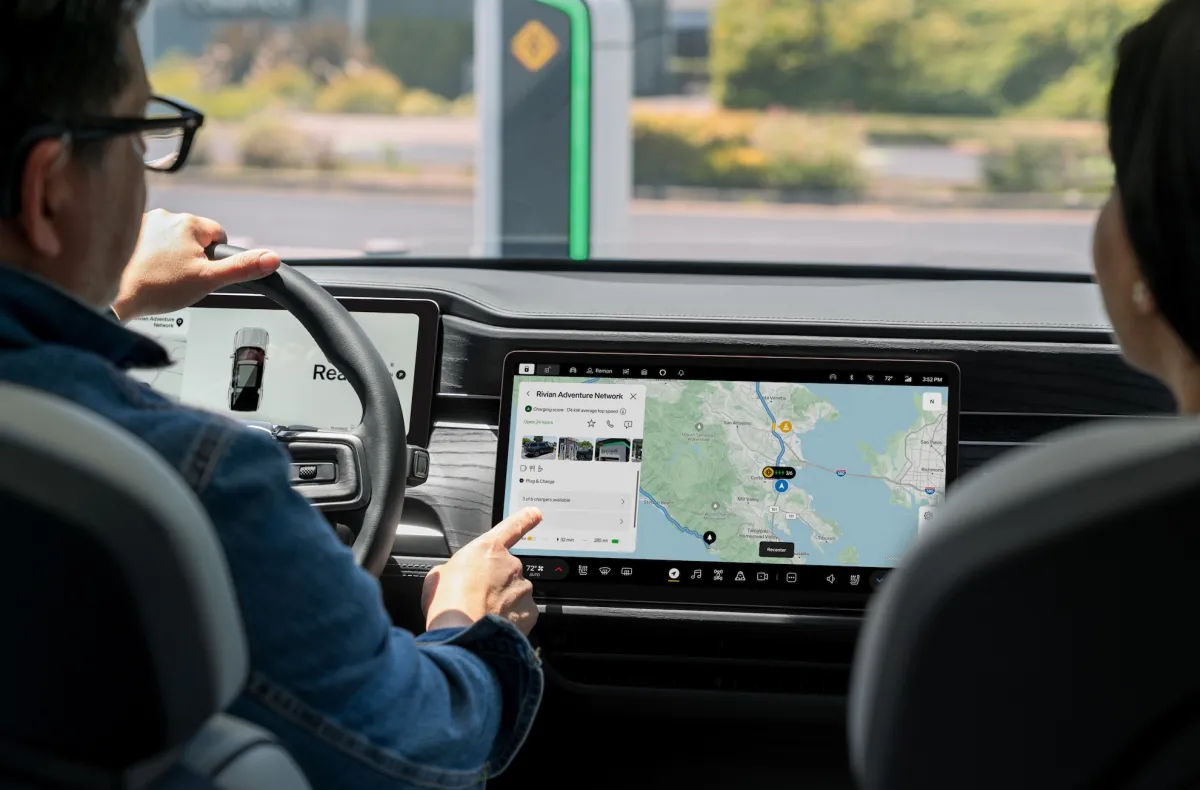
Electric vehicle maker Rivian has begun rolling out a new in-vehicle navigation system that integrates a customized version of Google Maps, replacing its previous Mapbox-based platform. The software update follows 18 months of collaboration between Rivian and Google engineers, aiming to deliver a more responsive and EV-tailored navigation experience.
Unlike Google’s typical automotive integrations—such as Android Auto or Google Built-In—this partnership involved a deeper level of cooperation between the two companies. Rivian’s Chief of Software, Wassym Bensaid, said the companies worked together on API-level integration to merge Google Maps’ navigation tools with Rivian’s proprietary software layer.
“We obviously closely watch customer feedback, and I think one of the areas where we had some level of criticism was navigation,” Bensaid said. “Google really wanted to embrace a new model of collaboration with a more open integration down to the API levels for Google Maps… and I think we’re really super happy with the result of this collaboration.”
The new interface includes familiar Google Maps features such as estimated time of arrival, real-time traffic conditions, place information, satellite imagery, and tappable points of interest. These are now merged with Rivian’s trip planner and EV-specific tools, including estimated range on arrival, route-based charging stops, and a scoring system that evaluates charging sites based on data from Rivian’s fleet. Many of these tools rely on data from A Better Routeplanner and Rivian’s internal metrics.
The updated maps are being delivered via a software update to Rivian vehicles and are also included in the company’s mobile app. New app features include satellite view (available with a Connect+ subscription), traffic data, place photos, and the ability to plan and share routes directly with the vehicle.
The navigation update is part of Rivian’s broader push to differentiate itself through software innovation. The company recently announced a joint venture with Volkswagen to develop next-generation EV software and platforms.