
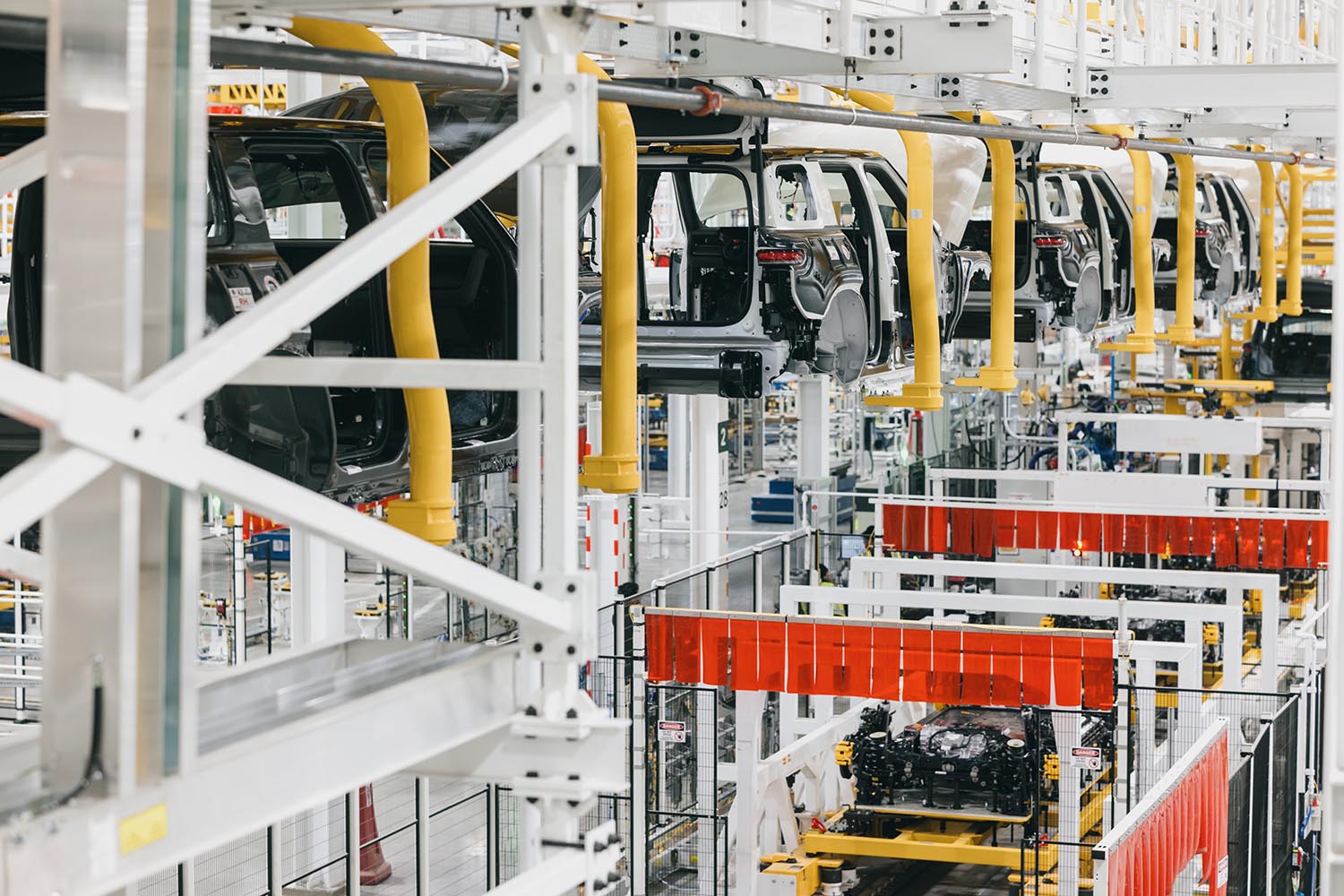
Rivian said its upcoming R2 electric sport utility vehicle has been engineered for high-volume production, with its manufacturing facility capable of producing up to 155,000 units per year as the company prepares to expand into a broader market segment.
The U.S. electric vehicle maker described the R2 as a new platform designed from the outset to balance performance, cost, manufacturability and long-term serviceability. The model is expected to play a key role in increasing sales volumes beyond Rivian’s current premium offerings.
“We made R2 so easy to build, our plant is capable of producing 155,000 R2 units annually,” the company said. “With a design this simple and a plant this advanced, R2 is ready to overdeliver on performance and capability at greater scale.”
See also: Rivian Plans Major Service Network Expansion Ahead of R2 Launch
Rivian said the vehicle’s architecture was simplified to reduce component count and assembly complexity, including cutting wiring length and using large structural castings to replace more intricate constructions. According to the company, these changes are intended to improve manufacturing efficiency while lowering overall vehicle weight and facilitating maintenance.
The automaker also designed the vehicle and factory in parallel, using digital simulation tools to model production processes before implementation. It said advanced robotics, artificial intelligence systems and real-time diagnostics will be used to optimize assembly, quality control and equipment utilization.
See also: Rivian’s R2 SUV Enters Final Validation Testing Ahead of Planned Deliveries
“Our vehicle and our manufacturing lines were literally made for each other,” Rivian said, adding that the integrated approach aims to support efficiency throughout the vehicle’s lifecycle, including service.
The R2 is expected to be a more affordable model positioned in the midsize SUV segment, which could significantly increase Rivian’s production volumes if demand meets expectations. The company did not specify a start date for full-scale manufacturing but said preparations are ongoing as it moves toward launch.