
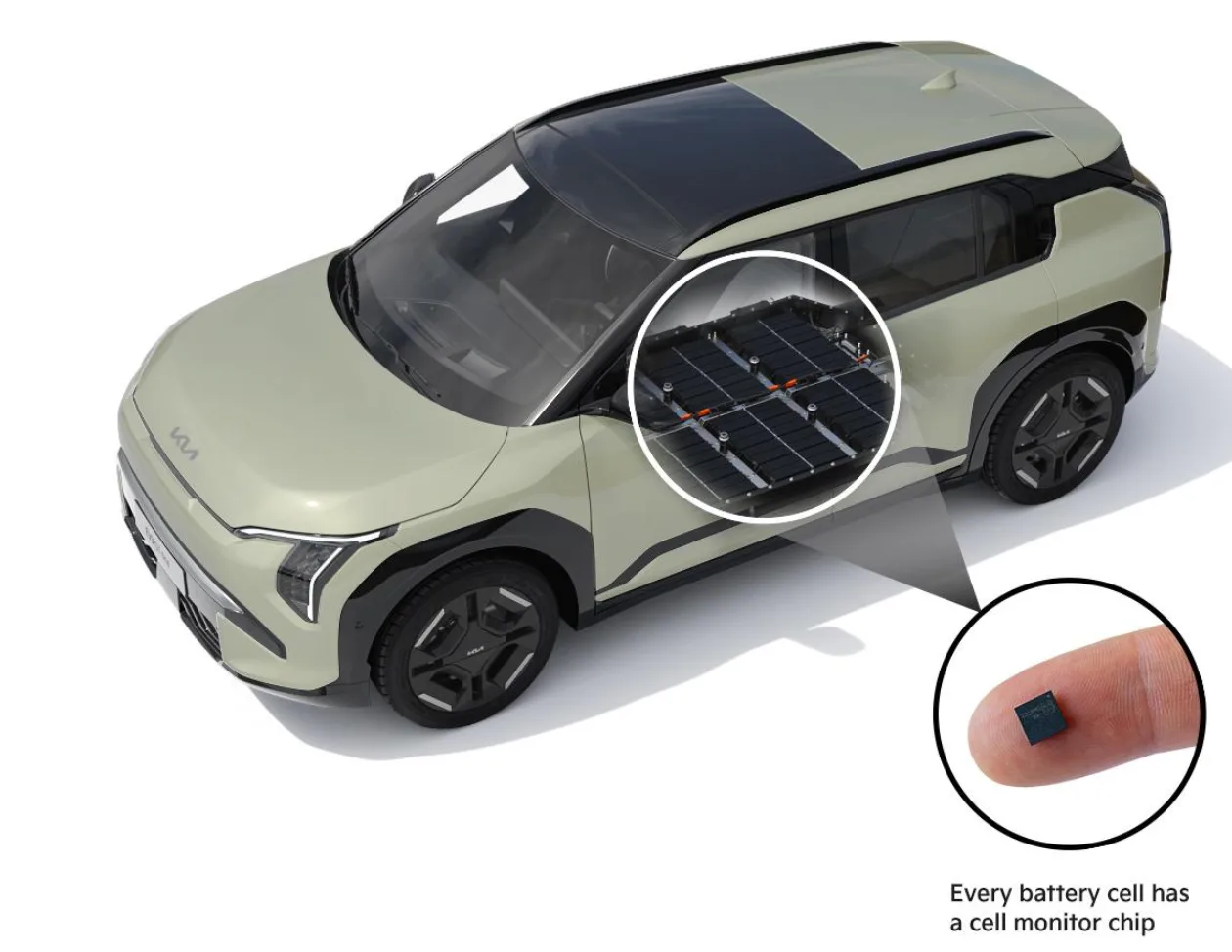
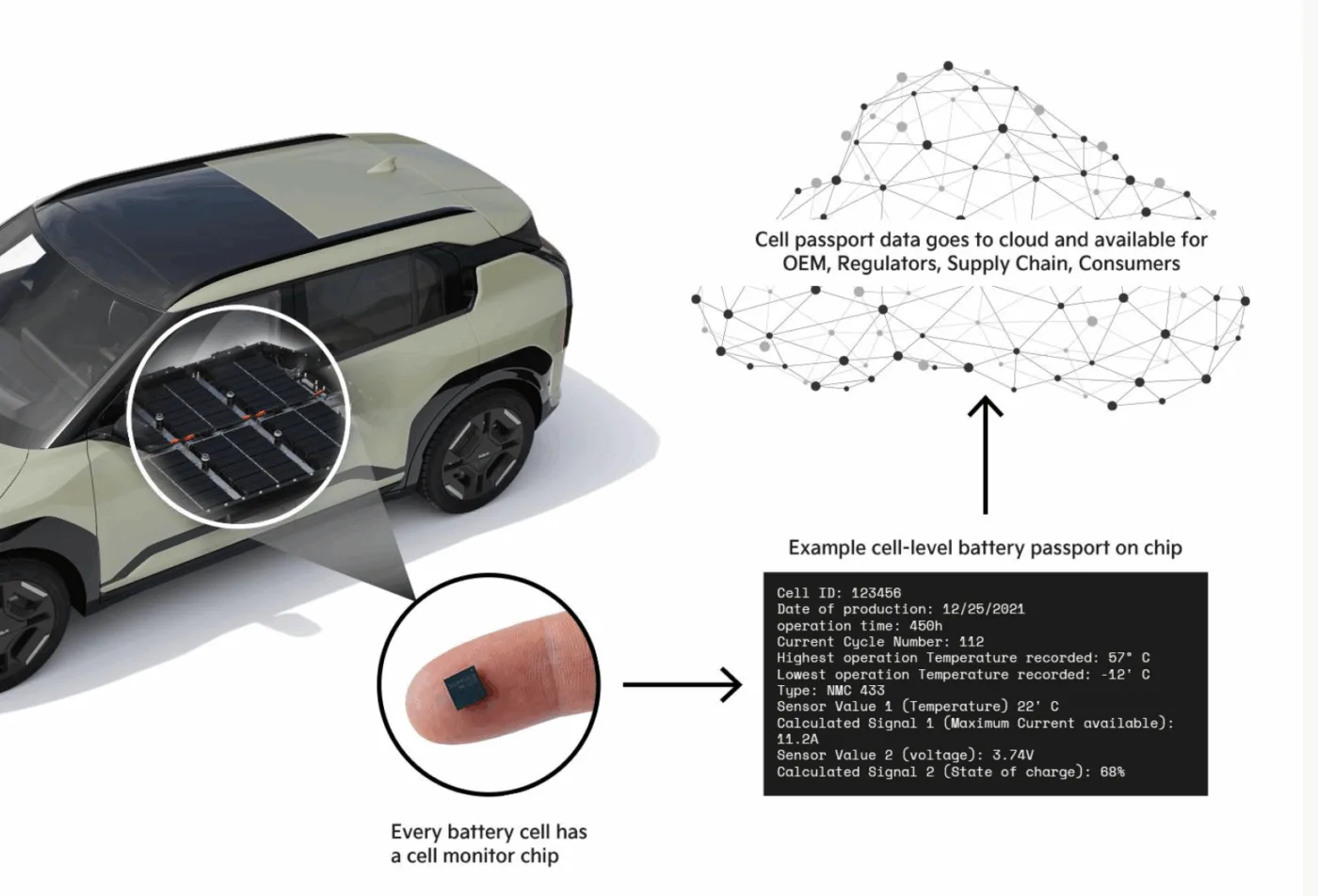
Kia Europe has begun publicly testing a digital battery passport at the cell level for the first time as part of preliminary research, using a Kia EV3 produced in South Korea and equipped with a Dukosi battery cell monitoring system. The vehicle, shipped to Germany for the trial, can collect and transmit live data for each battery cell and upload it to a digital passport.
“Kia aims to set a new standard for customers regarding battery transparency and performance,” said Marc Hedrich, President and CEO of Kia Europe. “Through testing cell-level battery passports, we gain insights on what ownership benefits we can offer our customers. On top of advantages such as extended battery life, we will be building on a relationship of trust as well.”
The battery passport trial allows real-time monitoring of the battery’s state of charge (SoC) and state of health (SoH), providing detailed information for users, technicians, and regulators. Data from the system is accessible through the car’s infotainment platform and updates automatically after any repair, ensuring full traceability throughout the battery’s lifecycle.
Kia said it has also created an internal organisation to lead the development of its own battery passport service, bringing together experts from across the company and partners in the battery value chain. The automaker noted that its battery passport “will go beyond legal requirements by including additional safety-related data.” The company plans to roll out the service across all fully electric and hybrid models sold in Europe by February 2027.
See also: AVL Launches Digital Battery Passport to Enhance Lifecycle Transparency and Sustainability
The European Union’s new battery regulation, adopted in August 2023, requires a functioning digital battery passport for all EVs from 2027. The system will provide detailed information on components, recycled material content, and lifecycle traceability through an electronic passport and QR code. Labelling requirements will begin in 2026, with the passport and QR system following in 2027.
Kia’s trial was coordinated by Delft University of Technology and Hyundai Motor Group, with data shared via a pilot environment developed by the Dutch research organisation TNO. The system, Kia said, could be configured for other models, brands, or even different industrial sectors, supporting cell-level repairs, second-life applications, and recycling — key steps in building a circular battery economy.