
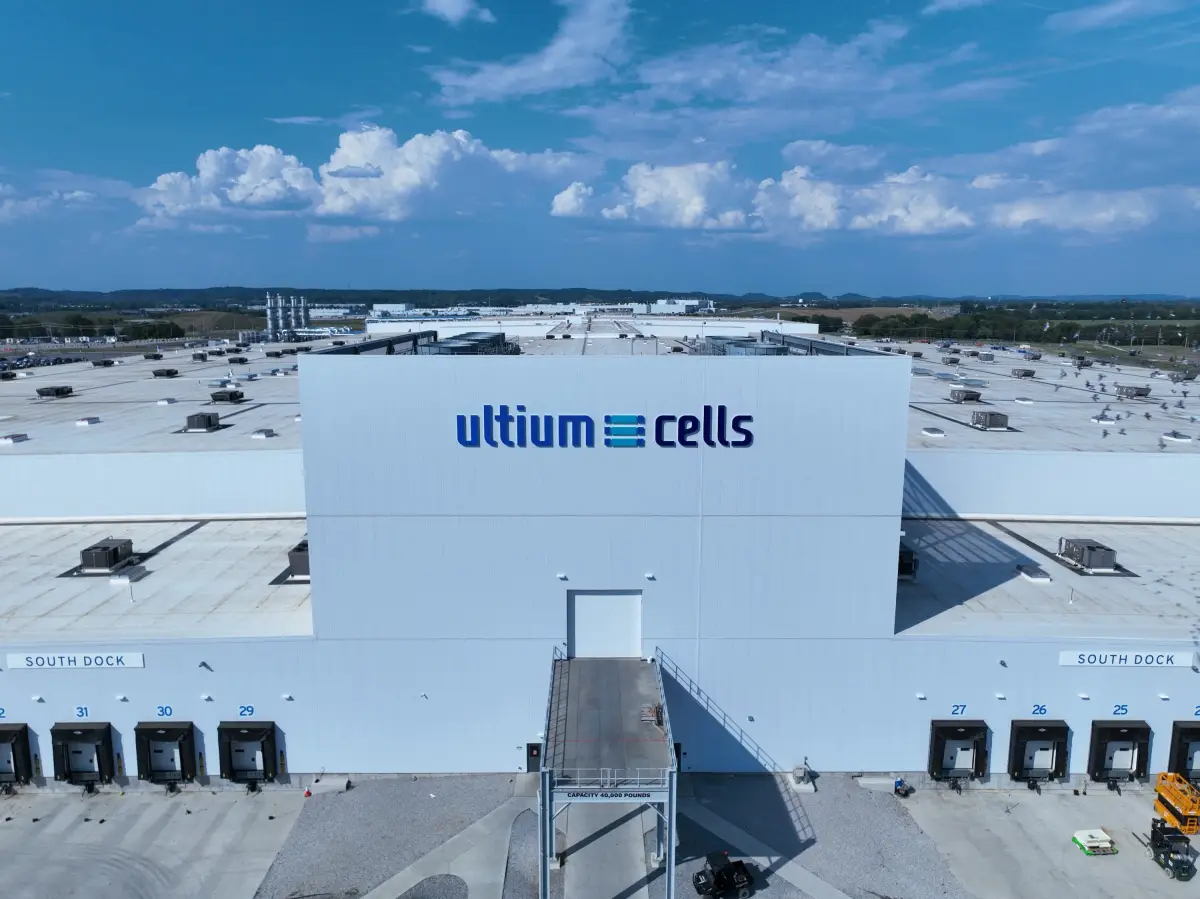
General Motors announced plans to produce lithium-iron-phosphate (LFP) battery cells at its joint-venture facility with South Korea’s LG Energy Solution in Spring Hill, Tennessee. The move marks a strategic shift toward more cost-effective battery technology as U.S. automakers recalibrate their electric vehicle (EV) targets in response to softening consumer demand.
GM said it will begin converting battery cell lines at the $2.3 billion Ultium Cells LLC plant later this year, with commercial LFP cell production expected by late 2027. The plant currently manufactures nickel-cobalt-manganese-aluminum (NCMA) battery cells, which will continue to be produced at GM’s separate facility in Ohio. LFP batteries offer a lower-cost and safer alternative to NCMA cells, with raw materials that are more abundant and less prone to overheating.
The shift comes as LFP chemistry gains traction in the U.S. auto industry. Rival Ford Motor (F.N) has also announced plans to manufacture LFP cells at a plant in Michigan using licensed technology from China’s CATL (300750.SZ), with production expected to begin in 2026. Despite concerns from some lawmakers over CATL’s involvement, Ford and GM are betting that LFP technology will help reduce costs and broaden the appeal of EVs among consumers.
While automakers like GM and Ford have recently moderated some of their ambitious EV rollout timelines due to lower-than-expected demand, both companies continue to invest heavily in battery innovation and manufacturing infrastructure. GM said the Spring Hill plant, which employs about 1,300 workers and supplies batteries for EVs like the Cadillac Lyriq, will remain a cornerstone of its electrification strategy. Earlier this year, employees at the Ultium facility ratified their first contract with the United Auto Workers union.
In addition to NCMA and LFP, GM is also developing a third battery chemistry — lithium-manganese-rich (LMR) — aimed at providing longer range at a competitive cost. LMR batteries are expected to enter production around 2028. According to GM, these options will help address key consumer concerns such as vehicle price and battery range, supporting broader EV adoption over the long term.