
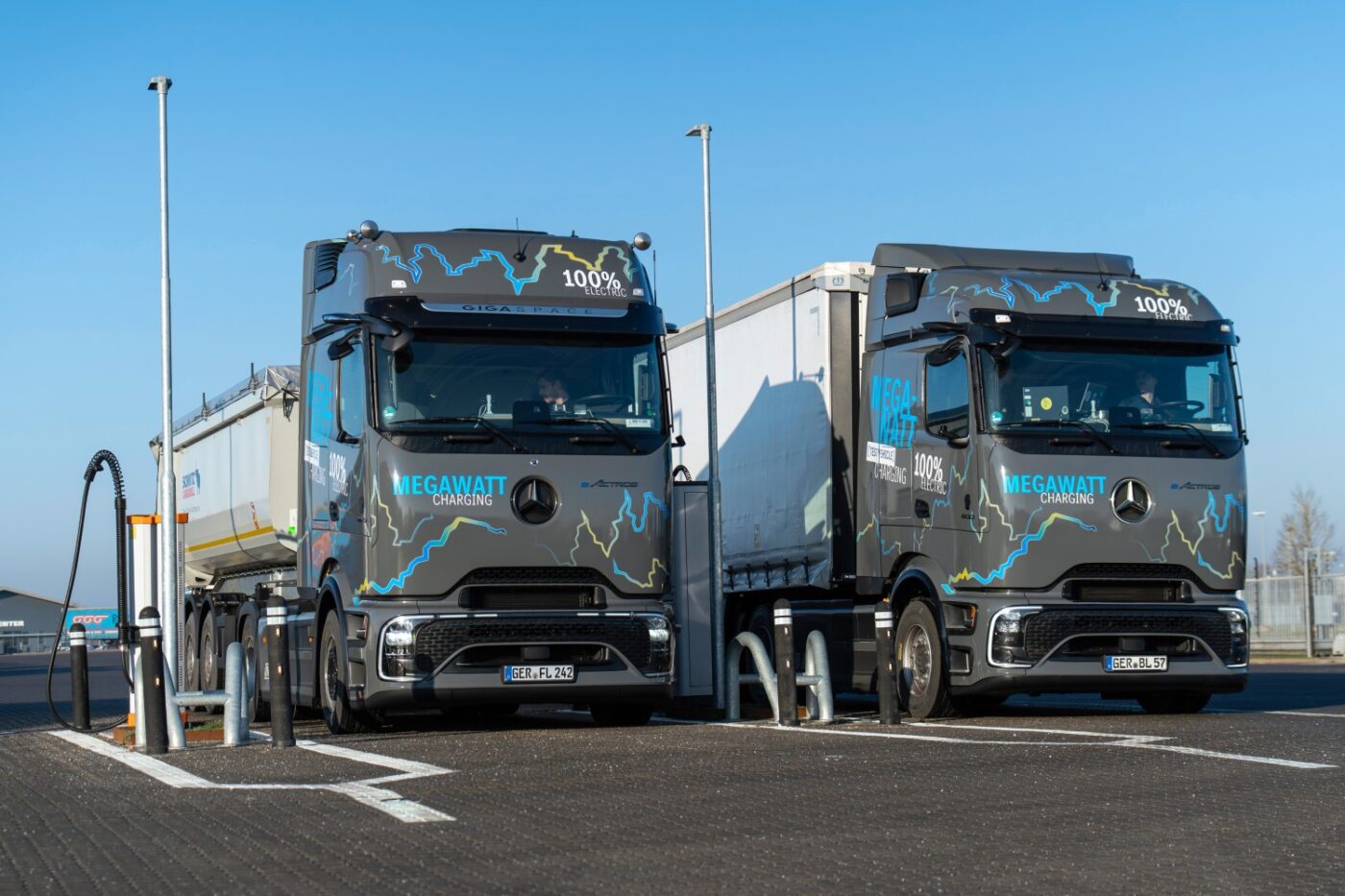
A survey conducted by Germany’s Öko-Institut found that companies operating heavy battery-electric trucks are reporting high satisfaction levels with the vehicles, citing reliability, operating cost advantages and positive driver feedback as key benefits.
The study surveyed 57 transport and logistics companies in Germany that have operated at least one heavy-duty electric truck in daily operations for a minimum of one year.
According to the results, 93% of participating companies described battery-electric trucks as a reliable and economically viable alternative to diesel-powered vehicles.
The research forms part of the federally funded ELV-Live project, which examines the practical adoption of electric trucks in freight transport.
The institute said the findings indicate that battery-electric trucks are moving beyond limited pilot applications and becoming increasingly accepted for both regional and long-haul logistics operations.
The surveyed companies collectively operate around 300 battery-electric trucks.
Many of the participants are believed to use the Daimler Truck eActros 600, which has been available for long-haul transport since late 2024. Daimler Truck assisted researchers in identifying companies participating in the study.
The report found that Germany’s toll exemption for battery-electric trucks and comparatively low depot electricity costs were among the main contributors to favourable operating economics.
Companies also rated the technical reliability of battery-electric trucks more positively than conventional diesel vehicles, according to the survey.
The study further highlighted strong driver acceptance, with operators citing lower noise levels and improved driving comfort as advantages.
However, researchers said significant barriers to wider adoption remain.
“The high acquisition costs, as well as bureaucratic and financial hurdles in expanding depot charging infrastructure and grid connection upgrades, remain key challenges,” said Florian Hacker, project leader at the Öko-Institut.
The survey found that many logistics providers consider current public charging infrastructure for heavy-duty electric trucks insufficient.
Operators reported that many public charging stations are not designed to accommodate large commercial vehicles, while charging prices at public sites are often viewed as too high.
Companies participating in the survey called for expanded truck charging infrastructure, dedicated charging space for heavy-duty vehicles, more transparent pricing systems and reservation functions for charging stations.
The study also examined why companies initially adopted battery-electric trucks.
According to the findings, the most important factors included lower operating costs, reduced energy expenses, toll exemptions, customer demand, environmental targets and long-term fleet modernisation strategies.
The institute noted that confidence in electric truck adoption is continuing to grow among early users. Around 93% of surveyed companies said they expect battery-electric trucks to become widely or extensively used within their operations by 2030.
Earlier this year, the Öko-Institut surveyed 200 logistics professionals and found that 61% were already considering purchasing battery-electric trucks, although only 28% had formally committed to introducing them before 2030.