





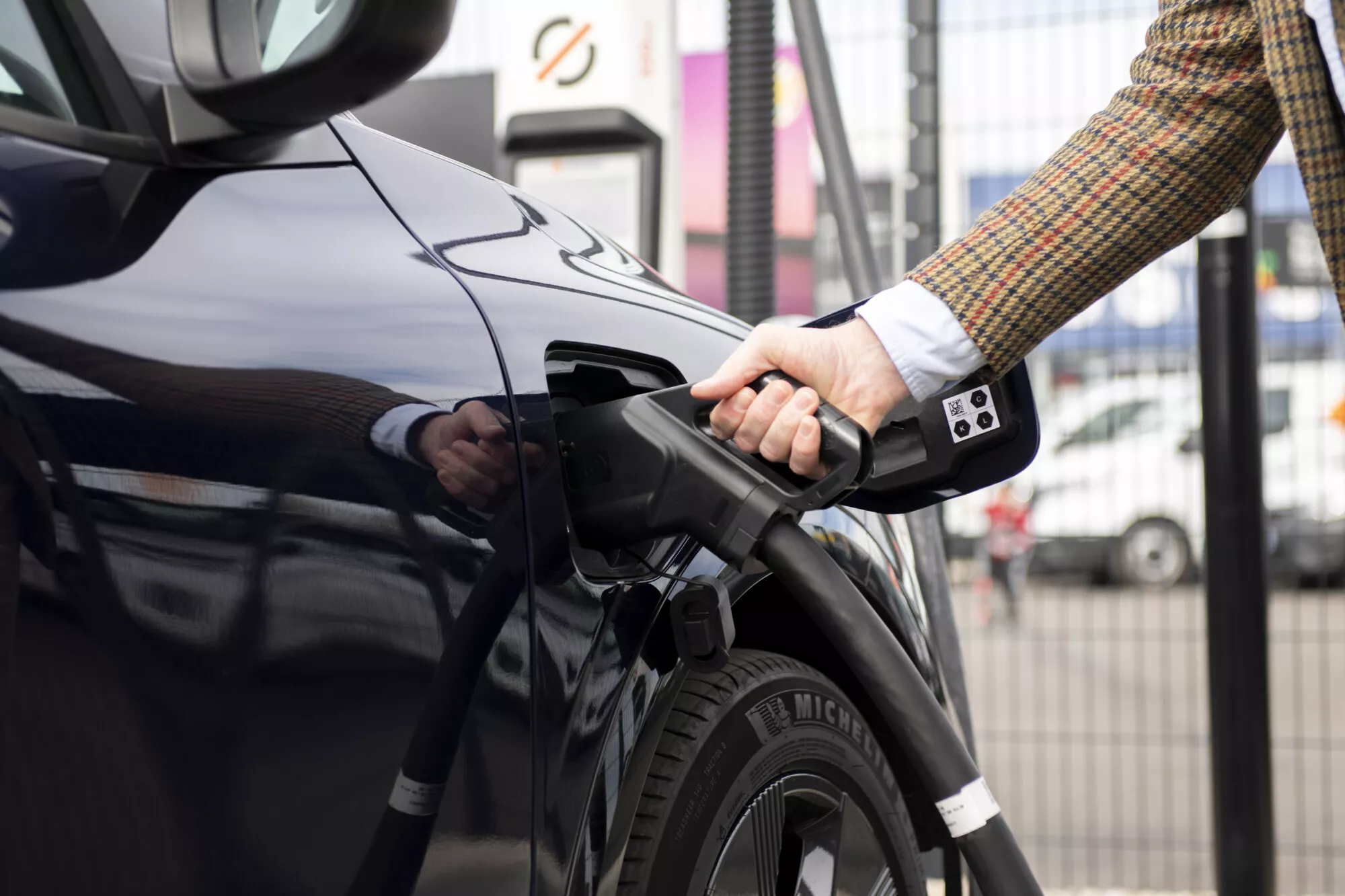
Europe’s automotive industry could rebound to its post-financial crisis peak of 16.8 million vehicles produced annually if the European Union upholds its 2035 ban on new fossil fuel car sales and implements supportive industrial policies, campaign group Transport & Environment (T&E) said on Tuesday.
In a new report, the group said a robust clean car strategy could boost the automotive value chain’s contribution to the European economy by 11% by 2035. However, rolling back the emissions goal and failing to adopt a cohesive industrial plan could cost the EU up to one million auto sector jobs and jeopardize two-thirds of planned battery investments.
“It’s a make or break moment for Europe’s automotive industry as the global competition to lead the production of electric cars, batteries and chargers is immense,” said Julia Poliscanova, Senior Director for Vehicles & E-mobility Supply Chains at T&E.
The EU formally adopted a regulation in 2023 that bans the sale of new cars and vans emitting carbon dioxide from 2035. While the European Parliament supported adjustments to short-term CO₂ targets in May after lobbying from automakers, the longer-term 2035 target remains unchanged.
T&E’s analysis projects that if the bloc stays on course and ramps up EV-related industrial policies, losses in traditional vehicle manufacturing jobs could be offset by the creation of more than 100,000 battery jobs by 2030 and 120,000 charging infrastructure jobs by 2035.
In contrast, a retreat from the 2035 target could cut the automotive sector’s contribution to the economy by €90 billion ($105.5 billion) over the next decade, the report found.
The European auto industry faces growing pressure amid rising input costs, tightening regulations, and intensifying global competition. Automakers are also contending with U.S. President Donald Trump’s recent imposition of 25% tariffs on car imports, prompting some companies to withdraw their 2025 forecasts.


