
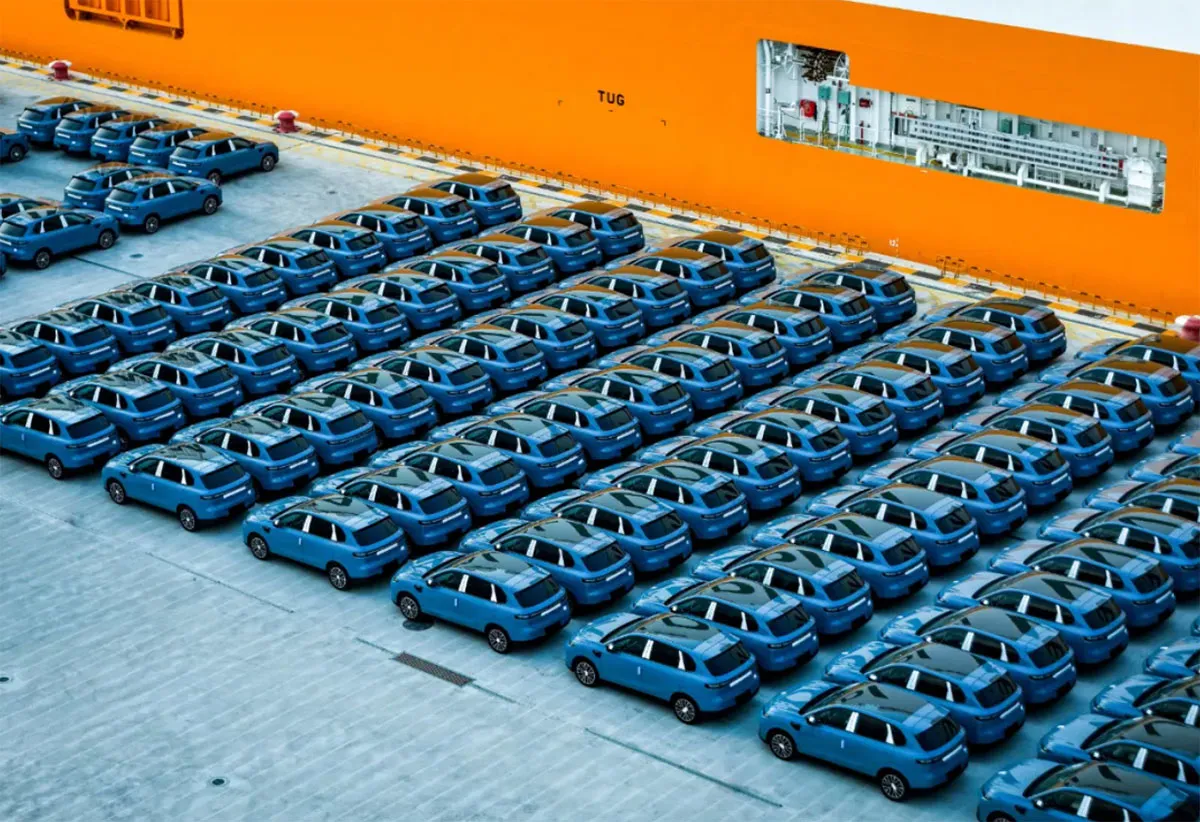
China will require exporters of pure electric vehicles (EVs) to obtain licenses from next year, tightening oversight of overseas shipments of the fast-growing segment.
In a joint statement on Thursday, four government departments, including the Ministry of Commerce, said that from Jan. 1, 2026, pure electric passenger cars will fall under an export license management regime. Applications, conditions and approvals will be handled under rules first outlined in a 2012 policy document.
China Customs will continue to use the existing commodity catalog for inspections, according to the notice. Authorities did not provide further details, though analysts said the measures could restrict unlicensed or private exports of battery electric vehicles (BEVs).
In recent years, some Chinese EVs have been shipped abroad through unofficial channels, prompting complaints in overseas markets over software update limitations and poor after-sales support. The tighter licensing rules are aimed at curbing such risks while aligning exports with national standards.
China exported 220,000 pure electric vehicles in August, up 48% from a year earlier and accounting for nearly a third of total vehicle exports, data from the China Passenger Car Association (CPCA) showed. From January to August, pure EV exports rose 27% year-on-year to 1.44 million units.
The European Union remains the largest destination for Chinese EV exports, while demand in Southeast Asia and the Middle East has shown more volatility, according to the CPCA.