
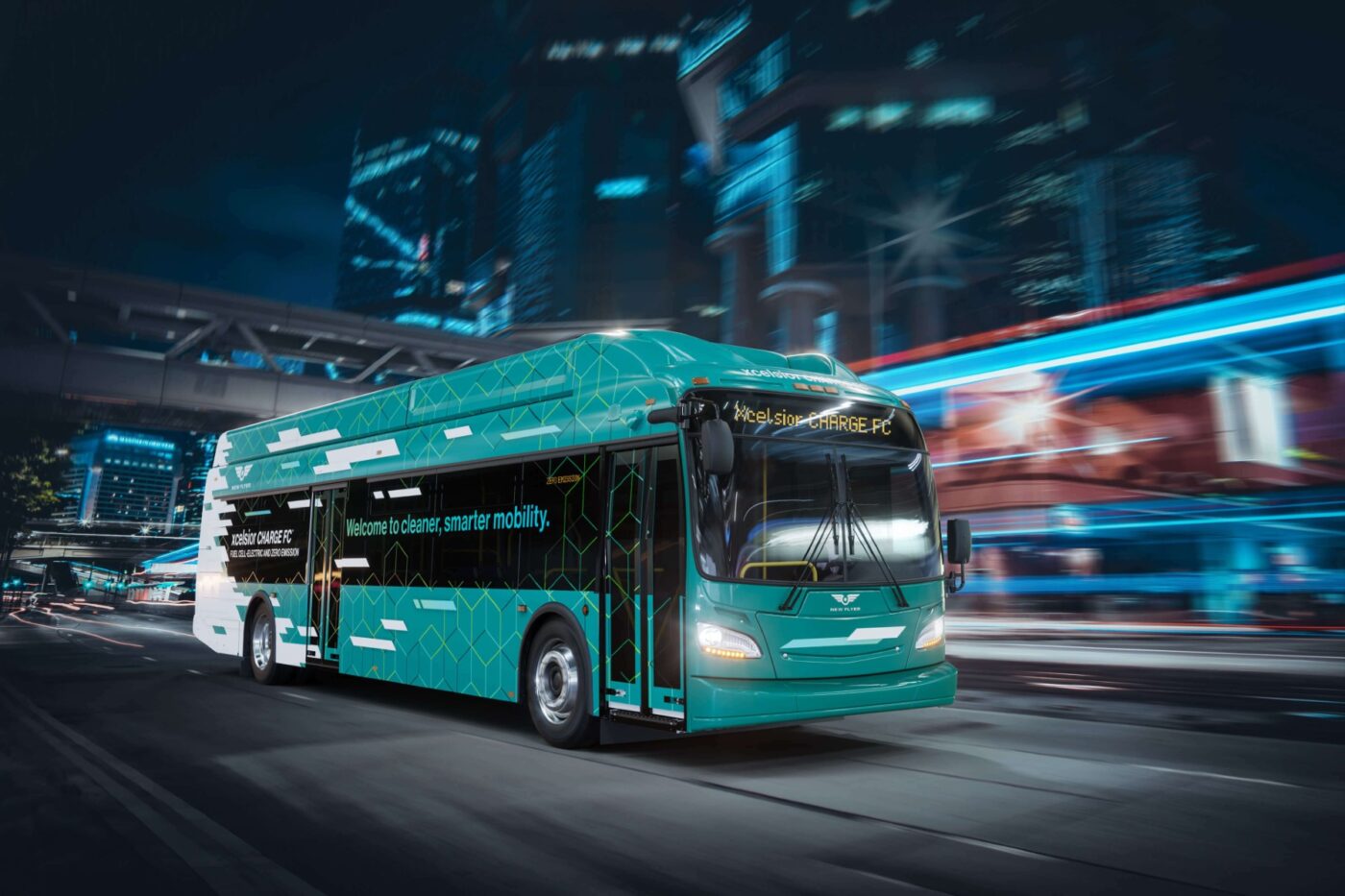
Ballard Power Systems said it has received an order for 500 hydrogen fuel cell modules from bus manufacturer New Flyer, representing a total capacity of about 50 megawatts.
The modules will be used in New Flyer’s Xcelsior Charge FC buses deployed across North America. Deliveries of the systems are expected to begin this year, the companies said.
The order covers Ballard’s FCmove-HD+ fuel cell module, each rated at 100 kilowatts and weighing around 250 kilograms.
The companies have worked together for more than a decade. Their current framework agreement was signed in January 2024 between Ballard and NFI Group, which also owns bus brands including Alexander Dennis and Motor Coach Industries.
According to Ballard, the new order represents the largest placed under the agreement so far. The first order under the deal in early 2024 included 100 modules, followed by a second order of 200 modules in November 2024 for delivery in 2025.
“We are proud that New Flyer continues to place their trust in Ballard as their long-term technology partner, building on a relationship that spans more than a decade,” said Oben Uluc, Vice President of Marketing and Sales at Ballard Power Systems.
“Our fuel cell engines, backed by additional fleet services, deliver the range, rapid refuelling, and reliable performance New Flyer’s fleets require,” Uluc said.
New Flyer said the agreement supports its efforts to expand zero-emission bus deployments.
“This agreement is the next step in our long-standing partnership with Ballard and a key component in advancing our leading fuel cell bus offerings,” said David White, Executive Vice President of Supply Management at New Flyer.
“Over the last decade, we’ve delivered buses powered by Ballard in multiple jurisdictions from coast to coast, showing their capability to operate in different environments and routes as a 1-for-1 diesel replacement,” White added.
Hydrogen fuel cell buses convert hydrogen into electricity to power electric drivetrains, offering zero tailpipe emissions and quick refuelling times compared with battery-electric alternatives.