
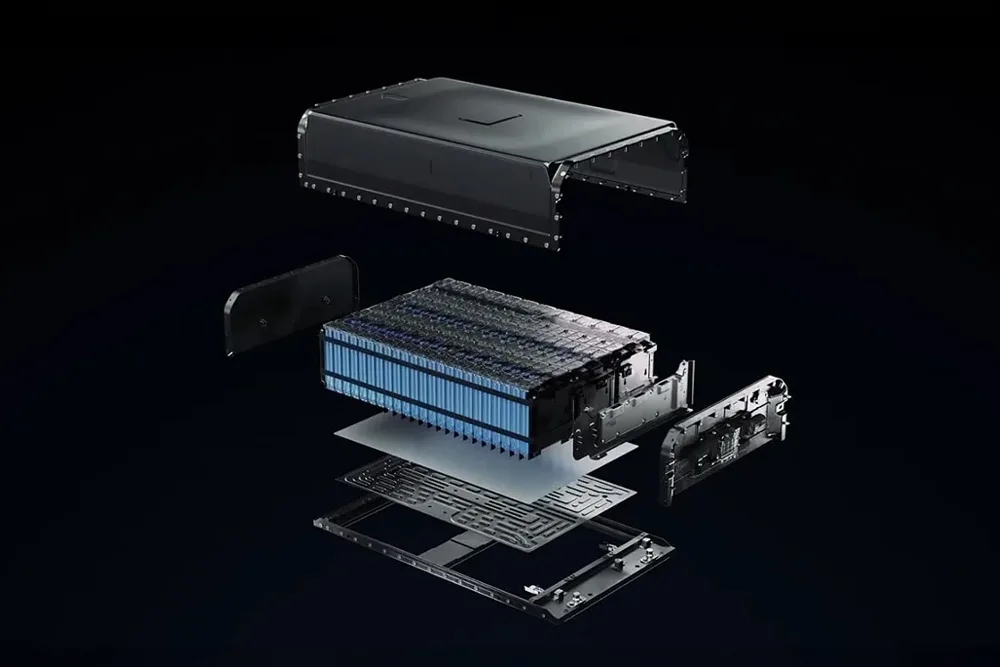
CATL retained its position as the world’s largest supplier of energy storage system (ESS) batteries during the first half of 2026 as global demand accelerated, while markets outside China accounted for the majority of shipments for the first time.
According to South Korean market research firm SNE Research, global lithium-ion ESS battery shipments reached 461.3GWh in the first six months of 2026, representing a 71% increase from 269.7GWh during the same period a year earlier.
CATL Widens Lead
CATL shipped 125.0GWh of ESS batteries in the first half, an 81% increase year-on-year, lifting its global market share to 27.1% from 25.6%.
Eve Energy ranked second after shipping 48.0GWh, up 69% year-on-year, giving it a 10.4% market share.
Hithium followed closely with 46.2GWh and a 10.0% share, while BYD ranked fourth with shipments of 35.7GWh, accounting for 7.7% of the market.
CALB and Rept Battero Energy each shipped more than 31GWh, with 31.5GWh and 31.4GWh respectively, giving both companies a market share of 6.8%.
Cornex ranked seventh with 30.2GWh, representing 6.5% of global shipments.
Together, the seven largest suppliers were all Chinese companies. The combined market share of the top three—CATL, Eve Energy and Hithium—increased to 47.5%, compared with 45.8% in the first half of 2025.
Competition among mid-tier suppliers also tightened, with only around 1GWh separating the fifth-, sixth- and seventh-ranked companies.
Chinese and South Korean Suppliers
Gotion High-tech shipped 20.8GWh during the period, representing 41% annual growth. However, this trailed overall market expansion, reducing its market share to 4.5% from 5.5%.
Great Power recorded one of the strongest performances among major suppliers, with shipments increasing 202% year-on-year to 20.5GWh. Its market share expanded from 2.5% to 4.4%.
Among South Korean manufacturers, LG Energy Solution recorded the fastest growth rate of any major supplier.
The company shipped 12.0GWh in the first half, an increase of 357% from a year earlier, lifting its market share to 2.6% from 1.0%.
LG Energy Solution delivered 6.7GWh during the second quarter alone, compared with just 1.1GWh in the same quarter of 2025.
Samsung SDI shipped 6.4GWh, representing 20% year-on-year growth. Despite higher volumes, its market share declined from 2.0% to 1.4%.
Combined, LG Energy Solution and Samsung SDI accounted for approximately 4.0% of the global ESS battery market, well below the 47.5% held by China’s top three suppliers.
Overseas Markets Surpass China
China remained the world’s largest individual ESS market, with shipments reaching 202.5GWh during the first half, up 49% year-on-year.
However, China’s share of global demand declined to 43.9%, down from 50.5% a year earlier.
For the first time, combined shipments across North America, Europe and other international markets exceeded China, reaching 258.7GWh, or 56% of global demand.
The fastest growth occurred in markets outside China, North America and Europe, where shipments surged 119% to 110.1GWh. SNE Research attributed much of this growth to utility-scale energy storage projects in the Middle East and Australia.
North American ESS battery shipments rose 83% year-on-year to 75.9GWh, while Europe recorded 72.7GWh, up 74%.
North America Remains Strategic
CATL maintained its leadership position in North America, shipping 29.5GWh and capturing a 38.8% market share.
Hithium ranked second with 13.1GWh, representing 140% annual growth and a 17.2% market share.
LG Energy Solution placed third after shipping 10.3GWh. Its North American market share climbed from 4.2% to 13.6%, with approximately 95% of those shipments supplied to grid-scale energy storage projects.
Samsung SDI’s shipments into North America increased 16%, although its market share declined to 6.1% from 9.7%. The company also supplied 1.6GWh of batteries for AI data centre applications in the region.
Together, LG Energy Solution and Samsung SDI increased their combined North American market share to 19.7%, compared with 13.9% a year earlier.
Grid Storage Drives Demand
Grid-scale energy storage remained the dominant application segment, accounting for 347.0GWh, or 75.2% of total ESS battery shipments worldwide. Shipments in the segment increased 69% year-on-year.
CATL held approximately 30% of the grid storage market, followed by Hithium with 13%, Eve Energy with 10%, BYD with 9% and CALB with 8%.
Residential energy storage posted the fastest growth among application segments.
Shipments more than doubled to 47.7GWh from 20.9GWh a year earlier, representing growth of 128%. Residential ESS increased its share of the global market from 7.7% to 10.3%, surpassing the 10% threshold for the first time.
Rept Battero Energy led the residential storage market with a 32% share, followed by Eve Energy at 25% and Great Power at 23%.
Commercial and industrial ESS shipments reached 39.6GWh, up 59% year-on-year. CATL led this segment with a 35% market share, followed by Rept Battero Energy with 14%.
Supply Chain Shifts Continue
SNE Research said tightening tariffs and localisation requirements in North America and Europe are reshaping procurement decisions, making regional manufacturing capacity, supply chain resilience and regulatory compliance increasingly important alongside pricing.
The research firm also noted that rapid growth in renewable energy generation and AI data centres is accelerating demand for grid-scale energy storage, with battery supply tightening for some products and projects as developers secure production capacity earlier to meet future deployment schedules.