
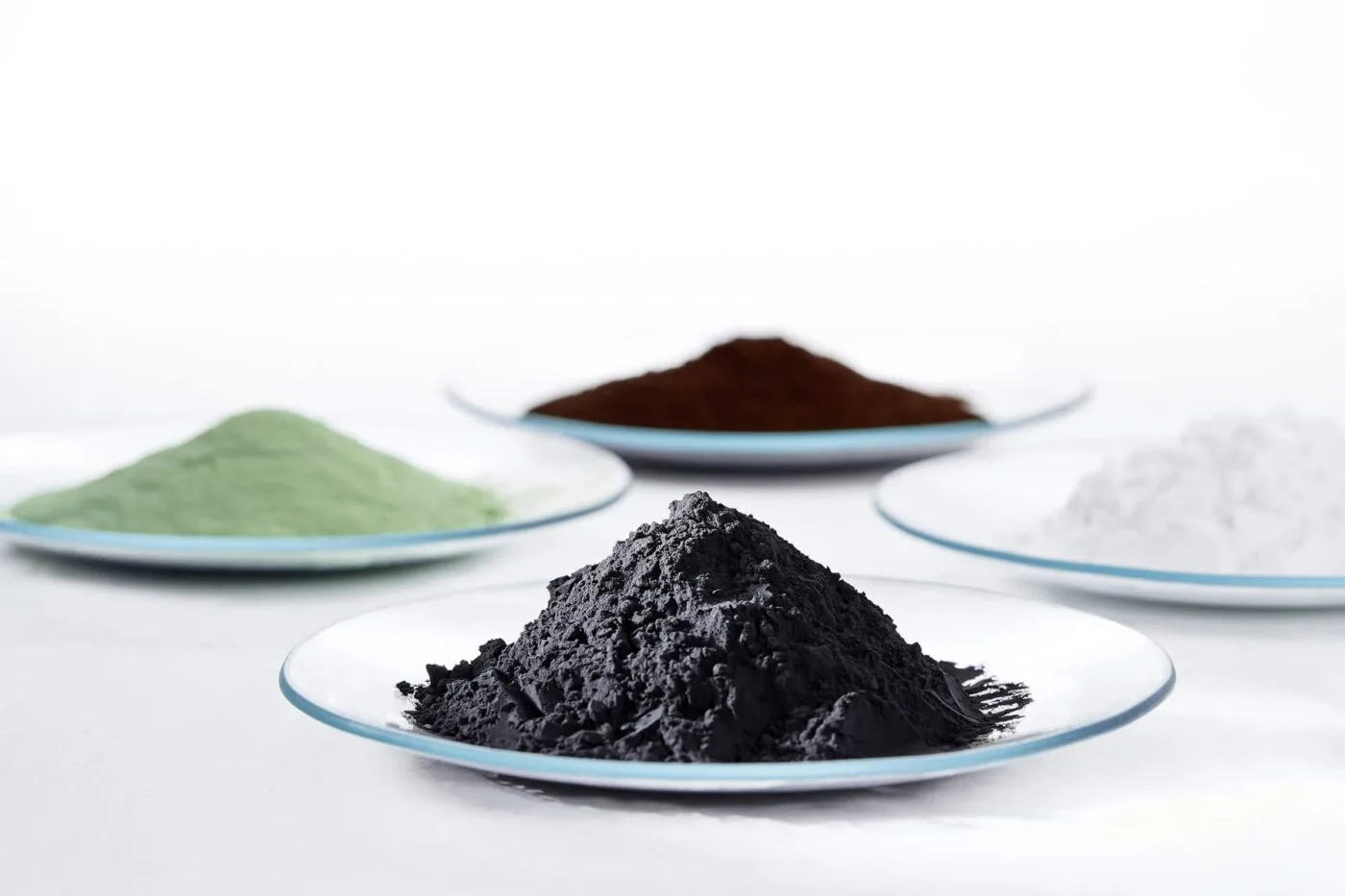
Researchers at Hanyang University in South Korea have identified a previously overlooked ageing mechanism affecting next-generation cobalt-free, nickel-rich battery cathodes, revealing that exposure of precursor materials to air before production can significantly shorten battery lifespan.
The findings highlight a manufacturing challenge for emerging high-energy battery chemistries designed to reduce dependence on cobalt while maintaining the energy density required for future electric vehicles.
Air Exposure Found to Accelerate Battery Degradation
The research focused on cobalt-free cathodes featuring a nickel-rich core surrounded by a manganese-rich protective shell, a material architecture considered a promising alternative for future lithium-ion batteries.
According to the study, storing precursor materials in air causes manganese on the particle surface to oxidise before battery production begins.
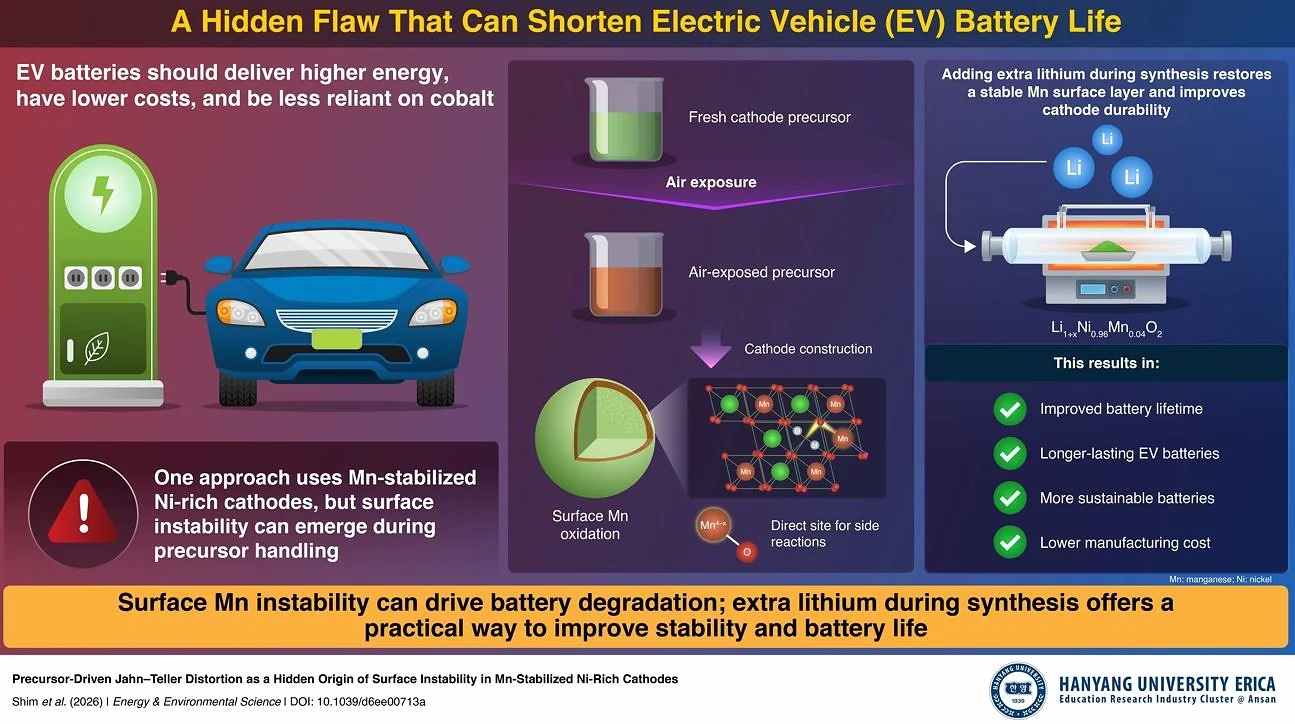
This chemical reaction creates defective surface regions containing Jahn-Teller-distorted manganese species, which interact aggressively with the battery electrolyte.
The researchers found that these reactions accelerate the dissolution of transition metals and trigger degradation processes at the graphite anode.
During long-term cycling tests, batteries using the affected cathode materials experienced nearly double the capacity loss compared with materials that had not undergone the same precursor degradation.
Professor Bang said the protective manganese coating can become a source of degradation if precursor materials are not carefully managed.
“We found that a manganese-rich shell, which is normally introduced to protect high-nickel cathodes, can instead become a catalyst for degradation if the precursor chemistry is not carefully controlled. Even small variations in precursor storage history can substantially affect battery stability.”
Higher Lithium Content Improves Stability
The research team also identified a potential solution during material synthesis.
By increasing lithium content during cathode production, the researchers found they could suppress formation of the defective manganese surface phase and restore more stable manganese-oxygen bonding.
Laboratory testing showed that cathodes produced using the modified process retained more than 90% of their original capacity after extended cycling, representing a significant improvement in long-term durability.
According to the researchers, the approach could improve battery performance without requiring additional protective coatings or major changes to existing production processes.
Manufacturing Process Plays a Critical Role
The study suggests that manufacturing conditions can have a greater influence on battery longevity than previously understood.
Rather than focusing solely on battery chemistry, manufacturers may also need to place greater emphasis on precursor handling and storage throughout the production process.
Professor Bang said the findings demonstrate that seemingly minor variations in manufacturing history can have a substantial impact on battery performance.
“Our results show that even minor variations in precursor history can have major consequences for battery performance, making precursor management an important consideration for large-scale manufacturing.”
The research team added that tighter control of material handling and lithium stoichiometry could provide a relatively straightforward pathway to producing longer-lasting batteries while avoiding costly modifications to manufacturing lines.
Findings Target Future Battery Technologies
The researchers noted that the study does not examine the lithium iron phosphate (LFP) or nickel-manganese-cobalt (NMC) batteries currently used in most electric vehicles.
Instead, it focuses on cobalt-free, high-nickel cathodes with manganese-rich protective coatings that are being developed as a potential successor to today’s nickel-rich lithium-ion battery technologies.
The findings provide new insight into the challenges facing next-generation electric vehicle batteries, suggesting that long-term durability will depend not only on advances in cell chemistry but also on precise control of manufacturing and material preparation throughout the production process.