
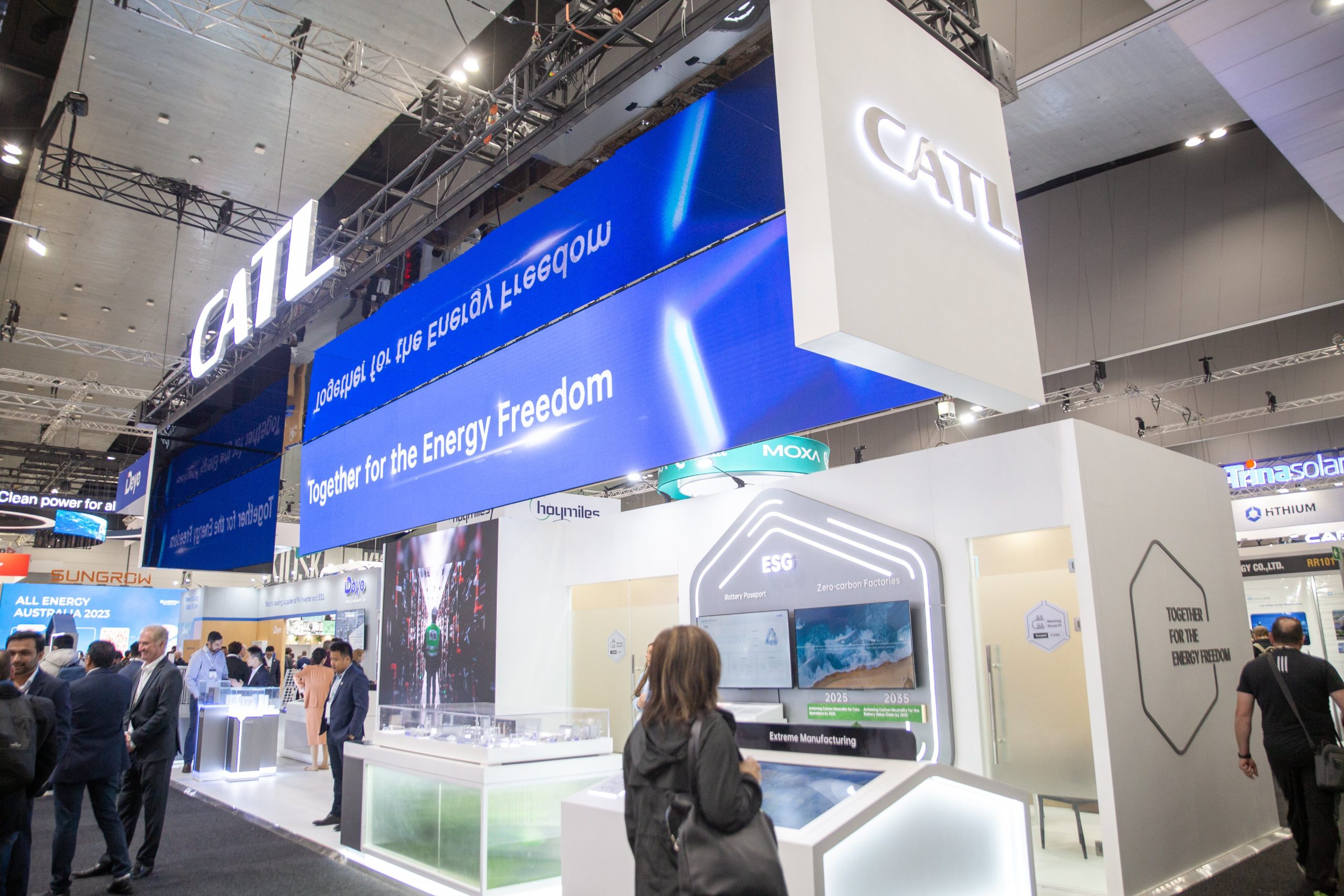
CATL has advanced its all-solid-state battery development to 20 ampere-hour (Ah) sample trials, moving beyond its earlier 10 Ah-class validation platform, according to a report by Y-Auto. The development marks a further step in the company’s efforts to prepare the technology for potential commercial production.
The company provided the update on October 27 in response to investor questions on the Shenzhen Stock Exchange’s Hudongyi platform. CATL is targeting small-batch production in 2027, followed by large-scale manufacturing around 2030.
CATL said its solid-state battery development team comprises more than 1,000 people and has set an energy-density target of approximately 500 Wh/kg. However, the company has not confirmed this figure as a production-cell specification or disclosed the expected output of its 20 Ah sample trials.
20 Ah Cells Mark the Next Development Stage
The move from a 10 Ah-class validation platform to 20 Ah samples indicates progress in CATL’s solid-state battery development. However, sample capacity alone does not establish whether the cells are ready for mass production or suitable for commercial electric vehicles.
Further development will need to demonstrate cell durability, safety, manufacturing consistency and cost competitiveness. CATL has not announced automotive customers, expected trial production volumes or a vehicle launch date linked to the 20 Ah cells.
Manufacturing Readiness Remains a Key Challenge
All-solid-state batteries use a solid electrolyte instead of a liquid electrolyte within the cell. Although the technology is being developed for its potential performance and packaging advantages, several technical challenges remain.
For batteries using sulfide electrolytes, maintaining stable contact between solid components is a significant issue. Electrodes expand and contract during charging and discharging, which can affect interface stability and increase resistance. Sulfide materials are also sensitive to moisture and may release toxic hydrogen sulfide gas when exposed to it, requiring controlled handling and manufacturing conditions.
CATL’s target of approximately 500 Wh/kg is another development objective that will require validation. The company has not disclosed the anode configuration used in the 20 Ah samples or published production-cell performance data.
Production Targets Remain Ahead
CATL is targeting small-batch production in 2027 and large-scale manufacturing around 2030. Reaching these milestones will depend on whether the company can translate its current sample development into reliable cells that can be manufactured consistently at commercially viable cost.
The latest update confirms progress to 20 Ah sample trials, but CATL has not provided evidence that the cells have reached commercial production readiness.