
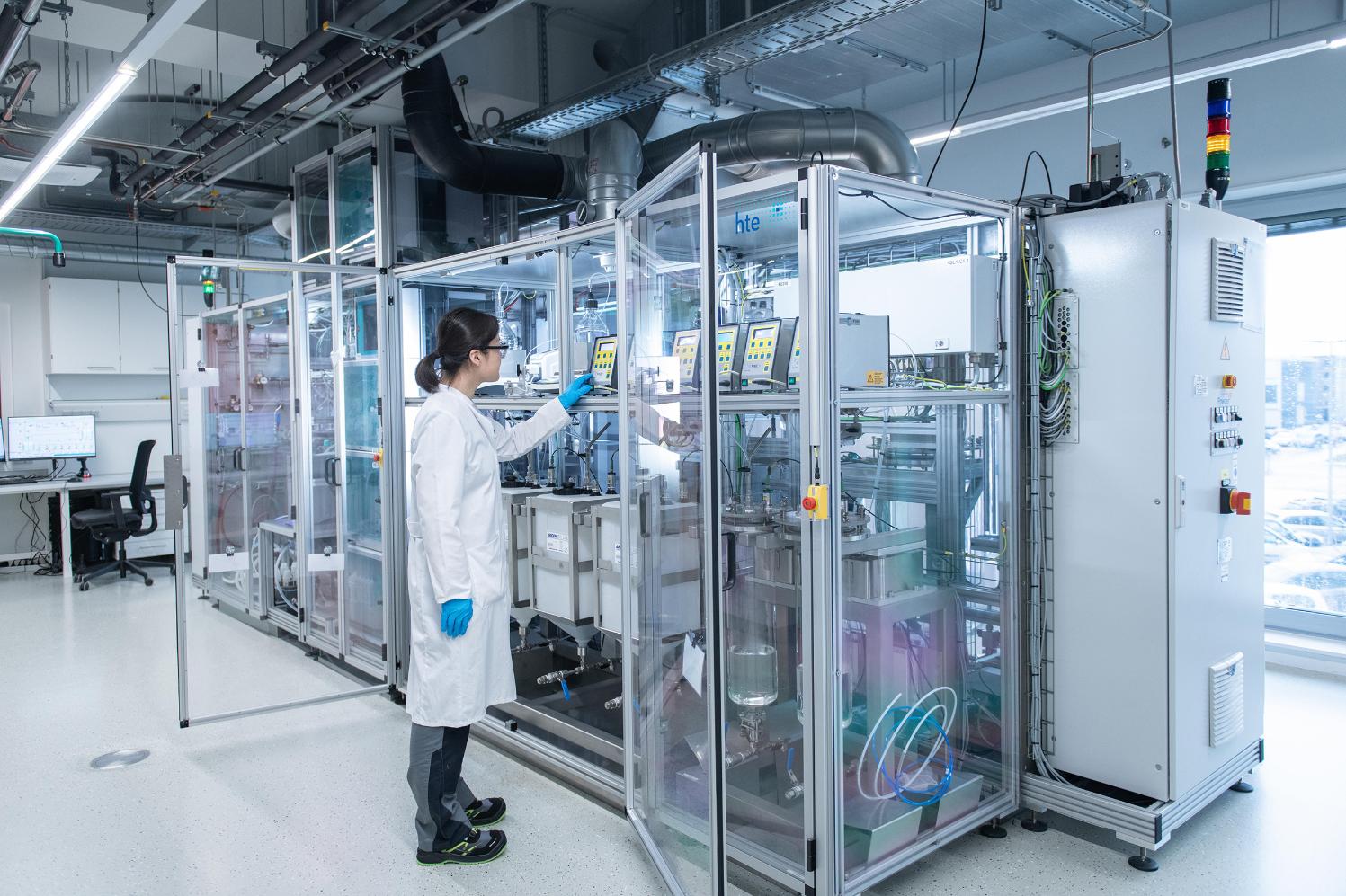
The Centre for Solar Energy and Hydrogen Research Baden-Württemberg (ZSW) has brought its Powder-Up! pilot line for battery cathode materials into full operation in Ulm, Germany, enabling laboratory-scale formulations to be produced in batches of up to 100 kg.
The facility is available to companies and research organisations for collaborative projects involving battery material development, synthesis processes and preparation for industrial production. ZSW describes it as Germany’s first independent facility of its kind.
More than 135 interconnected systems support material synthesis, analysis and quality control. Data collected throughout the process can also be used by artificial intelligence tools to help assess production conditions and material characteristics.
Pilot Line Supports Multiple Battery Chemistries
Powder-Up! is designed to work with several cathode material types, including nickel-manganese-cobalt (NMC), lithium iron phosphate (LFP) and sodium-ion battery materials.
Germany’s ZSW Unveils Pilot Plant for Battery Material Production
During early production runs, the facility scaled initial samples weighing only a few grams to batches of approximately 15 kg. Its furnaces can reproduce industrial heat-treatment conditions at temperatures ranging from 600°C to 1,000°C.
The line’s capacity to increase batch sizes provides a stage between laboratory research and full industrial manufacturing. Companies can use it to evaluate material formulations, test synthesis processes and assess whether a candidate material can be produced consistently at larger volumes.
The facility’s integrated analysis and quality-control systems are intended to help researchers connect production conditions with material properties, while its digital platform provides data for further evaluation.
Public Funding Supports Battery Research Infrastructure
The Powder-Up! facility received approximately €10 million (US$11.2 million) from the state of Baden-Württemberg for the building and around €24 million (US$26.9 million) from the German federal government for equipment. Commissioning took place in March 2025.
The investment provides a shared pilot-scale resource for companies and researchers seeking to develop battery materials without immediately committing to commercial-scale production infrastructure.
Cathode materials are a major cost component of lithium-ion batteries. Testing formulations and manufacturing processes at an intermediate scale can help identify performance or production issues before manufacturers invest in larger facilities.
Supporting European Battery Manufacturing
For European battery manufacturers, access to pilot-scale materials production can help bridge the gap between laboratory research and industrial deployment. It also offers an opportunity to assess alternative chemistries, including LFP and sodium-ion materials, alongside established nickel-based cathodes.
Professor Markus Hölzle of ZSW said the facility is intended to help companies validate materials, develop synthesis methods and prepare for mass production.
“Anyone seeking to produce battery cells competitively in Germany and Europe needs access to the best materials,” Professor Markus Hölzle of ZSW said. “With Powder-Up!, companies can validate their own material concepts for industrial use, jointly develop new synthesis processes, or benefit from the digital data platform. ZSW is therefore the national point of contact for anyone looking to develop improved battery materials and gear them up for mass production.”
By making pilot-scale production and process data available for collaborative projects, ZSW aims to help accelerate the development of battery materials suitable for industrial manufacturing in Germany and the wider European market.