
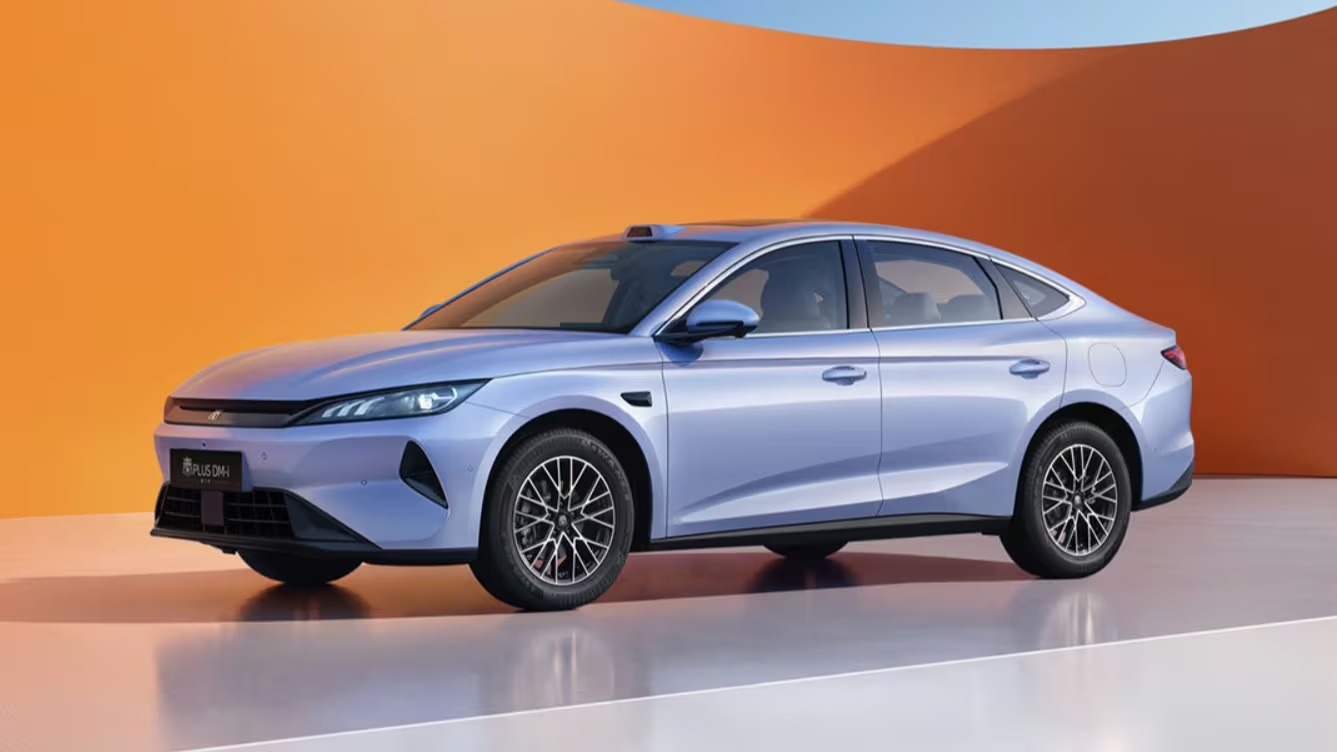
BYD has launched the third-generation Qin Plus DM-i in China, updating its entry-level plug-in hybrid sedan with a larger body, an extended electric driving range and optional LiDAR-based driver assistance.
The new model went on sale Tuesday in three variants, with limited-time prices ranging from 76,900 yuan ($11,450) to 97,900 yuan. Official guide prices range from 79,900 yuan to 100,900 yuan, with each version receiving a temporary 3,000-yuan discount.
The updated sedan retains BYD’s fifth-generation DM hybrid technology and offers a maximum CLTC-rated electric range of 220 kilometres (137 miles), up from 210 kilometres in the previous generation.
Three Variants and Pricing
The third-generation Qin Plus DM-i is available in three configurations:
- 140-km Leading: Guide price of 79,900 yuan; promotional price of 76,900 yuan.
- 220-km Beyond: Guide price of 90,900 yuan; promotional price of 87,900 yuan.
- 220-km Excellence: Guide price of 100,900 yuan; promotional price of 97,900 yuan.
The two higher variants offer the longer electric range, while the entry-level version uses a smaller battery pack.
Larger Dimensions and Updated Styling
The new Qin Plus DM-i measures 4,840 mm long, 1,900 mm wide and 1,498 mm tall, with a wheelbase of 2,800 mm. Compared with its predecessor, the sedan gains 60 mm in length, 63 mm in width, 17 mm in height and 82 mm in wheelbase.
Its exterior receives a redesigned front end and a fastback-style profile. The model retains the Qin family’s full-width rear lights inspired by traditional Chinese knot patterns and introduces a new Island Blue paint option.
The larger dimensions provide additional scope for cabin space, while revised seating and storage arrangements are intended to improve everyday practicality.
Hybrid Powertrain and Battery Options
The plug-in hybrid system combines a 1.5-liter petrol engine with an electric motor. Maximum output is rated at 74 kW for the engine and 120 kW (161 hp) for the electric motor.
Buyers can choose between 16.2-kWh and 24.3-kWh lithium iron phosphate battery packs. The smaller battery delivers a CLTC-rated electric range of 140 kilometres, while the larger pack raises that figure to 220 kilometres.
BYD says charging from 30% to 80% can take as little as 20 minutes.
With a full fuel tank and fully charged battery, the company claims a combined driving range of up to 2,290 kilometres. Fuel consumption is listed at as low as 2.58 litres per 100 kilometres under the NEDC test cycle when the battery is depleted.
These figures are based on specified test conditions; actual range and fuel consumption will vary with driving conditions, temperature and vehicle use.
Optional LiDAR and Updated Cabin Technology
The top-level driver-assistance option is BYD’s God’s Eye B system, which incorporates LiDAR. Its listed capabilities include city navigation on autopilot (CNOA), highway and expressway navigation assistance (HNOA), and a range of intelligent parking functions.
Inside, the new sedan introduces the DiLink 150 infotainment system, paired with an 8.8-inch instrument display and either a 10.1-inch or 12.8-inch central touchscreen. Redesigned seats and additional storage areas round out the cabin updates.
Qin Family Refresh Continues
The Qin Plus is the entry-level model line in BYD’s Qin family, which includes both battery-electric and plug-in hybrid vehicles. The latest launch covers the DM-i plug-in hybrid; a third-generation battery-electric version has previously appeared in regulatory filings.
The broader lineup also includes the Qin L and the higher-positioned Qin Max, which launched in August.
The latest update expands the Qin Plus DM-i’s electric-only capability and adds optional driver-assistance technology as BYD continues to refresh a core sedan range amid declining sales.