
Reliable Robotics has raised an additional $115 million in capital, expanding its previously announced Series D funding round from $160 million to $275 million amid increased investor demand. The latest financing values the autonomous aviation company at more than $1 billion.
The additional capital includes a $25 million term loan from Silicon Valley Bank. Reliable Robotics said it has raised more than $380 million in equity capital to date.
The company will use the funding to expand its aircraft fleet and production facilities, strengthen its engineering workforce and accelerate the development of its autonomous flight technology.
Nimble Partners led the round as a returning investor. New participants include Gideon Capital, RockCreek, Geek Ventures, Gold Hill Capital and Sparkwave Capital, alongside continued investment from Island Green Partners. Allen & Company supported the fundraising process.
Autonomous Flight Designed for Existing Aircraft
Reliable Robotics is developing autonomous aircraft systems intended to improve aviation safety while operating with existing certified aircraft and aviation infrastructure.
Its core technology comprises the Reliable Autonomy System (RAS) and Reliable Radar. The company says the systems are designed to address major causes of aviation accidents, including loss of control (LOC) and controlled flight into terrain (CFIT).
Reliable’s approach aims to enable commercial autonomous operations without requiring changes to the US National Airspace System. The technology is designed to support automated flight operations from gate to gate, including taxiing, takeoff, en-route flight management and landing.
The company has established partnerships across the aviation sector, including with aircraft manufacturers, avionics suppliers and operators.
Commercial and Military Applications
Reliable’s autonomy technology has potential applications in both commercial and military aviation. The company said it has secured contracts with multiple branches of the US military and completed several military airworthiness review processes with the US Air Force.
Its selection for the Federal Aviation Administration’s (FAA) Advanced Air Mobility Integration Pilot Program also enables pre-certification operations in the National Airspace System. Under the programme, Reliable plans to deliver cargo to small and rural communities in New Mexico and Colorado.
The initiative provides an opportunity to demonstrate the technology in practical operations as the company continues pursuing certification.
FAA Certification for Cessna Grand Caravan
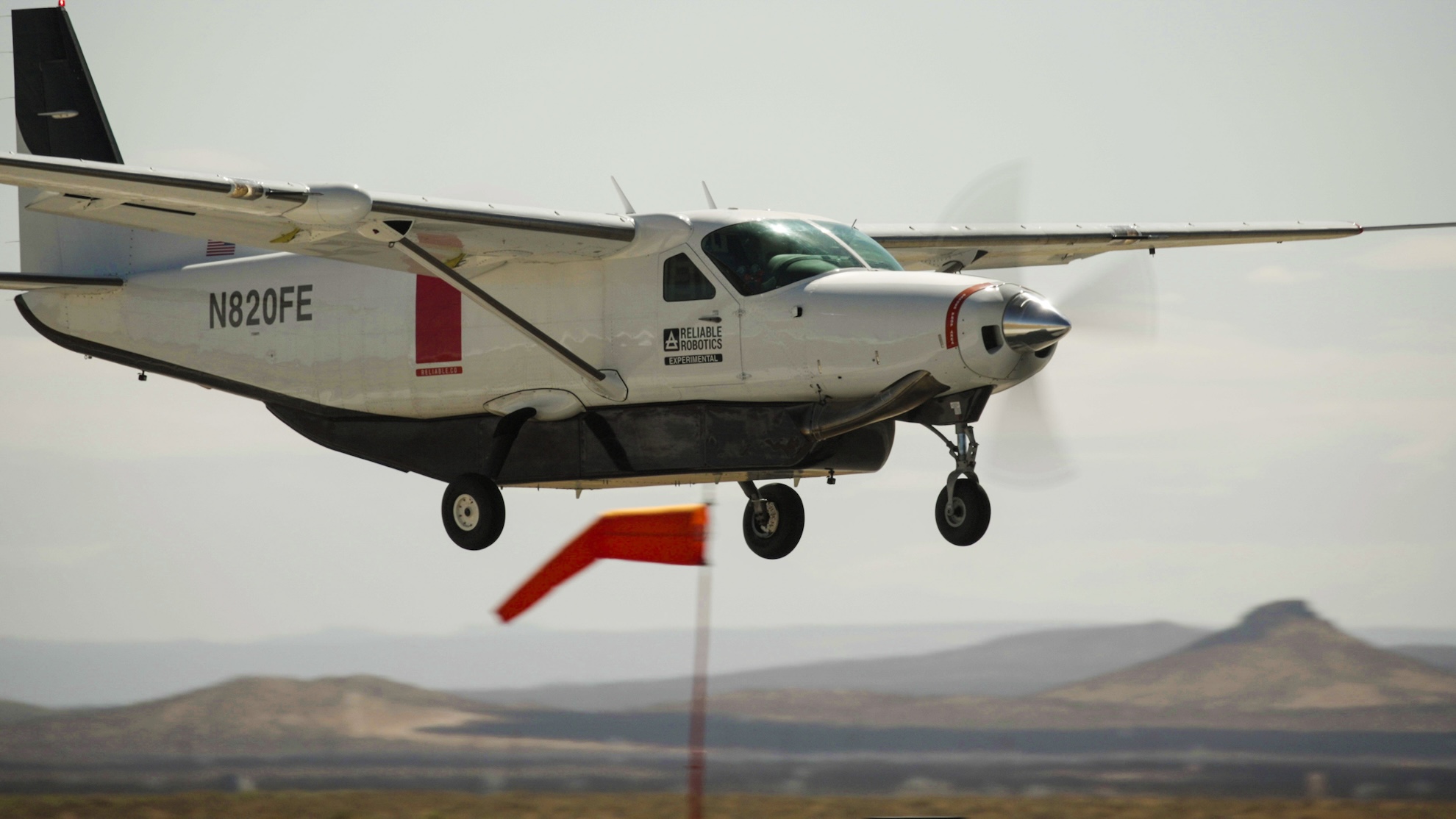
Reliable is working with the FAA to certify its Reliable Autonomy System for commercial operations on the Cessna 208B Grand Caravan.
The company describes RAS as the first FAA-certifiable system designed to enable full gate-to-gate automated aircraft operation. Reliable also says it has secured FAA acceptance of its certification plan and means of compliance, as well as closed issue papers concerning continuous autopilot engagement.
The system combines high-integrity navigation, full-authority flight controls and four-dimensional flight planning. Its intended capabilities include automated taxiing, takeoff, en-route navigation and landing at airports across the United States.
FAA certification remains a key milestone in bringing the system into commercial service.
New Offices Support Engineering Expansion
Alongside the expanded Series D round, Reliable Robotics announced the opening of new offices in Seattle, Washington, and San Diego, California.
The locations will complement its existing operations in Mountain View and San Martin, California, and Albuquerque, New Mexico. The company plans to recruit across engineering disciplines and establish a centre of excellence for its radar programme in Seattle.
Reliable said its workforce has grown to more than 250 employees and that it is continuing to recruit across its office locations.
The additional funding, expanded facilities and hiring plans are intended to help Reliable advance certification work while scaling production of autonomous aviation systems for commercial and defense applications.