
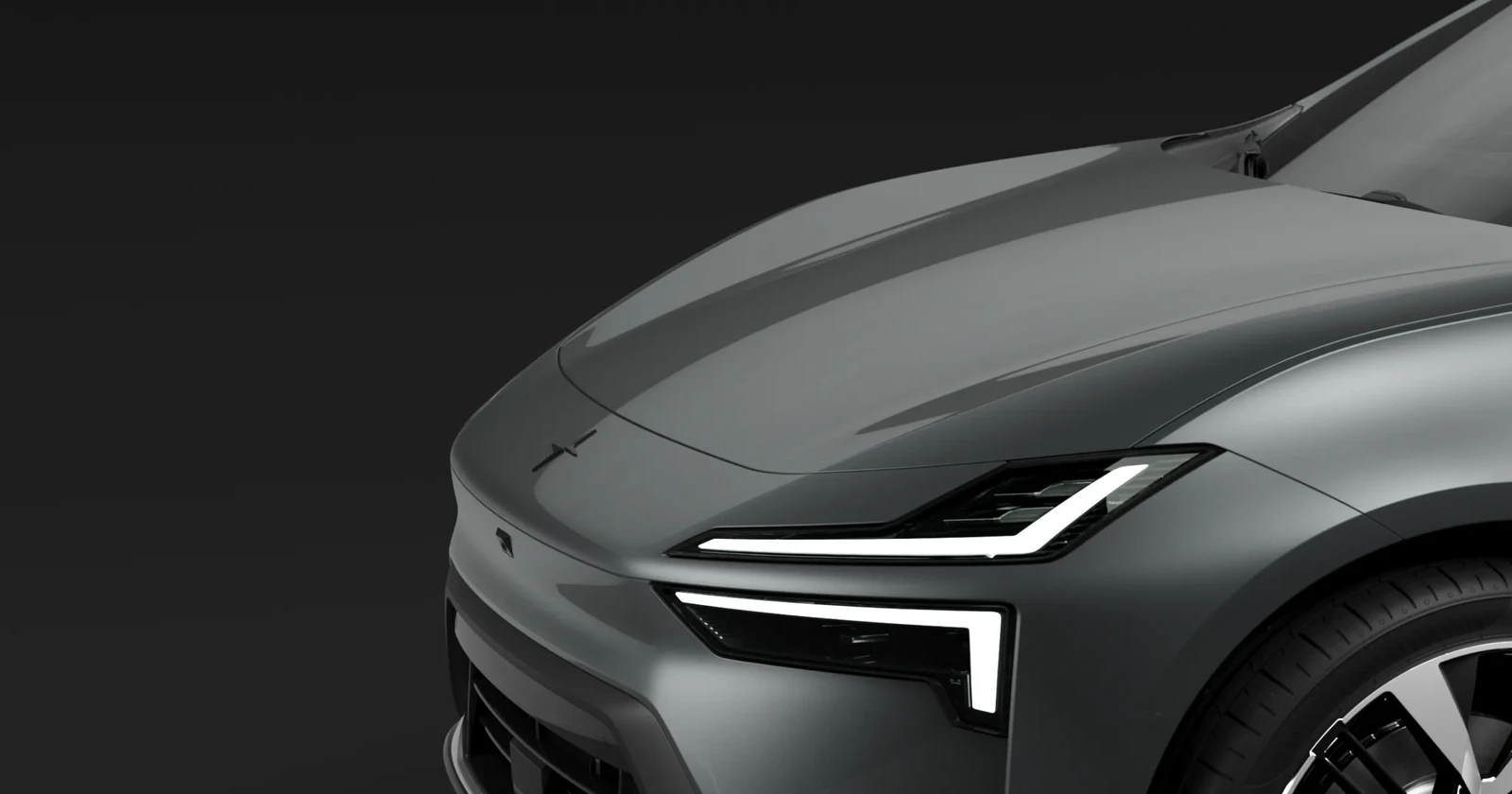
Polestar has partnered with researchers at the University of Oxford’s SDG Impact Lab to investigate how drivers perceive electric vehicle performance, looking beyond conventional measurements such as horsepower and lap times.
The pilot study, released on the 21st, examined the relationship between vehicle dynamics, drivers’ physiological responses and subjective assessments. Conducted at Sweden’s Gotland Ring circuit, the research involved 12 participants who drove both the rear-motor Polestar 4 and the higher-powered Polestar 4 Performance.
Researchers monitored participants’ heart rates and eye movements during everyday and dynamic driving conditions, supplementing the measurements with psychological assessments and interviews.
Performance Differences Despite Similar Lap Times
The most notable findings emerged during high-speed driving, when researchers matched lap times between the two versions.
The Polestar 4 Performance, rated at 544 horsepower, delivered 32% higher peak acceleration than the rear-motor model under the matched-lap-time conditions. It also required 15% less steering effort, while exposing drivers to more frequent cornering loads and strong acceleration.
The subjective assessments reflected these differences. The Performance version received higher scores for both driving dynamics and the overall driving experience.
| Measurement | Polestar 4 Performance | Polestar 4 Rear-Motor |
|---|---|---|
| Peak output | 544 hp | Not specified |
| Peak acceleration under matched-lap-time conditions | Baseline | 32% lower |
| Steering effort required | 15% less | Baseline |
| Performance and driving dynamics score | 89.2/100 | 67.7/100 |
| Overall driving experience score | 93.0/100 | 77.9/100 |
The Performance trim led by 21.5 points in performance and driving dynamics and by 15.1 points in overall driving experience. Most participants rated it more highly in both categories.
Physiological Responses Reveal Driver Engagement
The researchers also identified changes in drivers’ physiological responses during dynamic driving. Participants blinked less frequently, their pupils dilated and their gaze remained fixed for longer periods.
The research team interpreted these patterns as indicators associated with increased concentration and immersion, although the study does not establish them as universal measures of driving enjoyment.
Interviews provided further insight into what participants valued. Drivers highlighted physical stimulation, confidence in the vehicle and a feeling of control over its responses. Some compared the experience to a “controllable roller coaster.”
Max Clapham, a doctoral researcher at Oxford’s SDG Impact Lab, said:
Performance doesn’t just mean going faster — it’s about giving drivers confidence and a sense of control through predictable vehicle responses.
He added:
We’ve taken the first step toward measuring perceived performance by analyzing vehicle motion and driver responses together.
Polestar Seeks a Broader Performance Measurement Framework
Polestar plans to use the findings as a starting point for a framework that incorporates driver responses into vehicle development. The company aims to use the data to refine driving characteristics and performance.
Christian Samson, Polestar’s head of product attributes, said:
As EVs redefine what performance means, we wanted to understand the driver experience that spec sheets alone can’t explain.
He added:
Through our collaboration with Oxford University, we connected vehicle engineering with driver experience and were able to look at performance from a new perspective.
The research reflects a broader question facing EV manufacturers as they develop increasingly powerful electric powertrains: how should performance be evaluated when acceleration figures and lap times do not fully capture the experience behind the wheel?
The study suggests that steering effort, predictable vehicle behaviour and perceived control may contribute significantly to driving satisfaction alongside measurable speed and power.
Early Findings Require Further Validation
The results remain preliminary. With only 12 participants, the pilot is too small to establish whether the findings apply broadly across drivers, vehicle types or driving environments.
Polestar acknowledges the study’s limited scale and says further research will be used to refine the measurement framework.
The next step is to determine whether physiological measurements and subjective feedback can be incorporated consistently into vehicle development. If validated at a larger scale, the approach could give manufacturers another way to assess performance, complementing traditional engineering specifications with a more systematic understanding of the driver experience.