
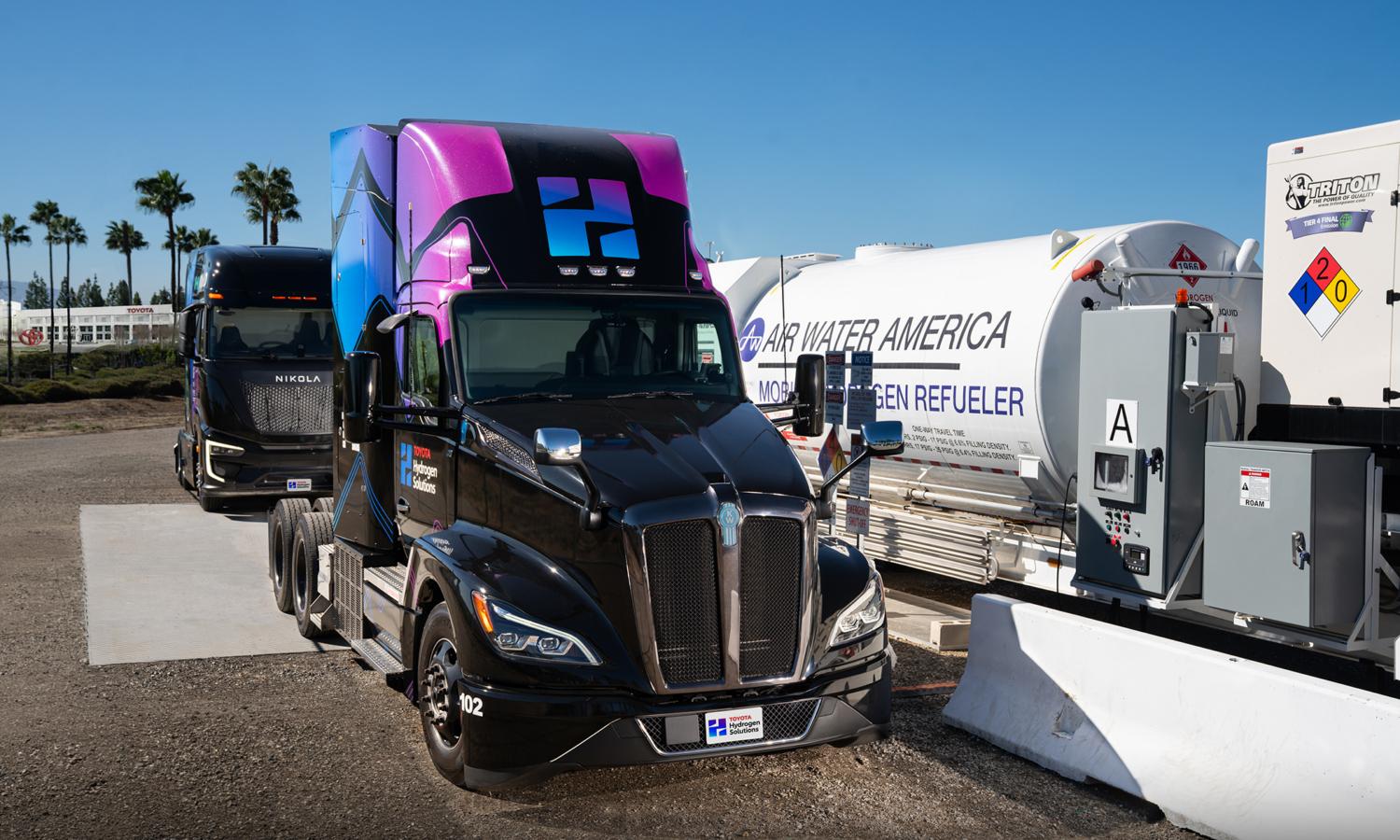
Toyota Motor North America is advancing hydrogen refueling technology for heavy-duty fuel cell trucks, installing mobile fueling equipment at its largest US parts distribution facility in California while preparing for commercial truck operations planned for 2027.
Toyota’s Hydrogen Headquarters (H2HQ) division has installed two mobile hydrogen fuelers at the North American Parts Center California (NAPCC). The equipment will support Toyota logistics operations by refueling heavy-duty fuel cell trucks transporting freight from the Port of Los Angeles to Ontario and other destinations across the region.
A permanent hydrogen fueling station is also planned for the NAPCC site. Initially, it will serve heavy-duty trucks commissioned through Hyroad Energy, with Toyota’s own certified fuel cell powertrain technology expected to be integrated into the fleet later.
Eight-Minute Refueling Demonstrated
Toyota is collaborating with the US Department of Energy’s National Laboratory of the Rockies (NLR) in Golden, Colorado, to develop high-flow hydrogen refueling for heavy-duty vehicles.
The research focuses on 70 MPa hydrogen fueling, designed to deliver hydrogen at rates of up to 300 grams per second. Toyota says this is approximately five times faster than conventional light-duty hydrogen refueling technology.
At that flow rate, the energy delivered to a heavy-duty vehicle is comparable in power terms to a 20 MW fast charger. The objective is to bring hydrogen refueling times closer to those of conventional diesel trucks, reducing downtime for commercial freight operations.
Toyota and NLR engineers and researchers have completed multiple rounds of testing under SAE J2601-5 standards. The trials demonstrated that Toyota-powered heavy-duty fuel cell trucks could be refueled in approximately eight minutes, providing a driving range of up to 450 miles.
Unlike diesel engines, hydrogen fuel cells produce electricity through an electrochemical process, with water as the vehicle’s direct exhaust product.
Commercial Truck Deployment Planned for 2027
Toyota expects production trucks equipped with its fuel cell powertrain to enter commercial operations in 2027.
The combination of rapid refueling and extended driving range is intended to support freight applications where vehicles need to cover long distances while limiting time spent away from service.
The mobile fuelers at NAPCC will help support Toyota’s existing logistics operations as the company prepares for the planned permanent station and wider deployment of heavy-duty fuel cell trucks.
Permanent Station to Serve Heavy- and Light-Duty Vehicles
Toyota also plans to upgrade the private fueling infrastructure at its H2HQ over the coming months. The upgrades will bring high-flow hydrogen fueling capabilities to the facility for heavy-duty vehicle testing.
Additional equipment for light-duty fuel cell electric vehicles will allow Toyota to assess station hardware and gather information aimed at improving reliability and operating performance.
Once the permanent NAPCC station becomes publicly available, Toyota intends to offer both conventional and high-flow hydrogen refueling for heavy-duty trucks, alongside a separate fueling area for light-duty vehicles.
The planned facility would expand access to hydrogen infrastructure in the Southern California freight corridor, where heavy-duty trucks connect ports, distribution centres and inland logistics hubs.
Broader Fuel Cell Development
Toyota continues to develop fuel cell technologies for heavy-duty transport, commercial applications, stationary power generation and passenger vehicles.
The company’s work on high-flow refueling addresses one of the operational requirements for hydrogen-powered freight: supplying enough energy quickly to support demanding vehicle schedules.
The upcoming commercial deployment will provide a further opportunity to evaluate Toyota’s fuel cell powertrain and fueling technology in real-world logistics operations.