
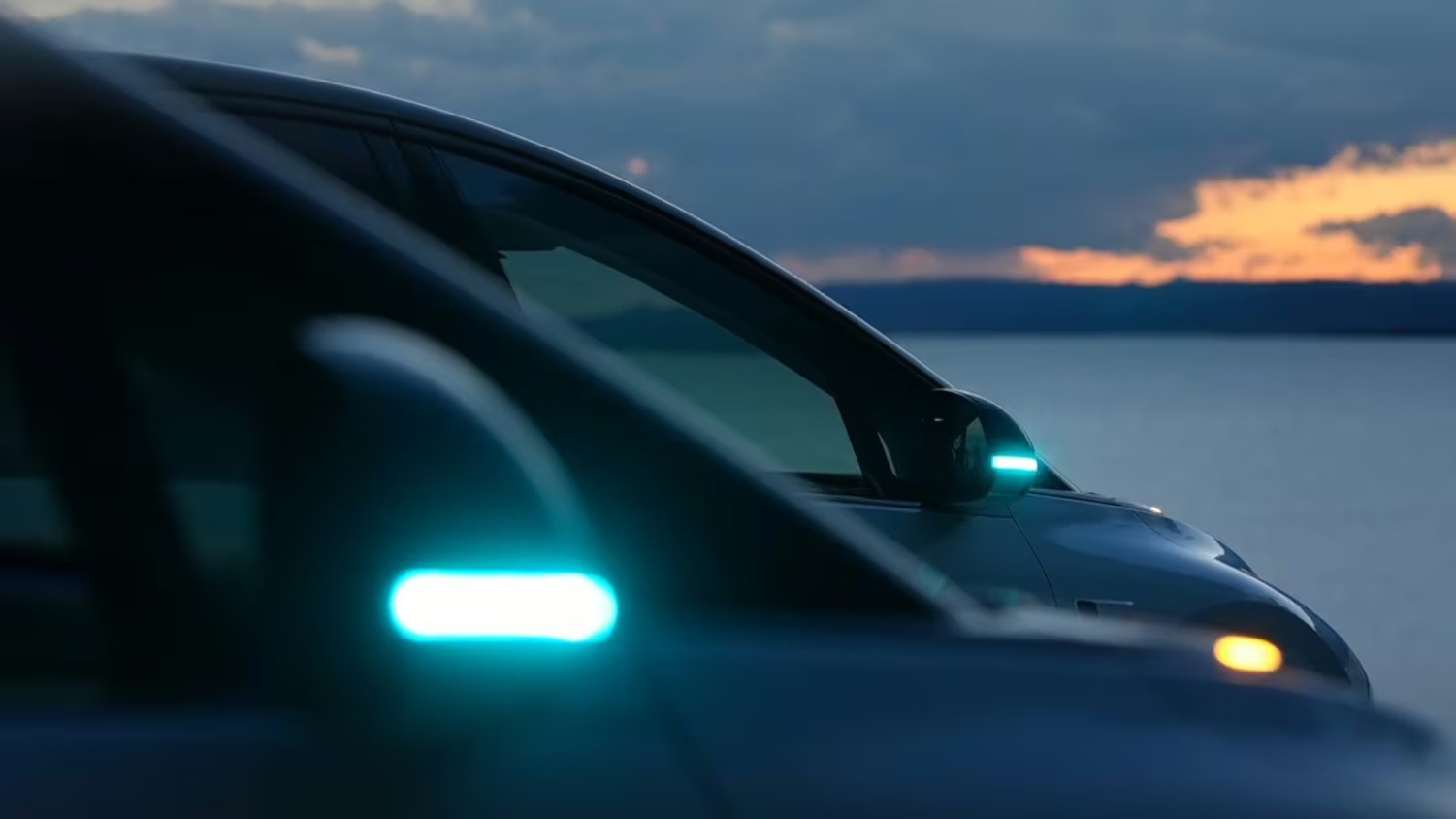
China has proposed a national framework allowing vehicles equipped with Level 3 or higher automated driving systems to use optional turquoise exterior lights to indicate when autonomous driving functions are active.
The Ministry of Industry and Information Technology (MIIT) opened public consultation on Tuesday for five mandatory national standards, including revised requirements for the installation of external lighting and light-signalling devices on motor vehicles and their trailers. The consultation period runs until December 19.
Under the draft, automated driving system (ADS) marker lights could be installed at the front, rear and sides of eligible vehicles. Turquoise would be designated as the specific colour for these indicators, creating a common standard for communicating automated-driving status.
Uniform Rules for Automated-Driving Indicators
The proposed standard would make ADS marker lights optional for vehicles equipped with Level 3 or higher automated driving systems, rather than requiring every eligible vehicle to have them.
If installed, the lights would activate automatically when the automated driving system is engaged and switch off when the system disengages. Drivers would not be permitted to activate or deactivate the indicators manually.
The proposal seeks to establish consistent requirements for what are commonly known in China as “little blue lights.” Automakers have introduced exterior lighting to signal when certain driving-assistance functions are operating, but the absence of uniform rules covering colour, brightness and placement has raised compliance questions.
In July, reports emerged that MIIT had directed passenger vehicle manufacturers to stop fitting such lights because they did not comply with the existing GB 4785 standard. Yicai cited an industry insider who said newly certified models had been prohibited from using them from July 27. MIIT did not publish an official document on the reported restriction at the time.
The new draft would provide a more clearly defined regulatory basis for these indicators, although its provisions remain subject to public consultation and final approval.
Restrictions on Vehicle Lighting Displays
Beyond automated-driving indicators, the draft proposes broader restrictions on the content and operation of exterior vehicle lights.
Except for illuminated logos, lights would be prohibited from displaying text or forming expressive human faces, animal faces or other anthropomorphic patterns.
The proposal would also restrict gesture-based controls for specified categories of lights and prohibit using voice commands to switch them off. If a light is activated through voice control, the vehicle would need to indicate the location of the corresponding manual switch.
Additional requirements would address how lighting functions are integrated. Turn signals and reversing lights could not be reciprocally incorporated with brake lights or rear fog lights under the proposed rules.
For signal lights with variable intensity, brightness adjustments would need to apply across the entire lamp rather than being achieved by switching individual light sources on or off.
These provisions are intended to establish more consistent requirements for vehicle lighting design, signalling and control.
Implementation Could Begin in 2028
The explanatory document accompanying the draft recommends that the revised standard take effect on January 1, 2028.
Transition periods would depend on the specific technical requirement and whether a vehicle model had already received type approval. Some provisions could receive transition periods of up to 48 months.
The proposed rules have not yet been finalised. The consultation process will allow industry participants and other stakeholders to submit feedback before the authorities determine the final requirements and implementation schedule.