
Xpeng’s flying car unit, previously known as Xpeng Aeroht, has been rebranded as Aridge, a move the company said is intended to support more independent development and global expansion.
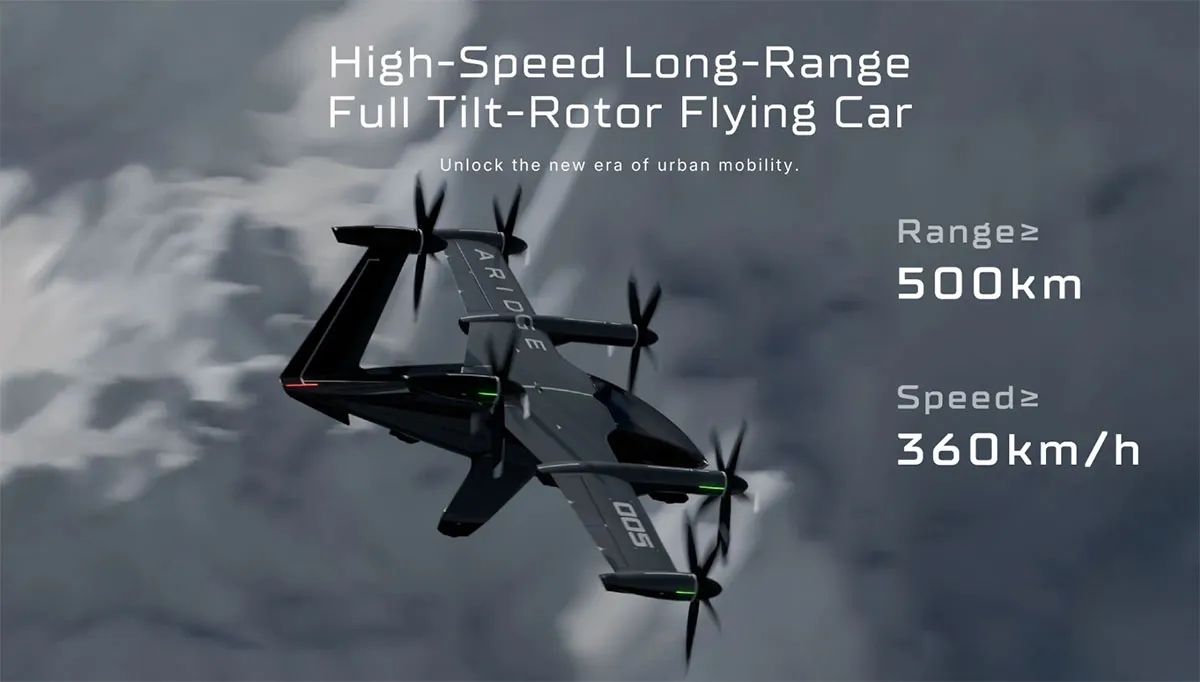
The rebranding was announced at an event in Dubai, where the company unveiled a new logo and revealed a hybrid long-range flying car, the A868, designed with a range exceeding 500 kilometers and a top speed surpassing 360 km/h. The model is scheduled to debut in Guangzhou in November, the company said.
See also: Xpeng Aeroht Secures UAE Permit for Modular Flying Car
Aridge combines “Air” and “Bridge,” symbolizing “a bridge connecting sky and earth through flight,” reflecting the company’s goal to become a global leader in low-altitude flight innovation, according to a statement released on Sunday. “We will pioneer new categories of flying cars under the new brand, delivering more cutting-edge low-altitude products and advancing the popularization of low-altitude flight,” Aridge CFO and vice president Du Chao said.
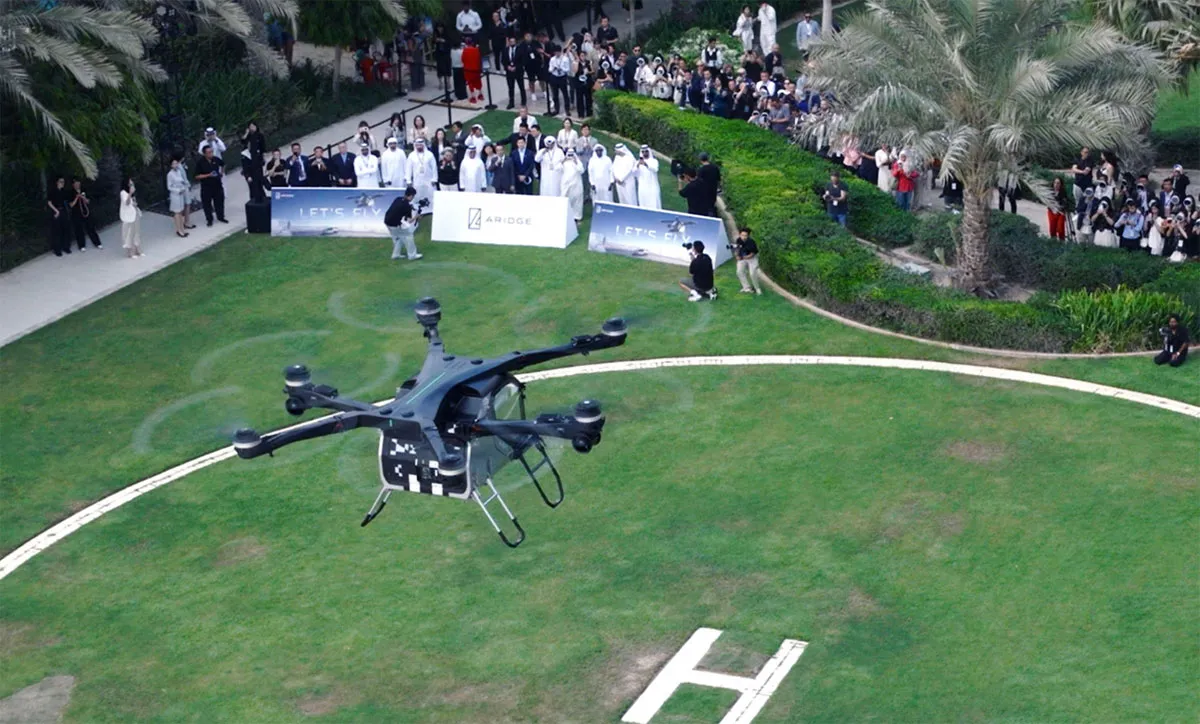
At the Dubai event, the company showcased the Land Aircraft Carrier, completing the first overseas public demonstration of a manned flight for the modular flying car. Aridge said it signed agreements with UAE’s Ali & Sons Group, Qatar’s Almana Group, Kuwait’s AlSayer Group, and the Chinese General Chamber of Commerce UAE for the first batch of 600 flying car orders in the Middle East, representing the industry’s largest overseas bulk order to date.
See also: Xpeng Aeroht Secures $250 Million in Series B Funding to Accelerate Flying Car Production

Cumulative orders for the Land Aircraft Carrier have reached 7,000 units, the company said. Aridge plans to enter the Middle East market as early as 2027.
The company also announced the completion of its smart manufacturing base in Guangzhou at the end of September, claiming it is the world’s first flying car smart plant with modern assembly lines for mass production. The facility is expected to have an annual production capacity of 10,000 units, with one aircraft produced every 30 minutes once full-scale production begins in 2026.