
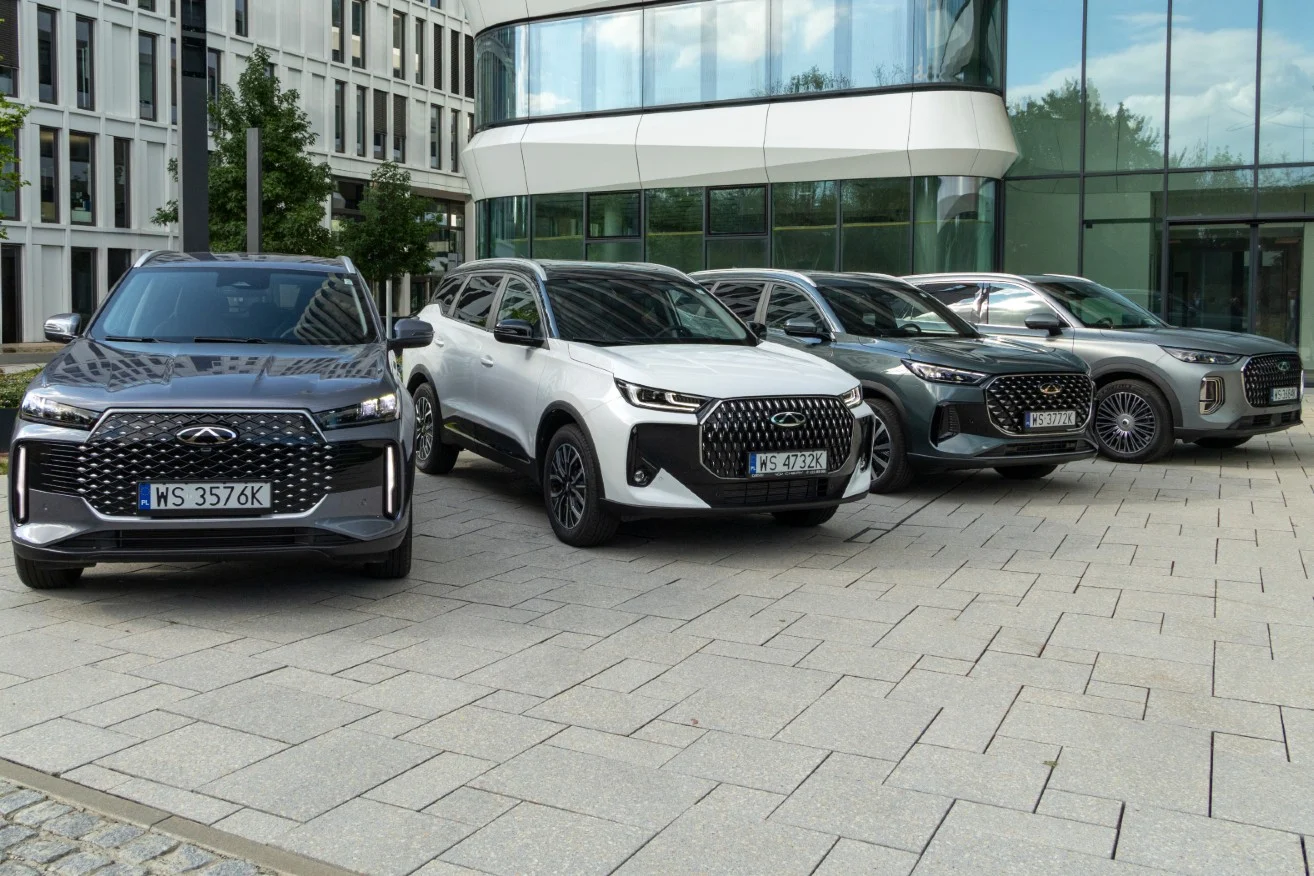
Chery Group reported a 5.25% year-on-year increase in vehicle sales in October, supported by record new energy vehicle (NEV) deliveries and strong overseas demand, with exports exceeding 200,000 units for the third time this year.
The Chinese automotive group sold 295,934 vehicles in October, bringing its total sales for the first 10 months of the year to 2,502,723 units, up 9.34% from the same period in 2025, according to figures released on Sunday.
NEVs continued to drive growth. Chery Group sold 140,893 NEVs in October, an increase of 27.7% year-on-year. Monthly NEV sales remained above 100,000 for the seventh consecutive month.
Cumulative NEV sales reached 999,417 vehicles between January and October, up 43.2% year-on-year. The total had already exceeded the group’s full-year NEV sales in 2025.
Exports Account for More Than Two-Thirds of Sales
International markets remained a major contributor to Chery’s performance. The group exported 200,618 vehicles in October, up 58.67% from a year earlier. Exports represented approximately 68% of its total monthly sales.
For the first 10 months, overseas deliveries totalled 1,751,766 vehicles, an increase of 64.8% year-on-year and equivalent to around 70% of the group’s overall sales.
Chery is also expanding its presence in Europe. The company said it sold 292,000 vehicles across 24 European countries during the first three quarters of the year, representing growth of 182% compared with the same period in 2025. NEVs accounted for more than 146,000 of those deliveries, up 251%.
The automaker is pursuing further international expansion through potential local manufacturing and new brand launches. Bloomberg reported on October 23 that Chery was considering vehicle production in Canada and planned to begin selling vehicles in the country in 2027.
Its iCar brand is also preparing to enter the UK market under the overseas name iCaur. Sales of its first model, the V27, are expected to begin in early 2027.
Listed Chery Auto Records Highest Monthly Sales of the Year
Separately, Hong Kong-listed Chery Auto (HKEX: 9973), which reports sales across five brands, recorded 282,458 vehicle sales in October. This was an increase of 7.21% year-on-year and 1.99% from September, marking its highest monthly total this year.
The listed company’s October performance represented its eighth consecutive month of year-on-year sales growth and fifth consecutive month of month-on-month increases, according to data compiled by CnEVPost.
Sales from January through October reached 2,359,349 vehicles, up 10.13% year-on-year.
Chery Auto sold 132,023 NEVs in October, an increase of 28.17% year-on-year and 6.34% month-on-month. NEVs accounted for 46.74% of its total sales.
Exports reached 194,674 vehicles, up 61.53% year-on-year but down 3.11% from September. Domestic sales totalled 87,784 vehicles, representing a 38.59% annual decline but a 15.47% monthly increase.
Chery Brand Offsets Declines Across Other Divisions
Among the listed company’s five brands, the namesake Chery brand was the only one to record year-on-year sales growth in October, offsetting declines at Jetour, Exeed, iCar and Luxeed.
The Chery brand sold 200,571 vehicles during the month, up 18.19% year-on-year and 0.95% from September. It accounted for the majority of the listed company’s October deliveries.
Jetour recorded sales of 58,443 vehicles, down 1.07% year-on-year but up 1.65% month-on-month.
Exeed sold 5,637 vehicles, representing a 40.63% annual decline, although sales increased 14.92% from September. iCar deliveries reached 11,717 vehicles, down 5.45% year-on-year but up 7.91% month-on-month.
Luxeed recorded the steepest annual decline among the five brands. Its October sales totalled 6,090 vehicles, down 52.46% year-on-year for a second consecutive monthly decline. Deliveries nevertheless increased 21.61% from September.
Luxeed sold 49,713 vehicles in the first 10 months of the year, down 29.57% compared with the corresponding period in 2025.
The October figures show Chery’s growing reliance on overseas markets and NEVs for expansion. However, the divergence between strong export performance and declining domestic sales, particularly across several of its subsidiary brands, highlights the uneven nature of its growth.