
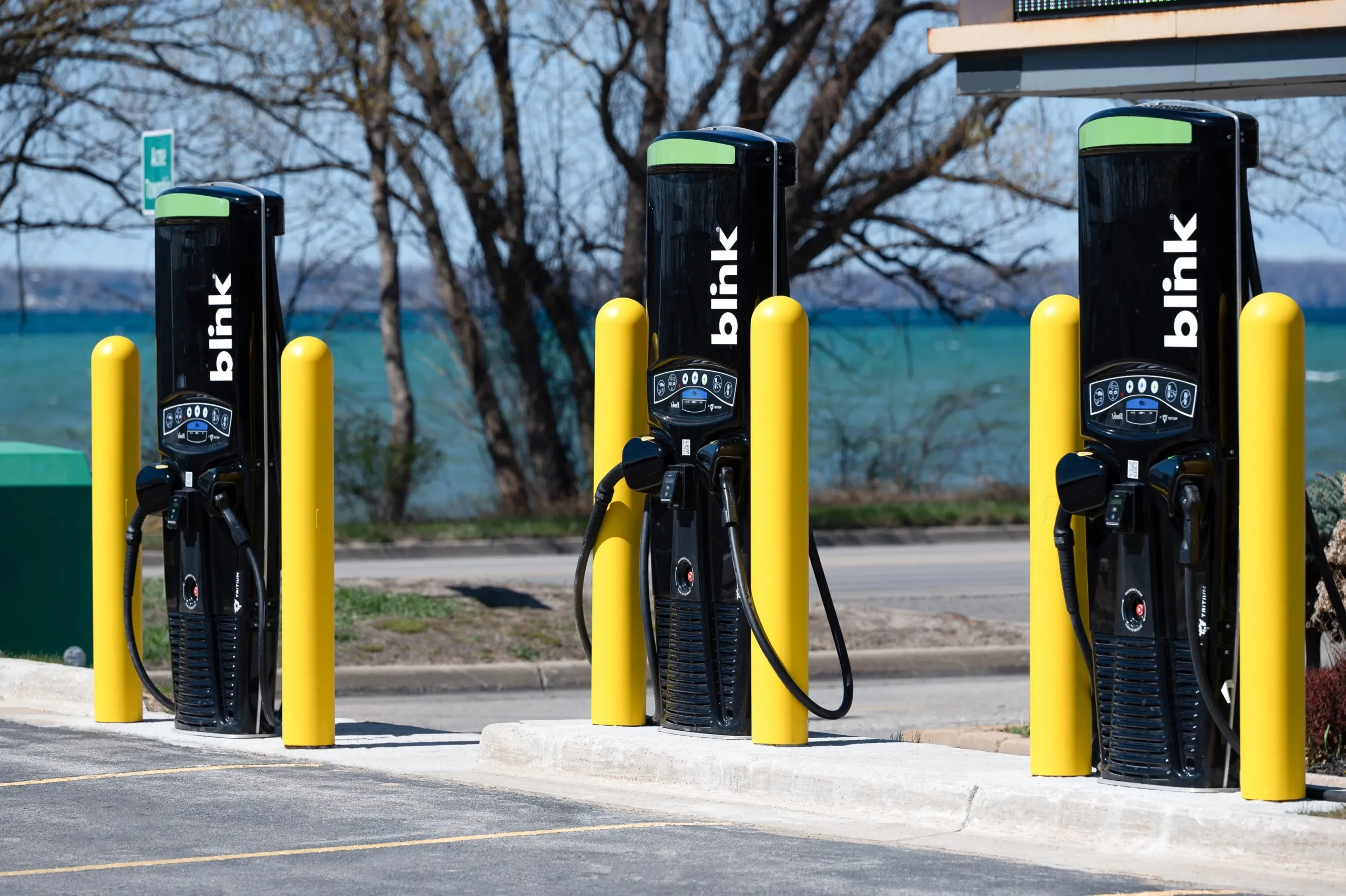
Blink Charging plans to change its corporate name to Blink Energy as it expands beyond electric vehicle charging into energy management software and battery energy storage. Announced on October 29, the proposed rebranding reflects the company’s strategy to combine charging infrastructure with technologies that help businesses manage electricity demand, available grid capacity and operating costs.
The company, headquartered in Henderson, Nevada, says its network of more than 48,000 connected chargers worldwide provides an established customer base for its broader energy services. Blink intends to offer these solutions to existing customers as well as businesses seeking greater control over their electricity consumption.
Energy Management Targets Charging Costs
For commercial property owners and charging network operators, electricity costs and grid capacity can present significant challenges when expanding EV charging infrastructure.
Utility demand charges can increase operating expenses, particularly at sites with DC fast chargers. Limited electrical capacity can also restrict the number of charging points that operators can install without upgrading their grid connections.
Blink’s strategy combines EV charging equipment with software-based load management and battery storage. The company aims to help customers balance electricity consumption, manage peak demand and expand charging capacity while controlling energy costs.
President and CEO Mike Battaglia said the proposed name change reflects this broader business direction.
“Customers want to add charging capacity while keeping electricity costs under control,” Battaglia said in the announcement. “Blink Energy reflects our strategy to bring charging, energy management and battery storage together to meet those needs—and build a broader recurring revenue business in the process.”
EnergyConnect Records Early Demand Reduction
A central component of the strategy is EnergyConnect, an AI-driven energy management platform designed to work with Blink charging equipment.
The software balances charging loads in real time, manages peak electricity demand and helps operators accommodate additional chargers within existing electrical capacity.
EnergyConnect has been deployed at 52 Blink-owned DC fast-charging locations, with 26 sites actively using its load management capabilities.
Blink reports that early utility billing data indicate reductions in peak demand following activation. At one location, billed peak demand declined by 23% during the first month of implementation in September 2026.
The company describes the result as preliminary and specific to that individual site. It has not provided evidence that the same reduction can be achieved across its wider network.
Blink plans to make EnergyConnect available to customers throughout the United States and Europe. The company sees software subscriptions as an opportunity to develop a more recurring revenue stream alongside its charging infrastructure business.
Battery Storage Planned for Selected Charging Locations
Blink is also preparing to introduce battery energy storage at selected charging sites, particularly locations with high utility demand charges.
The company has identified several potential deployment locations where battery systems could be integrated with EV charging infrastructure through EnergyConnect. Further installations will depend on local electricity rates, site conditions and the commercial viability of each project.
Battery storage can complement software-based load management by storing electricity for use during periods of higher demand. This approach could reduce the amount of power drawn directly from the grid during peak periods and help operators manage related electricity costs.
Blink has not disclosed the number of planned battery storage installations or an implementation timetable.
Broader Business Beyond EV Charging
The planned transition to Blink Energy marks a strategic expansion for the company as it seeks to address a wider range of energy infrastructure requirements.
By combining its global charging network with energy management software and battery storage, Blink aims to serve businesses looking beyond the installation of charging equipment toward more integrated electricity management solutions.
The company has not announced an effective date for the corporate name change. Its next phase will depend on the commercial rollout of EnergyConnect and the development of battery storage projects across suitable charging locations.