

Chinese electric vehicle manufacturer Xpeng is considering expanding its European production capacity beyond its existing contract manufacturing arrangement with Magna in Austria, as it prepares for proposed European Union rules that could introduce minimum local-content requirements for electric vehicles.
Xpeng vice president Yeqing Zheng told Reuters at the Paris Motor Show 2026 that the company expects to decide on a new production line within the coming months.
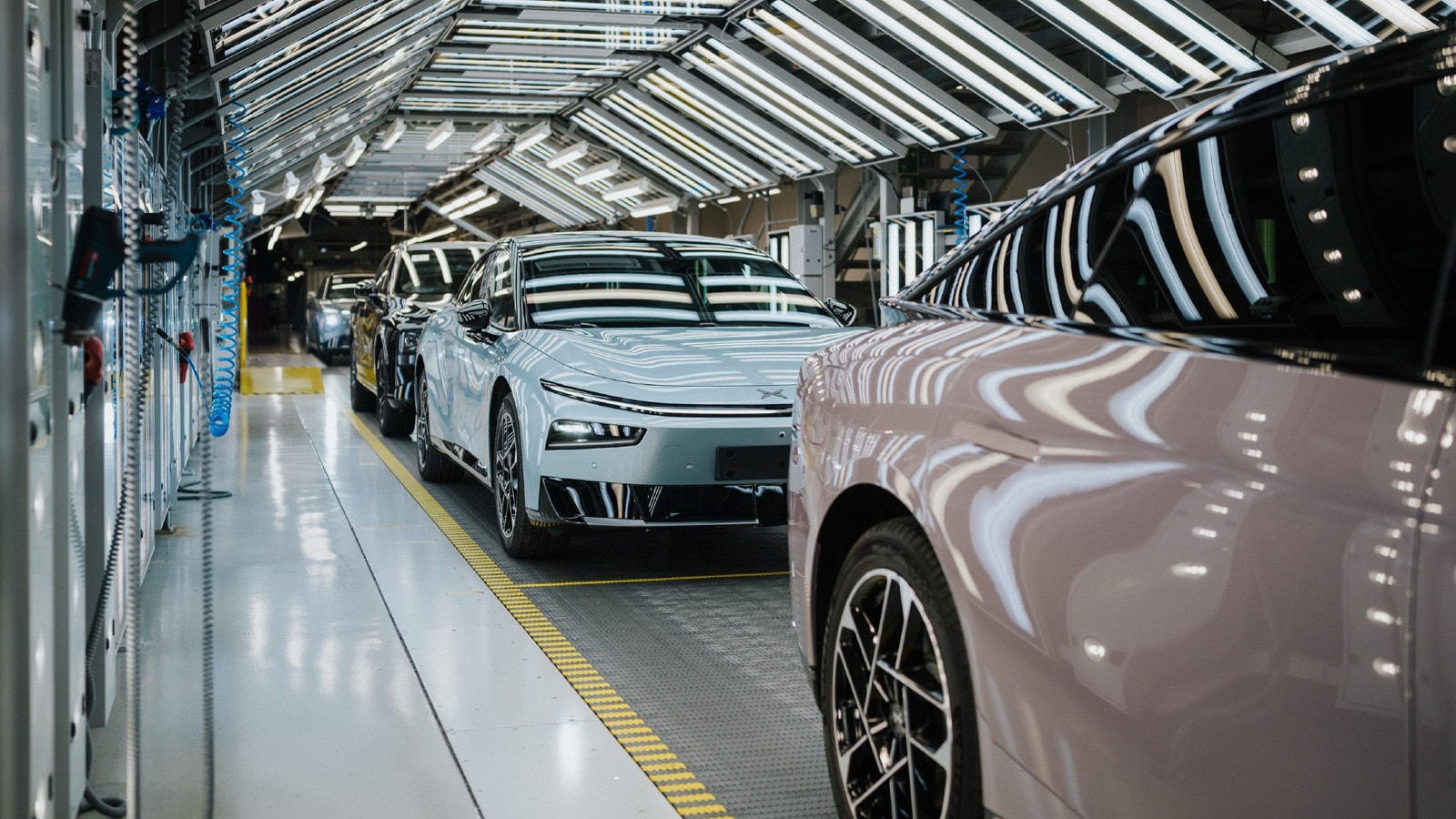
The company currently relies on Magna’s Austrian facility for contract vehicle manufacturing. However, Zheng said the existing production volume is insufficient to meet Xpeng’s anticipated growth in Europe.
Xpeng expects its European business to continue growing at a “high double digits” rate, Zheng said, adding that the Austrian volume “is not even sufficient” to meet that demand.
New Production Capacity Under Consideration
Xpeng is evaluating a manufacturing partnership with a local company to establish additional production capacity in Europe. Options include building a new factory or operating an existing facility.
The proposed production line would focus on “mid-level” vehicles and require a lower cost base than the current Austrian arrangement. Xpeng has not disclosed a potential location, manufacturing partner, investment amount or planned production volume.
The company wants the additional line to be operational by the time the EU’s proposed “Made in Europe” rules take effect. The timing suggests that regulatory developments are an important consideration in Xpeng’s manufacturing plans, although the final requirements and implementation schedule have yet to be confirmed.
Local-Content Requirements Shape Manufacturing Plans
The EU’s proposed local-content rules could affect how automakers organize vehicle assembly and source components for the European market. For Xpeng, expanding regional manufacturing could help align its operations with potential future requirements while increasing production capacity closer to customers.
The company has not detailed how much of each vehicle it would need to manufacture or source locally under the proposed framework. The impact will depend on the final rules, including how local content is defined and which components or production activities qualify.
Xpeng’s current contract manufacturing arrangement in Austria provides an existing European production base. Its proposed expansion would go beyond that setup by adding capacity through another local manufacturing partnership.
Battery Sourcing Remains a Key Hurdle
Establishing a regional supply chain is another part of Xpeng’s expansion plans, with battery sourcing among the main challenges.
Zheng said finding a European battery supplier capable of meeting Xpeng’s requirements would be “challenging.” The company needs cells that support its fast-charging technology while providing the required energy density.
Xpeng is working to develop a local supply chain, but it has not announced a European battery partner or confirmed where battery production and other key components would be sourced.
The availability of suitable local suppliers could influence how much of the vehicle supply chain Xpeng can establish in Europe and how quickly the proposed production line can become operational.
European Sales Targets and Model Expansion
Xpeng’s manufacturing plans are linked to its longer-term ambitions for the European market. Chairman and CEO He Xiaopeng said the company aims to sell 1 million vehicles annually worldwide by 2030, with Europe expected to account for approximately 500,000 units, according to a Bloomberg report dated October 12, 2026, covering an interview at the Paris Motor Show.
The target would make Europe a significant part of Xpeng’s global sales strategy and increase the importance of production capacity and supply-chain development in the region.
On October 12, Xpeng also unveiled its G9L flagship electric SUV in Europe. The six- and seven-seat model expands the company’s European lineup, with starting prices ranging from €74,600 in Germany to €75,990 in the Netherlands.
The planned manufacturing expansion could help support the company’s sales ambitions, although Xpeng has not confirmed whether the G9L or other specific models would be built at the proposed facility.
Decision Expected Within Months
Xpeng’s next steps will depend on negotiations with potential manufacturing partners, the development of its regional supply chain and the direction of EU local-content policy.
Zheng said the company expects to make a decision on the new production arrangement within months. Until then, the location, scale and timetable of the proposed expansion remain unconfirmed.