
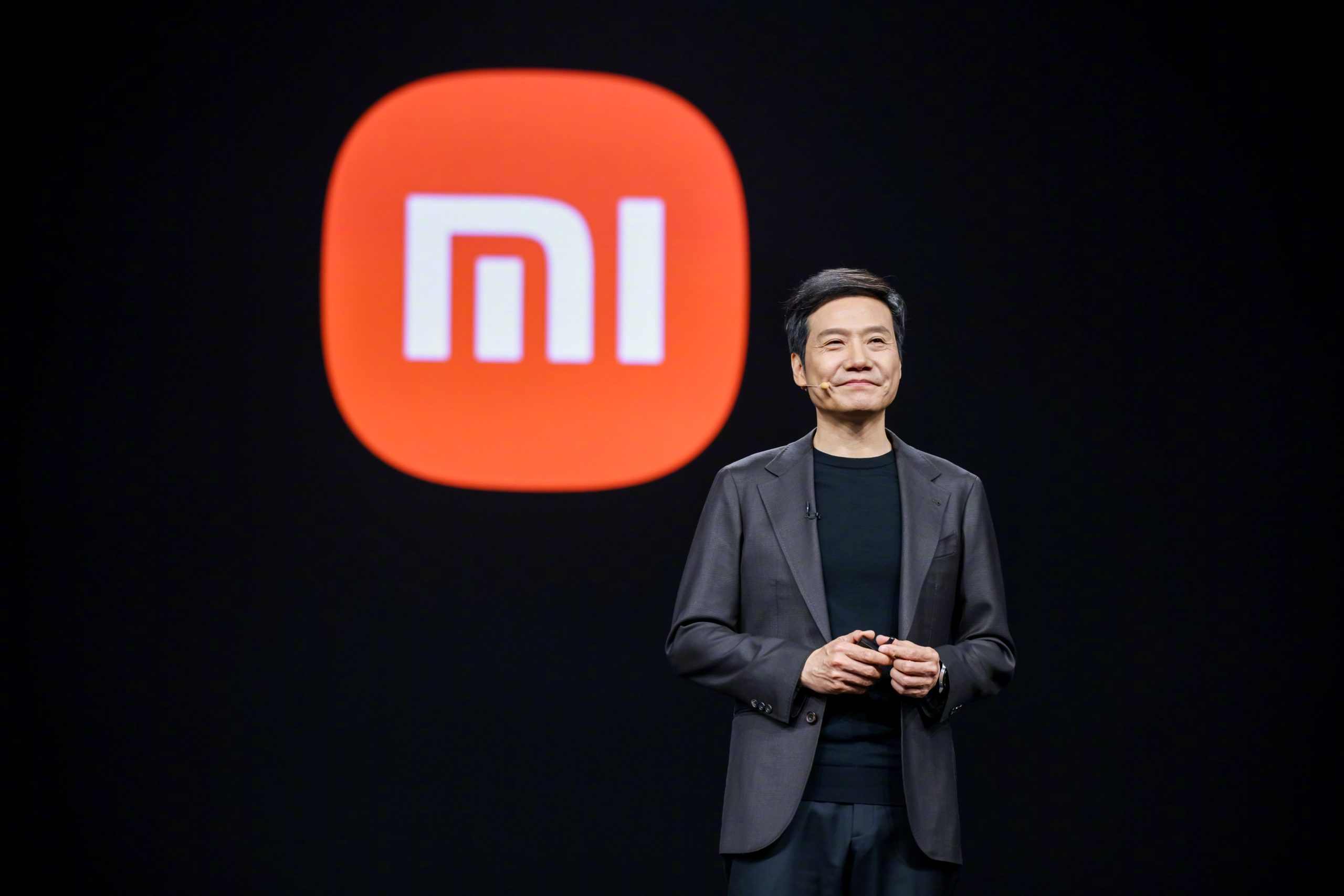
Xiaomi founder, chairman and chief executive Lei Jun has defended the company’s decision to enter the extended-range electric vehicle (EREV) market, saying the segment remains far from saturated and continues to present significant growth opportunities.
In a post published on Weibo ahead of Xiaomi’s Sky Nomad technology launch event, Lei addressed questions about why the company is introducing EREVs and whether it is entering the market too late.
Lei Says EREV Market Still Has Growth Potential
Lei rejected the view that demand for extended-range electric vehicles has peaked, pointing to the recent performance of Li Auto’s new-generation Li L6 as evidence of continued consumer interest.
Xiaomi Reveals 505 km Electric Range for First Extended-Range Sky Nomad SUVs
He noted that sales of the updated Li L6 have continued to increase following its launch while having no apparent impact on demand for the company’s battery-electric Li i6.
“Contrary to many widely held views, the EREV market is far from saturated and instead still offers enormous potential.”
Lei said the performance of the Li L6 demonstrates that demand for well-designed extended-range electric vehicles remains strong and that consumers continue to value the technology.
Li Auto introduced the new-generation Li L6 in July at a starting price of 249,800 yuan (approximately US$36,790), with deliveries beginning shortly after its launch.
Sky Nomad Marks Xiaomi’s Entry Into EREV Segment
Xiaomi is scheduled to unveil its first extended-range electric vehicles at its Sky Nomad technology launch event, where the N90 Max and N70 Max SUVs will make their official debut.
The launch represents the company’s first expansion beyond battery electric vehicles after previously introducing the SU7 sedan and YU7.
Xiaomi Reveals First HD Exterior Images of Sky Nomad N90 SUV
Lei said the decision to develop EREVs was driven by product positioning rather than competition between different powertrain technologies.
According to him, the SU7 and YU7 were designed as driver-focused battery electric vehicles emphasizing acceleration, handling and driving dynamics, making a fully electric architecture the most suitable solution.
The Sky Nomad lineup, however, has been developed as a family-oriented intelligent SUV offering greater cabin space, longer travel capability and refueling flexibility.
Large SUVs Present Challenges for Fully Electric Designs
Lei said large SUVs naturally generate greater aerodynamic drag and carry more weight than smaller passenger vehicles.
Equipping such vehicles with sufficiently large battery packs to achieve long driving ranges would further increase weight, reducing overall efficiency.
He added that modern extended-range electric systems have advanced significantly and should no longer be compared with earlier generations of the technology.
According to Lei, Sky Nomad models will deliver up to 505 kilometers of battery-only driving range under the China Light-Duty Vehicle Test Cycle (CLTC), allowing many urban drivers to operate the vehicles much like fully electric models by charging approximately once a week.
Xiaomi YU7 GT Sets Nürburgring Autonomous Driving Lap Record for Production SUV
When operating with the range extender, the rear-wheel-drive N70 series is expected to achieve fuel consumption of as low as 5.7 liters per 100 kilometers, while the all-wheel-drive N90 series is rated at 6.26 liters per 100 kilometers.
Lei said the range-extender system is compatible with China’s major gasoline grades, including 92, 95 and 98 octane fuel. He added that after the initial service, maintenance for the range extender is scheduled every three years or after every 30,000 kilometers of range-extender operation.