
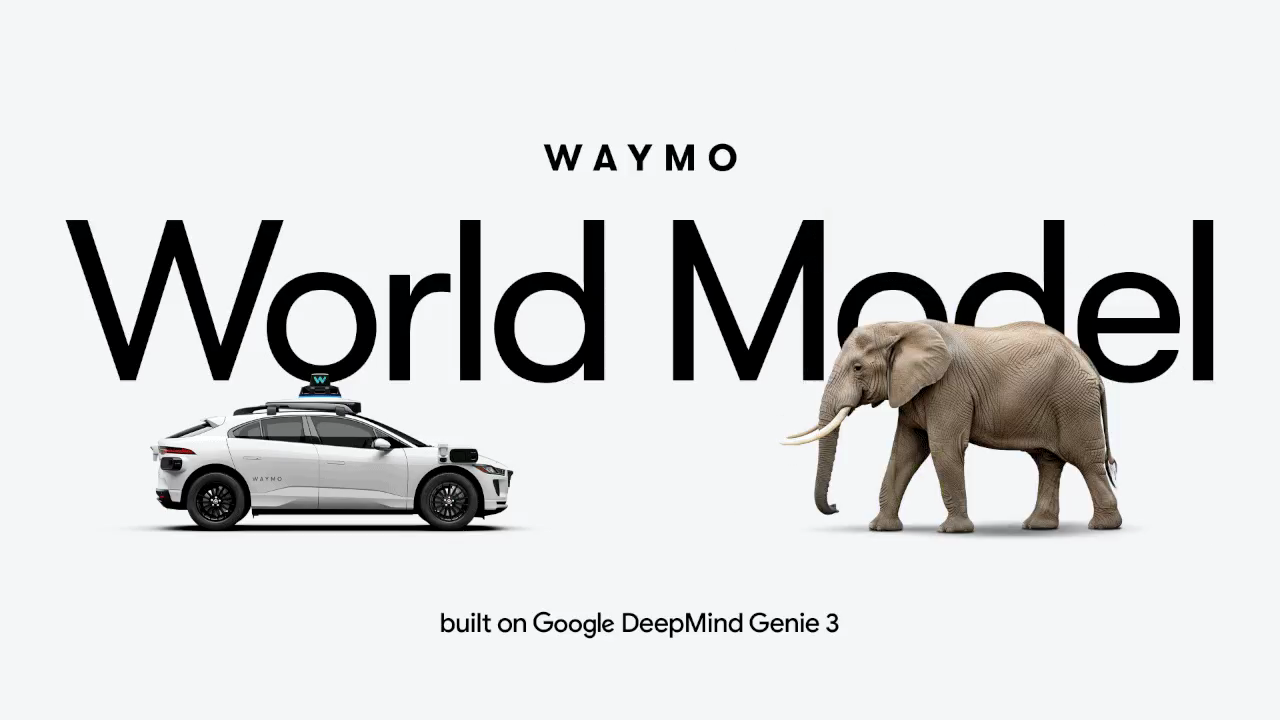
Waymo said on Friday it is introducing a new generative artificial intelligence system, called the Waymo World Model, to simulate rare and extreme driving scenarios as the Alphabet-owned company seeks to improve the safety and resilience of its autonomous vehicles.
The move comes after Waymo’s vehicles have accumulated more than 200 million miles of autonomous driving on public roads, providing the company with one of the largest real-world datasets in the self-driving industry. Still, Waymo said some events are so uncommon that they are unlikely to appear even in hundreds of millions of miles of real-world testing.
See also: Waymo Plans Robotaxi Expansion to Sacramento and Boston
To address those gaps, Waymo will combine its existing high-definition road data with simulated environments generated using Google’s Genie 3 model, a so-called “world model” designed to replicate physical environments and their underlying dynamics, including weather, motion and spatial interactions.
“By simulating the ‘impossible,’ we proactively prepare the Waymo Driver for some of the most rare and complex scenarios,” the company said in a statement.
Unlike large language models, which predict text sequences, world models are trained to recreate how physical systems behave. Waymo said this allows its autonomous driving software to be tested in scenarios that go beyond its existing camera and lidar data, including extreme weather events, natural disasters, sudden road hazards and highly unusual encounters.
See also: Waymo Secures $16 Billion in New Funding to Speed Robotaxi Expansion
The company said examples include navigating through floodwaters, responding to falling debris after accidents, or encountering unexpected obstacles on the road. Such simulations are intended to complement, rather than replace, real-world testing.
Waymo’s approach reflects a broader trend in the artificial intelligence sector, where companies are increasingly exploring generative world models as a way to train systems in environments that would be costly, dangerous or impractical to recreate in reality.
Still, the technology has limitations. Early versions of consumer-facing world models have shown inconsistencies, and researchers note that simulated environments can still produce errors or unrealistic behavior. Waymo acknowledged that the system will evolve over time as it refines the model and incorporates additional feedback.
See also: Waymo Opens Public Robotaxi Service in Miami With 60-Square-Mile Coverage
The announcement comes as autonomous vehicle developers continue to face scrutiny over how their systems handle unusual or unexpected situations. Waymo has said it is continuously updating its software based on both real-world driving and simulated testing.
Waymo currently operates commercial robotaxi services in several U.S. cities and has positioned safety validation as a central pillar of its deployment strategy as it expands autonomous ride-hailing operations.