
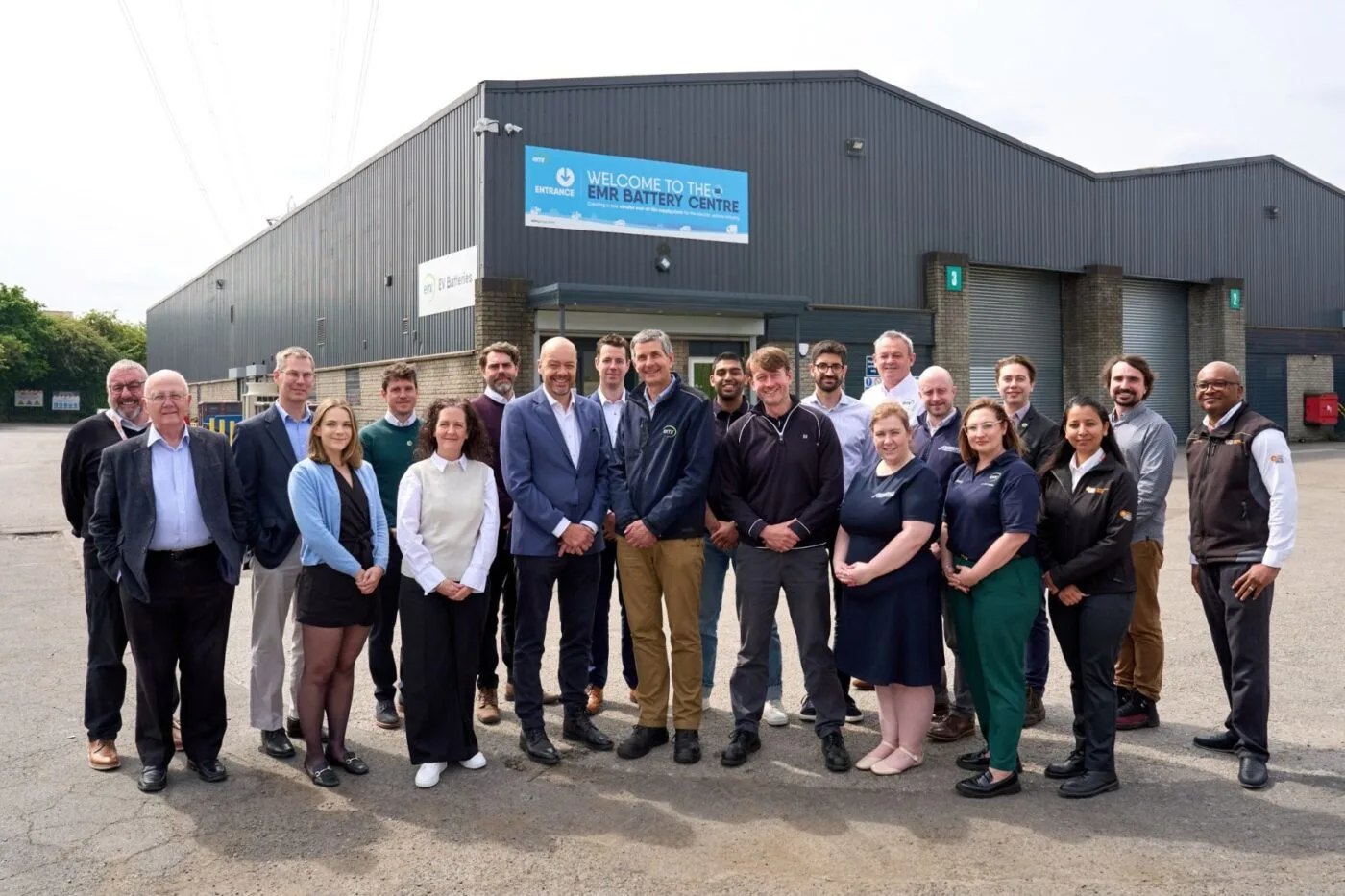
The UK has completed its first circular supply chain for electric vehicle (EV) batteries with the conclusion of the RECOVAS project, a four-year initiative led by EMR and funded by the Advanced Propulsion Centre. The programme has delivered a functioning model for battery recycling, reuse, and remanufacturing, marking a significant step toward a sustainable EV ecosystem.
Central to the project is a newly operational recycling facility in Birmingham developed by EMR, capable of processing up to 2,000 tonnes of end-of-life EV batteries annually. The site, backed by a multi-million-pound investment, has created 14 skilled jobs and expands the UK’s domestic battery recycling capacity. The RECOVAS consortium also included major automakers BMW, Jaguar Land Rover, and Bentley Motors, which collaborated to develop technical design guidance for battery reuse, remanufacture, and recyclability.
“By focusing on a range of challenges and opportunities associated with this technology, companies in the recycling, automotive and energy sectors have highlighted the huge progress that can be made when we work together,” said Alexander Thompson, Innovation Project Manager at EMR. “While RECOVAS has ended, its legacy continues in partnerships which will continue to benefit this growing industry in the years and decades ahead.”
The initiative also enabled second-life battery applications, with Connected Energy validating the use of repurposed EV batteries for stationary energy storage systems. Autocraft Drivetrain Solutions developed mobile diagnostic and remanufacturing tools to support repair and refurbishment. WMG at the University of Warwick advanced material recovery from black mass, and the UK Battery Industrialisation Centre created lifecycle assessment tools. The Health and Safety Executive (HSE) contributed safety protocols for battery handling and recycling. The RECOVAS project, launched in early 2021, was awarded the 2025 Resource and Waste Management Partnership of the Year at the LetsRecycle.com Awards for Excellence.