
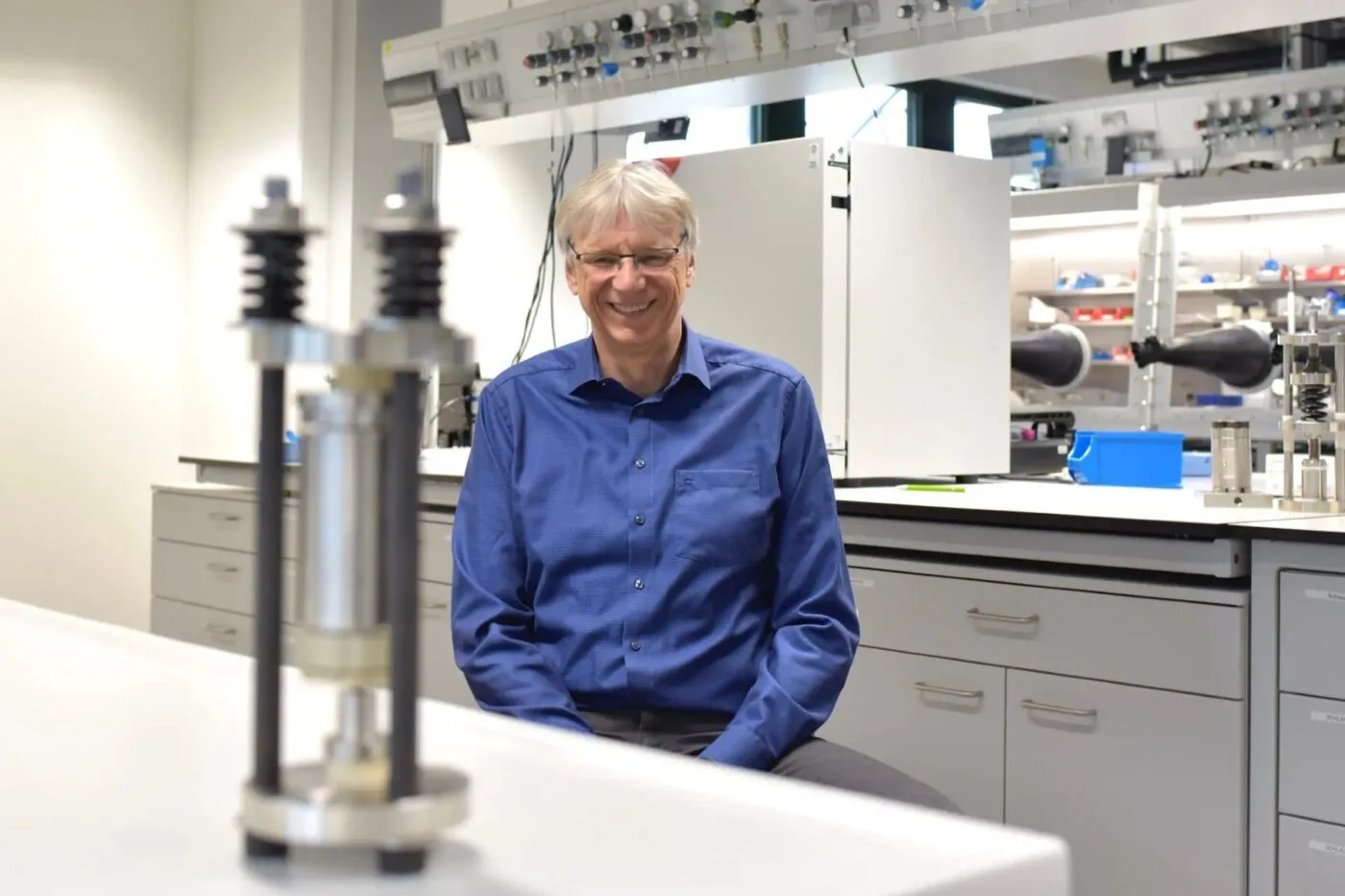
Scientists at the Technical University of Munich (TUM) have developed a new material for solid-state batteries that they say enables lithium ions to move more than 30% faster than in any previously reported substance, potentially advancing the performance of next-generation energy storage systems.
The research team, led by Professor Thomas F. Fässler from TUM’s Chair of Inorganic Chemistry, achieved the result by partially substituting lithium in a lithium-antimonide compound with scandium. The modification is reported to create vacancies in the crystal lattice, allowing lithium ions to pass through the material more easily. Findings were published in Advanced Energy Materials under the title Scandium Induced Structural Disorder and Vacancy Engineering in Li₃Sb – Superior Ionic Conductivity in Li₃–₃ₓScₓSbᵥ.
To verify the conductivity results, the researchers collaborated with the Chair of Technical Electrochemistry at TUM. “Because the material also conducts electricity, it presented a special challenge, and we had to adapt our measurement methods accordingly,” said co-author Tobias Kutsch, who conducted follow-up tests. The measurements were confirmed, according to the research team.
The new material is still in the early stages of development, and researchers cautioned that further testing will be needed before it can be applied in commercial battery cells. However, they pointed to the material’s dual ion and electron conductivity, thermal stability, and compatibility with conventional chemical synthesis as indicators of practical potential. A patent application for the material has been filed.
“This represents a significant step in basic research,” said Prof. Fässler. “By introducing small amounts of scandium, we have demonstrated a structural approach that could be transferable to other systems.”
The development is also reported to represent a new class of materials. Jingwen Jiang, lead author of the study and researcher at TUMint.Energy Research GmbH, noted that while the compound is based on lithium-antimony, the underlying principle could be extended to lithium-phosphorus compounds. “The previous record holder required five elements to optimize conductivity. We achieve comparable performance with only scandium as the additional component,” Jiang said.
TUMint.Energy Research GmbH, which supported the project, was established in 2019 as a joint initiative between TUM and the Bavarian State Ministry of Economic Affairs. The organization is focused on consolidating battery research at the university and supporting the transition of academic findings into industrial applications.