



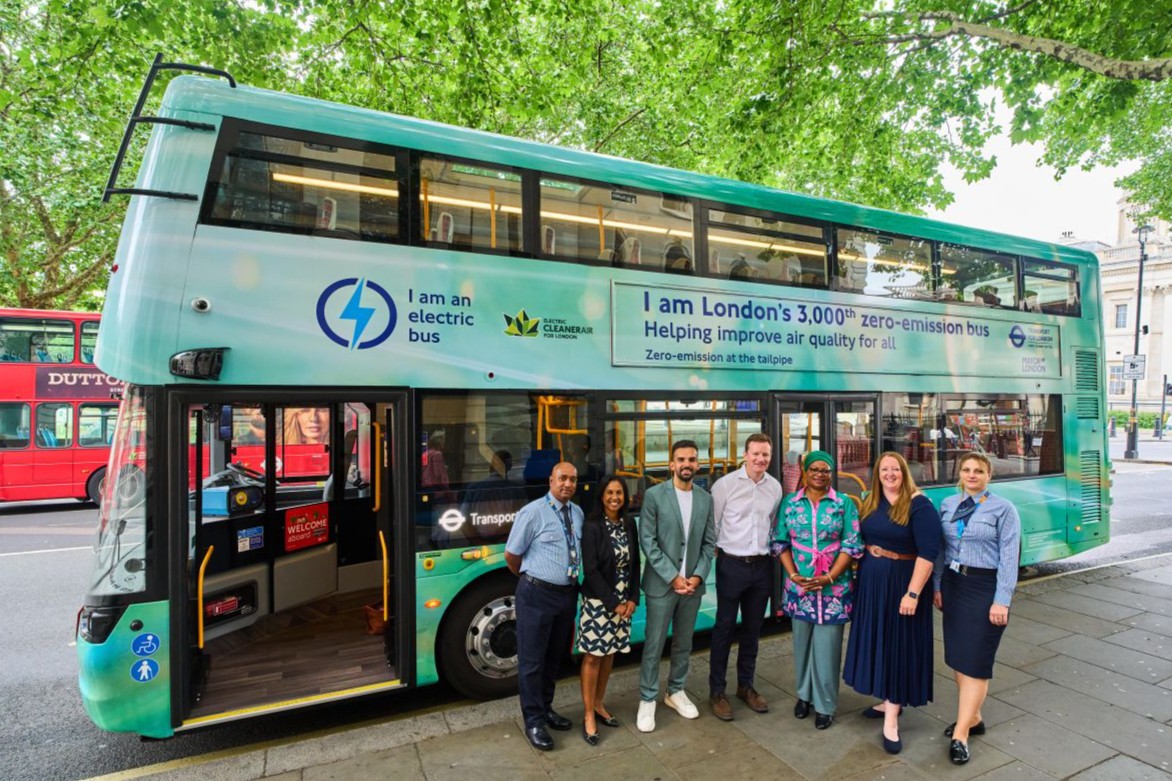
Transport for London (TfL) has placed its 3,000th zero-emission bus into service, marking a major milestone in the capital’s transition to cleaner public transport and reinforcing London’s position as a leader in sustainable urban mobility.
The milestone vehicle, a battery-electric double-decker built by Wrightbus, will operate on Route 165 between Romford and Rainham from Stagecoach London’s Rainham depot. The bus forms part of a wider order for more than 120 zero-emission vehicles from the Northern Ireland manufacturer.
Once the full fleet is delivered, six additional routes operating from the Rainham depot will transition to zero-emission operation. To support the expansion, the depot is being upgraded with overhead charging infrastructure installed on steel gantries.
Rapid Growth in London’s Electric Bus Fleet
London’s zero-emission bus network has expanded dramatically over the past decade. TfL operated just 30 electric buses in 2016, compared with more than 3,000 today.
The transport authority estimates that operating 3,000 electric buses for a year can prevent more than 100,000 tonnes of carbon dioxide emissions compared with an equivalent diesel fleet.
Lorna Murphy, Director of Buses at TfL, highlighted the scale of the transformation.
“We have the largest zero-emission bus fleet in Western Europe and now more than 3,000 of London’s buses are zero-emission, up from just 30 in 2016, demonstrating the pace of progress as we strive to transition the whole of the fleet.”
TfL expects the number of zero-emission buses operating in the capital to double again within the next five years as older diesel vehicles continue to be replaced.
Commitment to Cleaner Transport
The vast majority of London’s zero-emission fleet consists of battery-electric buses, although TfL also operates a smaller number of hydrogen fuel cell vehicles.
Since 2021, all newly procured buses entering service in London have been required to be zero-emission at the tailpipe, reflecting the city’s commitment to reducing transport-related emissions and improving air quality.
Mayor of London Sadiq Khan said the milestone demonstrates the success of London’s long-term investment in sustainable transport.
“I’m proud that London is leading the charge in sustainable transport with 3,000 of our iconic red buses now going green – which is a hundred times more than when I took office in 2016, and one of the largest zero-emission bus fleets in Europe.”
“Over the last decade as Mayor, I’ve worked with TfL to take our bus network from strength to strength – creating new services such as the game-changing Superloop, and boosting our zero- and low-emission buses to help clean up our air and support our climate goals.”
Safety and Passenger Experience
TfL said all zero-emission buses operating in the capital are equipped with a range of modern safety and passenger-focused technologies.
These include USB charging ports, camera monitoring systems that replace conventional mirrors, speed-limiting technology and audible warning systems designed to improve pedestrian safety.
The features form part of TfL’s Bus Safety Standard programme and contribute to London’s Vision Zero strategy, which aims to eliminate deaths and serious injuries on the city’s roads.
Wrightbus Marks Milestone Delivery
The 3,000th zero-emission bus also represents a significant achievement for Wrightbus, which is celebrating its 80th anniversary this year.
Christian Reynolds, Managing Director of Wrightbus, said the milestone reflects both environmental progress and continued innovation in public transport.
“We are delighted to have provided London’s 3,000th zero-emission bus in what is also a landmark year for us, as we celebrate our 80th anniversary.”
“Each vehicle represents not only a step forward in decarbonising transport, providing cleaner air for the people of London, but also a commitment to accessibility, innovation and passenger experience.”
With one-third of London’s bus fleet now operating without tailpipe emissions, the city continues to move closer to its goal of delivering a fully zero-emission public transport network while supporting cleaner air and long-term climate objectives.


