
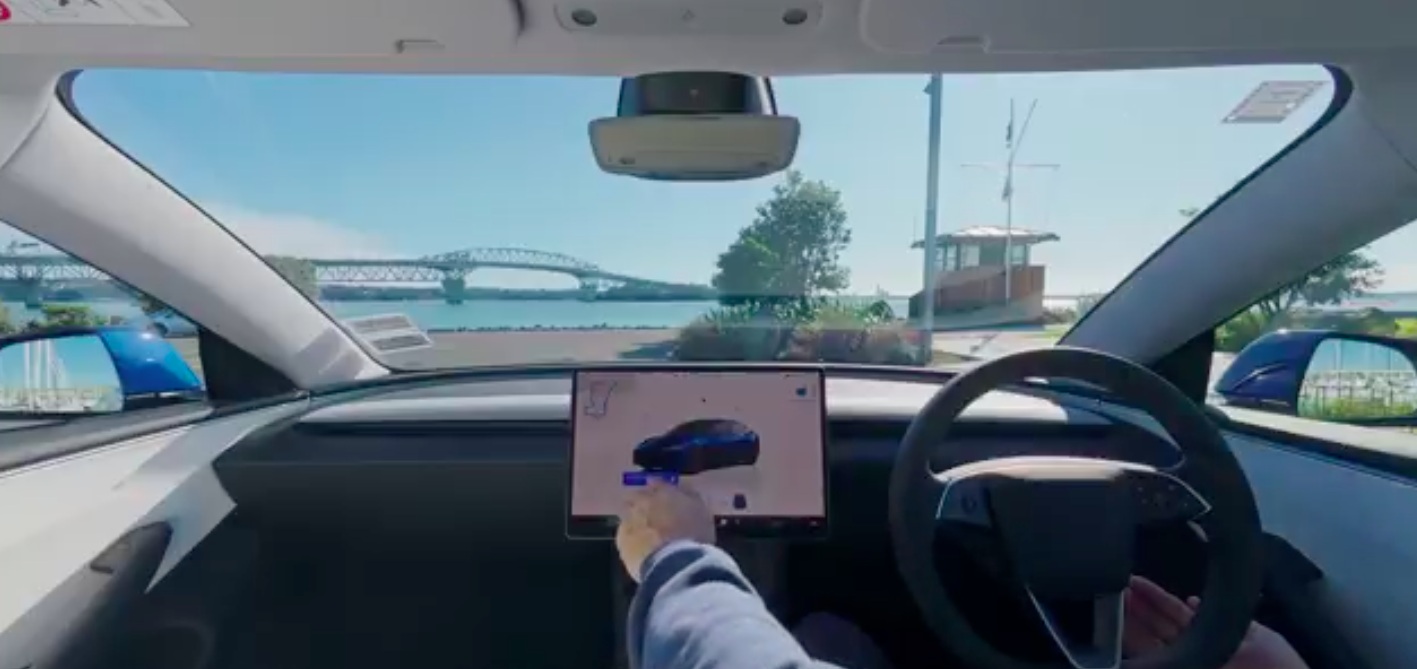
Tesla is preparing to launch its Full Self-Driving (FSD) supervised system in New Zealand, after confirming that it has cleared regulatory hurdles and entered the final stages of validation testing.
The U.S. electric vehicle maker released a video this week showing its FSD technology navigating streets in Auckland, marking the company’s first public demonstration of autonomous driving on New Zealand roads. The move follows similar trials in Sydney and comes as part of Tesla’s broader efforts to expand its advanced driver-assistance features internationally.
Tesla’s country director for Australia and New Zealand, Thom Drew, said the company had been working with local authorities in both countries and confirmed that no regulatory barriers remain. “We are running through the final stages of validation prior to public release,” Drew said on LinkedIn. “Looking to start with HW4 on certain vehicles and then release in phases from there.”
The rollout in New Zealand will mirror Tesla’s strategy in other markets, with a phased release expected to begin on newer vehicles equipped with the company’s latest hardware. Tesla’s FSD system remains classified as supervised, meaning a driver must be present and attentive at all times, though it allows for hands-free operation in various driving conditions, including city environments.
The New Zealand launch is part of a wider global push by Tesla to accelerate development and deployment of its autonomous driving technologies. In June, Tesla unveiled its long-anticipated Robotaxi in Texas and completed what it claimed to be the world’s first fully autonomous vehicle delivery without any human involvement. The company is also operating a small-scale ride-hailing pilot in Austin using FSD-enabled vehicles, with safety drivers positioned in the passenger seat.