
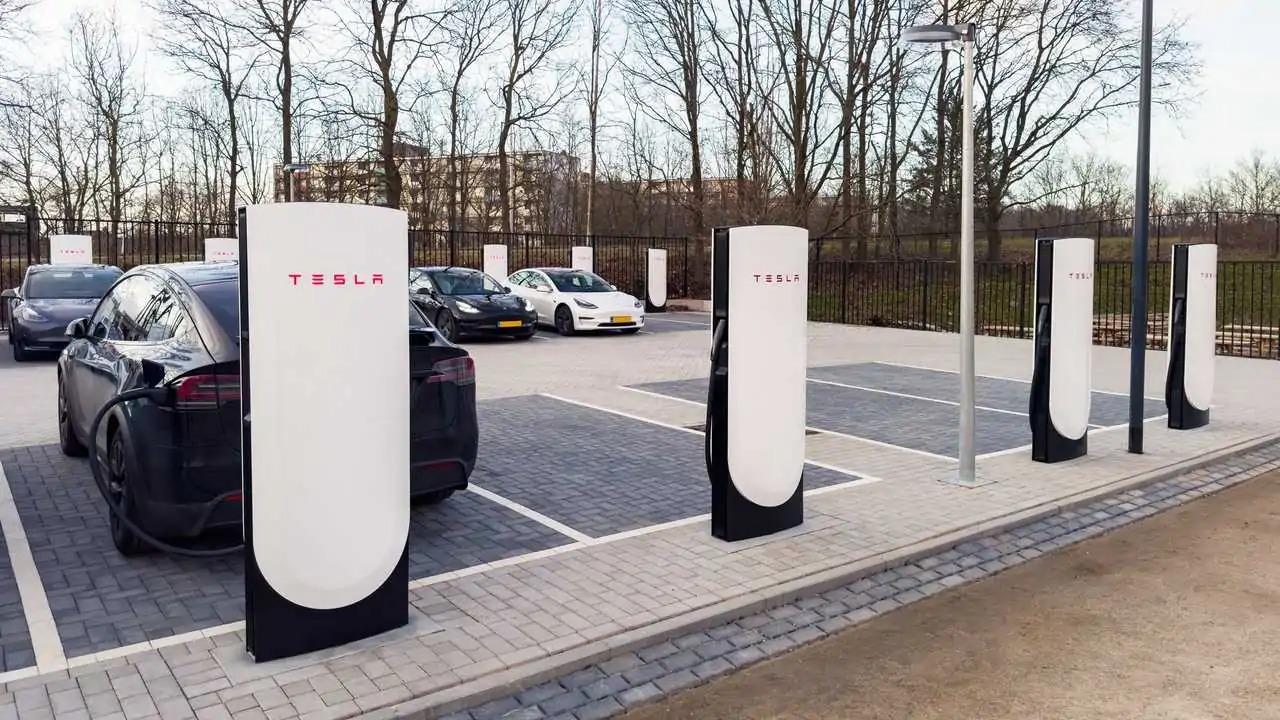
Tesla said it is rolling out an updated machine-learning model designed to better predict utilisation at its Supercharger network, aiming to minimize waiting times and improve route planning for drivers.
In a post published on X, Tesla’s charging division outlined efforts to manage traffic flows more efficiently by guiding drivers to less congested charging stations. The system is intended to optimize total journey time, including charging stops, by avoiding overcrowded locations.
“For the rare times when a wait does occur, we need to provide the most accurate estimates so you can plan with confidence,” Tesla Charging said in the post.
The updated system expands the capabilities of Tesla’s route planner by incorporating additional real-time and predictive data. The machine-learning model analyzes traffic patterns within geofenced areas around Supercharger sites to estimate how many vehicles are likely to arrive and charge, including non-Tesla vehicles that now have access to the network in some regions.
Tesla said the model has been trained on 9 million miles of aggregated and anonymised vehicle movement data collected around Supercharger locations globally. By identifying which vehicles intend to charge—rather than simply pass through—the system improves predictions of station utilisation and queue lengths.
“Supercharger sites are often co-located with amenities… The mixed purpose traffic at these sites makes queue predictions challenging, but we found a fix,” the company said.
According to Tesla, the updated model reduces the error rate in queue length estimates to around 20%. In cases where more than 10 vehicles are waiting, the system can now predict queue size with an accuracy margin of one to two vehicles.