


South Korean battery manufacturer SK On said it has made progress in its research on solid-state battery technology, unveiling methods to improve the cycle life and performance of next-generation energy storage systems through collaborations with academic institutions.
The company said it has developed a technique to enhance the durability of sulfide-based all-solid-state lithium metal batteries (ASSLMBs) by forming a protective layer on the lithium metal anode. According to SK On, this layer increases interfacial stability, thereby improving battery safety and extending its operational life.
The research, conducted in partnership with Dr. Dong-Won Kim’s group at Hanyang University and published in ACS Energy Letters, addressed key challenges posed by lithium metal anodes, including their high reactivity and susceptibility to dendrite formation. These factors have historically limited the battery’s usable lifespan despite its high capacity. The team’s approach reportedly enabled more than 300 charge-discharge cycles at room temperature, compared with the typical 100 cycles for similar systems.
In a separate study with Dr. Jong Hyeok Park of Yonsei University, published in Angewandte Chemie, SK On examined the performance of gel polymer electrolytes (GPEs). The findings showed that increasing the thermal curing time of the electrolyte from 20 to 60 minutes resulted in a significantly lower degradation of discharge capacity—9.1% versus 34%. The study attributed this improvement to a reduction in side reactions caused by residual monomers, as identified through density functional theory analysis.
“These achievements are the result of SK On’s continued R&D efforts and technological prowess, enabled through collaboration with academia,” said Kisoo Park, Head of R&D at SK On.
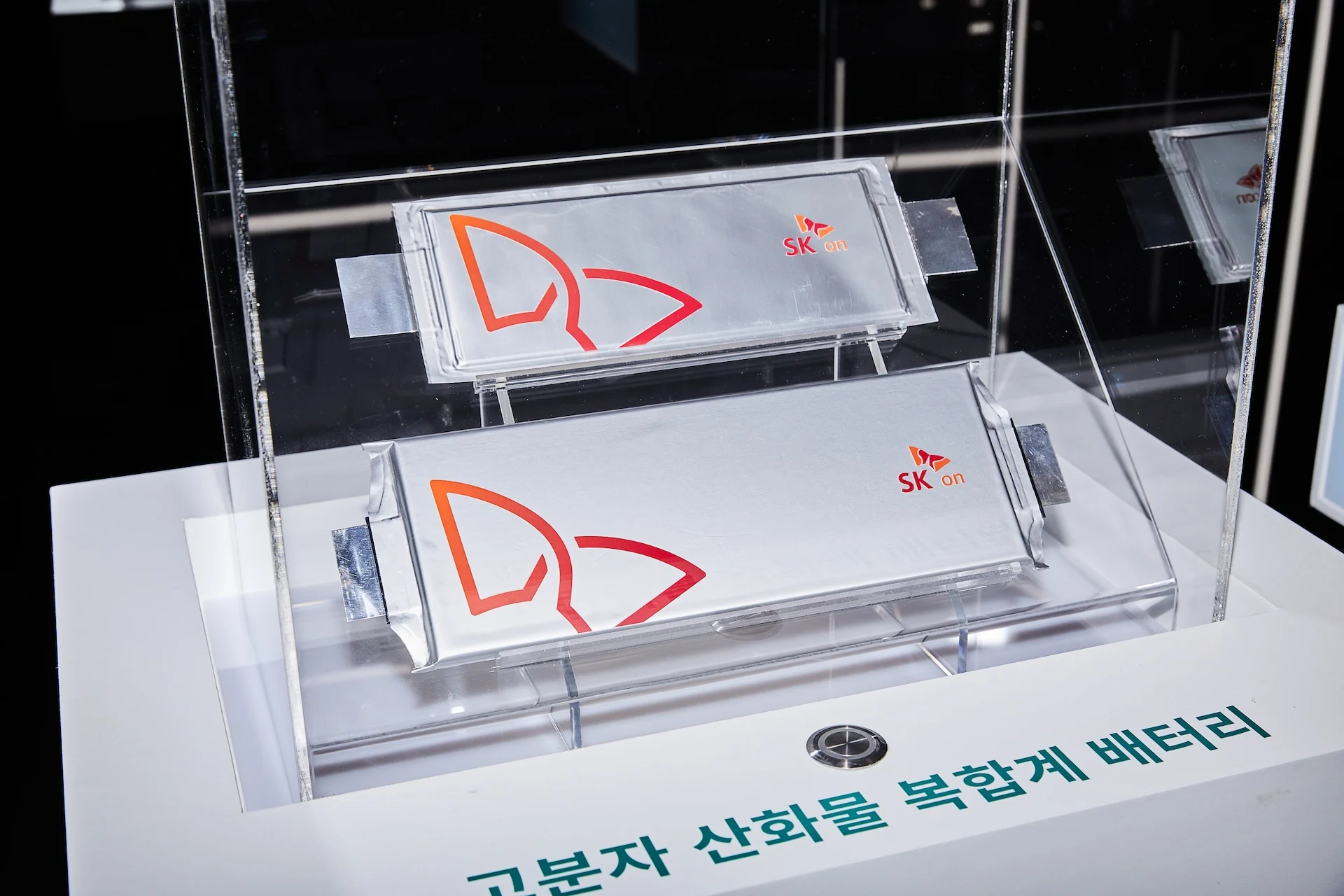
The company aims to commercialize polymer-oxide composite batteries by 2028 and sulfide-based solid-state batteries by 2030. SK On said these developments are part of its long-term strategy to advance battery performance, safety and sustainability in preparation for wider adoption in electric vehicles and energy storage systems.