
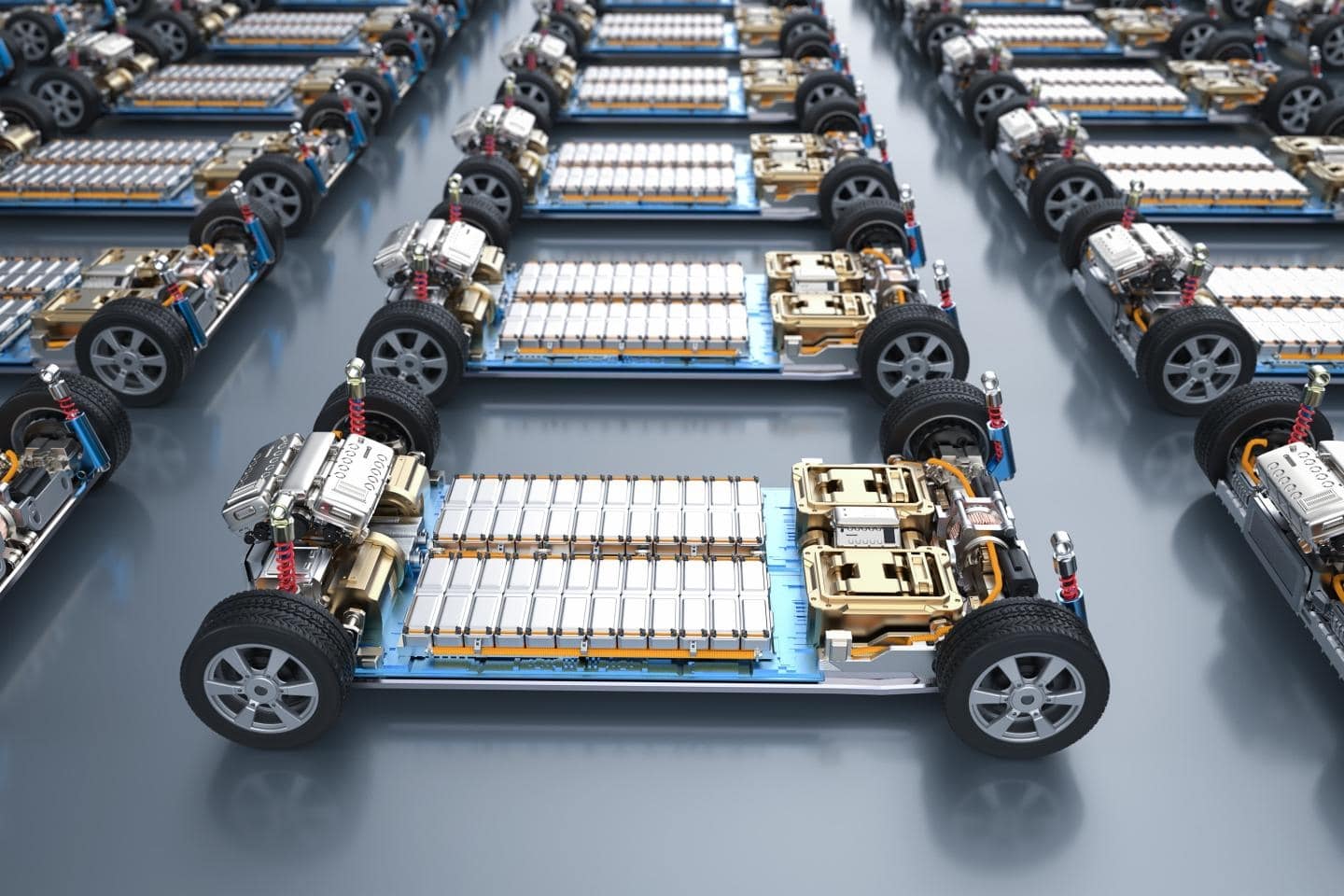
SAIC Motor said its partner Qingtao Power has completed full-line commissioning of an all-solid-state battery production line in Anting, marking a key step in the automaker’s multiyear effort to industrialise next-generation cell technology.
According to information reported by IT-Home, SAIC expects sample cells to be produced before the end of the year, with prototype vehicles to begin testing in 2025 and commercial deliveries planned for 2027.
See also: Dongfeng Targets 2026 for Mass Production of 350 Wh/kg Solid-State Batteries
The company has previously outlined ambitious performance targets for the solid-state chemistry, including a gravimetric energy density above 400 Wh/kg, volumetric energy density greater than 820 Wh/L and single-cell capacities above 75 Ah.
SAIC also cited internal safety-validation data, noting that cells withstood nail-penetration tests, 200°C thermal exposure and retained more than 90% capacity in low-temperature environments. These benchmarks form part of the firm’s published development roadmap.
See also: Sunwoda Unveils New Generation Solid-State Battery With 400 Wh/kg Energy Density
SAIC’s solid-state programme has been under way for several years through cooperation with Qingtao Energy, including joint investment and the establishment of a dedicated laboratory. Analysts caution that while line-commissioning and laboratory safety tests are notable milestones, they do not guarantee manufacturability or long-term cost competitiveness. Commercial success will depend on stable mass-production yields, supply chain readiness and data gathered from extended fleet testing.
China’s automakers and suppliers are accelerating their own efforts. GAC Group has brought its first large-capacity (60 Ah+) solid-state line online with small-batch output already underway and mass production targeted between 2027 and 2030.
See also: Dongfeng Motor Develops Fully Independent Solid-State Battery Supply Chain in China
Chery is pursuing a 600 Wh/kg module with pilot-vehicle tests slated for 2026. Sunwoda, backed by Li Auto, is developing a 400 Wh/kg cell for long-range applications. Meanwhile, CATL has tempered expectations, signalling that wide-scale solid-state mass production is unlikely before 2030 despite continued R&D.