
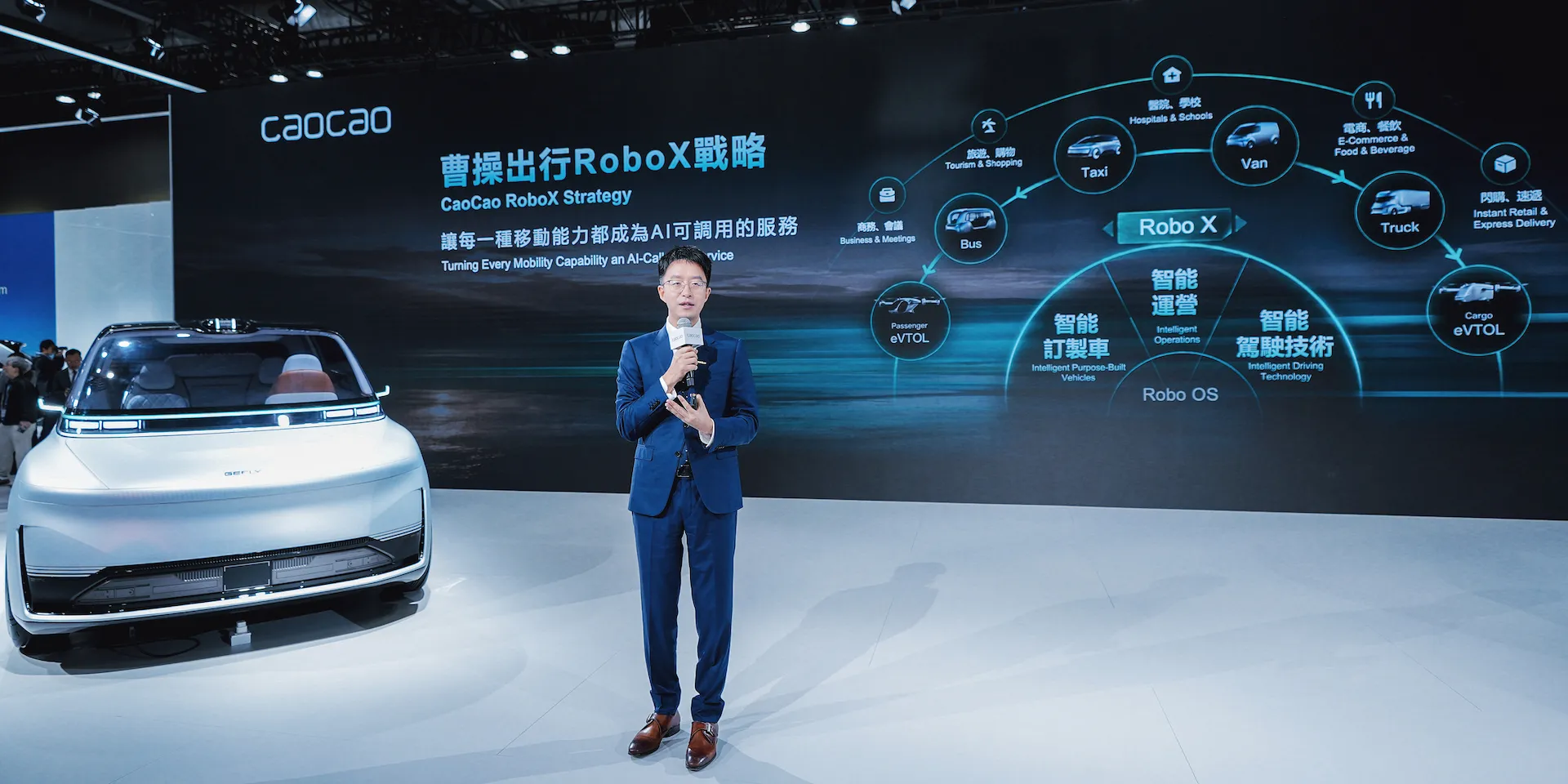
CaoCao Inc., the ride-hailing platform backed by Geely Holding Group, has unveiled its RoboX strategy, outlining plans to deploy a combined fleet of 200,000 autonomous vehicles by 2030.
The initiative includes a target of 100,000 Robotaxis and 100,000 Robovans, as the company seeks to transform itself into what it describes as a physical AI mobility platform.
The strategy was announced during the 2026 International Automotive and Supply Chain Expo in Hong Kong.
Three-Pillar Autonomous Mobility Framework
According to CaoCao, the RoboX strategy is built around three core pillars: intelligent driving technologies, intelligent purpose-built vehicles, and intelligent operations.
The company said it will leverage Geely’s manufacturing and engineering capabilities to develop autonomous vehicles tailored to different transportation use cases.
Its autonomous driving efforts are focused on Level 4 technology, which allows vehicles to operate without human intervention within defined operating environments.
The company said safety, operating efficiency, and cost competitiveness remain key priorities for both passenger transportation and freight applications.
Expanding Beyond Robotaxis
While Robotaxi services remain a major focus, CaoCao plans to expand autonomous operations across multiple vehicle categories.
Future applications are expected to include Robovans, Robobuses, and Robotrucks.
To support freight transportation initiatives, CaoCao has entered into a strategic partnership with Farizon Auto, Geely’s commercial vehicle subsidiary.
The companies plan to promote large-scale deployment of autonomous commercial vehicles, including models such as the Shentong T6.
Building an AI Mobility Operating System
At the center of the strategy is CaoCao Robo OS, a proprietary operating platform designed to coordinate autonomous mobility services.
The system is intended to manage demand forecasting, fleet dispatching, supply-demand matching, and service fulfillment.
The company said the platform incorporates AI-driven tools, including an “AI Super Brain for Operations,” hybrid dispatching systems, and intelligent mobility hubs designed to support large-scale fleet management.
Hong Kong Chosen for International Expansion
CaoCao also announced the launch of its Robotaxi business in Hong Kong, marking the company’s first step toward international deployment.
The company said it intends to use Hong Kong as a testing ground for autonomous mobility operations before expanding into additional overseas markets.
According to CaoCao, the city’s urban environment provides an opportunity to refine operational models for future international deployment.
Partnerships to Support Growth
In addition to its collaboration with Farizon Auto, CaoCao signed a framework agreement with Douyin Group to explore AI-powered mobility services and in-vehicle content recommendations.
The company said the partnership could expand into additional areas of cooperation as autonomous mobility services develop.
Shift Toward AI-Native Operations
CaoCao said it has spent much of 2026 restructuring its business around artificial intelligence and autonomous driving.
The company reported reducing investment in non-core operations while increasing spending on AI systems, autonomous driving technologies, and intelligent mobility infrastructure.
Chief Executive Officer Shawn Gong said the company views transportation as an increasingly important platform for AI applications in the physical world.
“AI is moving from the digital world into the physical world,” Gong said.
“By turning vehicles into execution terminals for AI agents, we aim to build a physical AI execution network connecting digital intelligence with the physical world.”
The RoboX strategy represents one of the most ambitious autonomous mobility plans announced by a Chinese ride-hailing platform, reflecting growing industry efforts to commercialize self-driving transportation services at scale.