
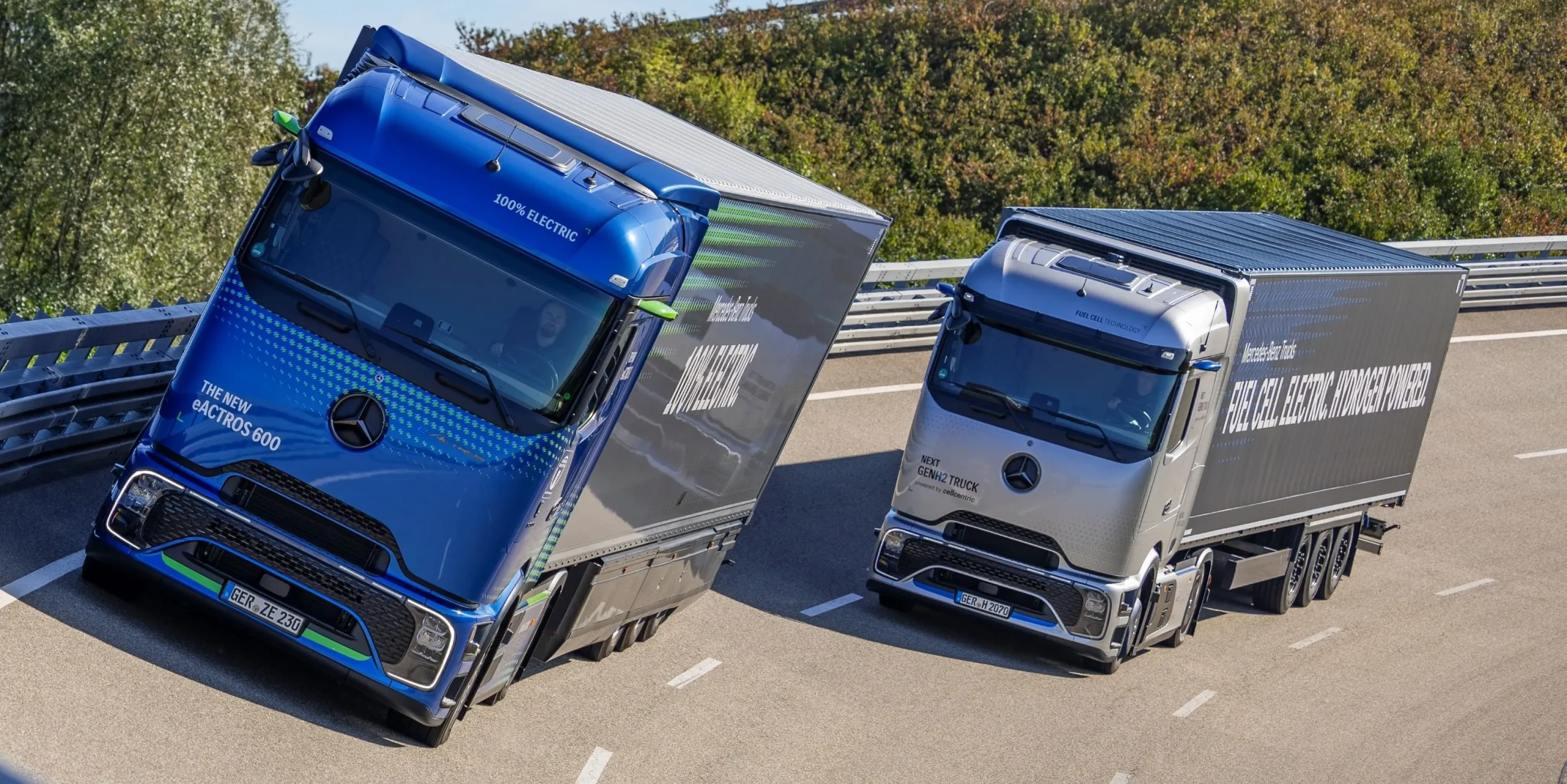
Sales of zero-emission commercial vehicles in Europe continued to grow during the first quarter of 2026, with Mercedes-Benz and MAN emerging as leaders in the battery-electric truck market, while Chinese bus manufacturer Yutong became the top-selling electric bus brand in the region, according to a new analysis by the International Council on Clean Transportation (ICCT).
The study, based on European Union vehicle registration data, highlights accelerating adoption of electric trucks and buses, alongside increasing competition among manufacturers.
Zero-Emission Commercial Vehicle Sales Rise
The ICCT recorded approximately 6,355 zero-emission commercial vehicle registrations across the EU-27, excluding Malta and Finland, during the first quarter of 2026.
The total included around 1,600 heavy-duty trucks, 2,000 light and medium-duty trucks, and 2,700 buses.
Sales of heavy-duty electric trucks nearly doubled compared with the same period a year earlier.
According to the report, zero-emission heavy trucks accounted for 2.3% of all heavy truck registrations, while the light and medium-duty segment achieved a market share of 19.7%.
Electric buses represented 24.1% of total bus registrations during the quarter.
Mercedes and MAN Lead Heavy Electric Truck Segment
In the heavy-duty truck category, defined by the ICCT as vehicles weighing more than 12 tonnes, Mercedes-Benz Trucks retained the leading position with a market share exceeding 30%.
Mercedes registered 530 heavy electric trucks during the quarter, compared with 95 units in the first quarter of 2025.
MAN also recorded strong growth, increasing sales to 411 units from 130 units a year earlier and significantly expanding its market share.
DAF was another notable performer, selling nearly 200 heavy electric trucks after ramping up production of its electric XD and XF models.
Meanwhile, Volvo Trucks, previously a market leader in the segment, ranked fourth with a market share slightly above 10%.
Iveco recorded only six heavy-duty battery-electric truck registrations during the period.
Northern Europe Driving Adoption
Germany remained the largest market for heavy electric trucks, registering 536 vehicles during the quarter and achieving a market share of 3.5%.
Several other European markets recorded higher penetration rates, including:
- Netherlands: 338 registrations, 10.3% market share
- Denmark: 100 registrations, 10.0% market share
- Sweden: 125 registrations, 9.7% market share
- Austria: 138 registrations, 8.0% market share
These figures indicate growing adoption of battery-electric trucks across Northern and Central Europe.
Mercedes, Iveco and Ford Lead Medium-Duty Segment
In the 3.5- to 12-tonne category, Mercedes, Iveco and Ford collectively accounted for approximately 70% of zero-emission vehicle sales.
The segment continued to be supported by strong demand in Nordic countries, with Denmark, Sweden and the Netherlands reporting electric vehicle shares approaching or exceeding 60% of registrations.
Yutong Leads Electric Bus Market
The electric bus market remained highly competitive during the quarter, with Chinese manufacturer Yutong becoming the leading supplier of zero-emission buses in Europe for the first time.
Yutong captured approximately 15% of the market, narrowly ahead of Solaris.
MAN and Daimler Buses followed with market shares of around 10%.
The report noted that Chinese manufacturers continued to gain ground against established European competitors, with BYD and King Long also ranking among the top eight brands.
Electric Bus Adoption Varies Across Europe
The share of zero-emission city bus registrations stabilized at around 55% during the first quarter, following a decline from nearly 60% in most quarters of 2025.
Several countries recorded significant growth in electric bus adoption:
- Portugal increased from 3% to 50%
- Italy rose from 13% to 34%
- Lithuania increased from 40% to 59%
Other markets experienced slower growth or declines, including Germany, Belgium and Greece.
The findings suggest that while electric commercial vehicle adoption continues to expand across Europe, market performance varies significantly by country and vehicle segment, with competition intensifying as both European and Chinese manufacturers seek to strengthen their positions.