



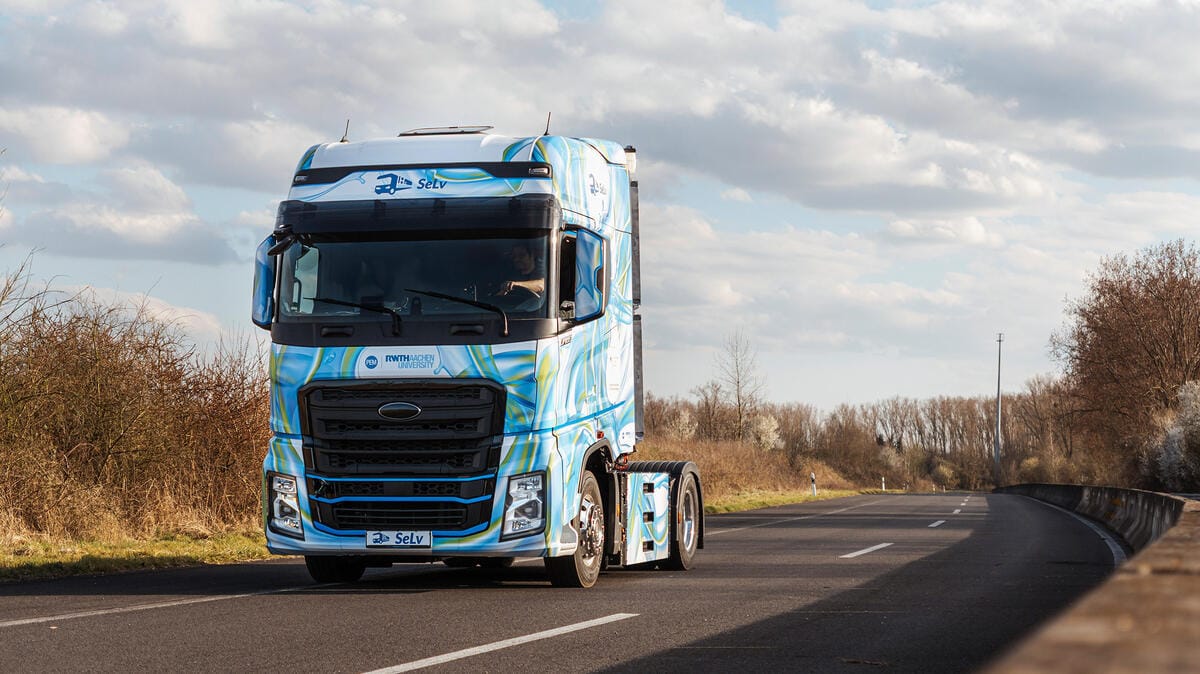
RWTH Aachen University said its Chair of Production Engineering of E-Mobility Components (PEM) has completed the SeLv research project, delivering a modular technology kit for electric heavy-duty trucks equipped with fuel cell range extenders that is designed for rapid transfer to industrial use.
The project, funded by the German government with €16.9 million, has been underway since 2021 and focused on developing a battery-electric powertrain with a hydrogen fuel cell extender for commercial vehicles with a permissible gross weight of up to 41 tonnes. After more than five years of work and the construction of three prototypes, the system is now considered ready for application by manufacturers and retrofitters, the university said.
See also: RWTH Aachen Researchers Complete Project on Faster, Lower-Cost Battery Production
To mark the project’s conclusion, the PEM team presented a third prototype truck along with a second study vehicle that has received official road approval. The modular approach allows existing diesel trucks to be converted into electric vehicles and could also be applied to niche sectors such as construction machinery. “Many suppliers find it very difficult to bring new ideas to market these days,” said Achim Kampker, director of PEM. He added that industry stakeholders often question whether new concepts are mature and safe enough for deployment.

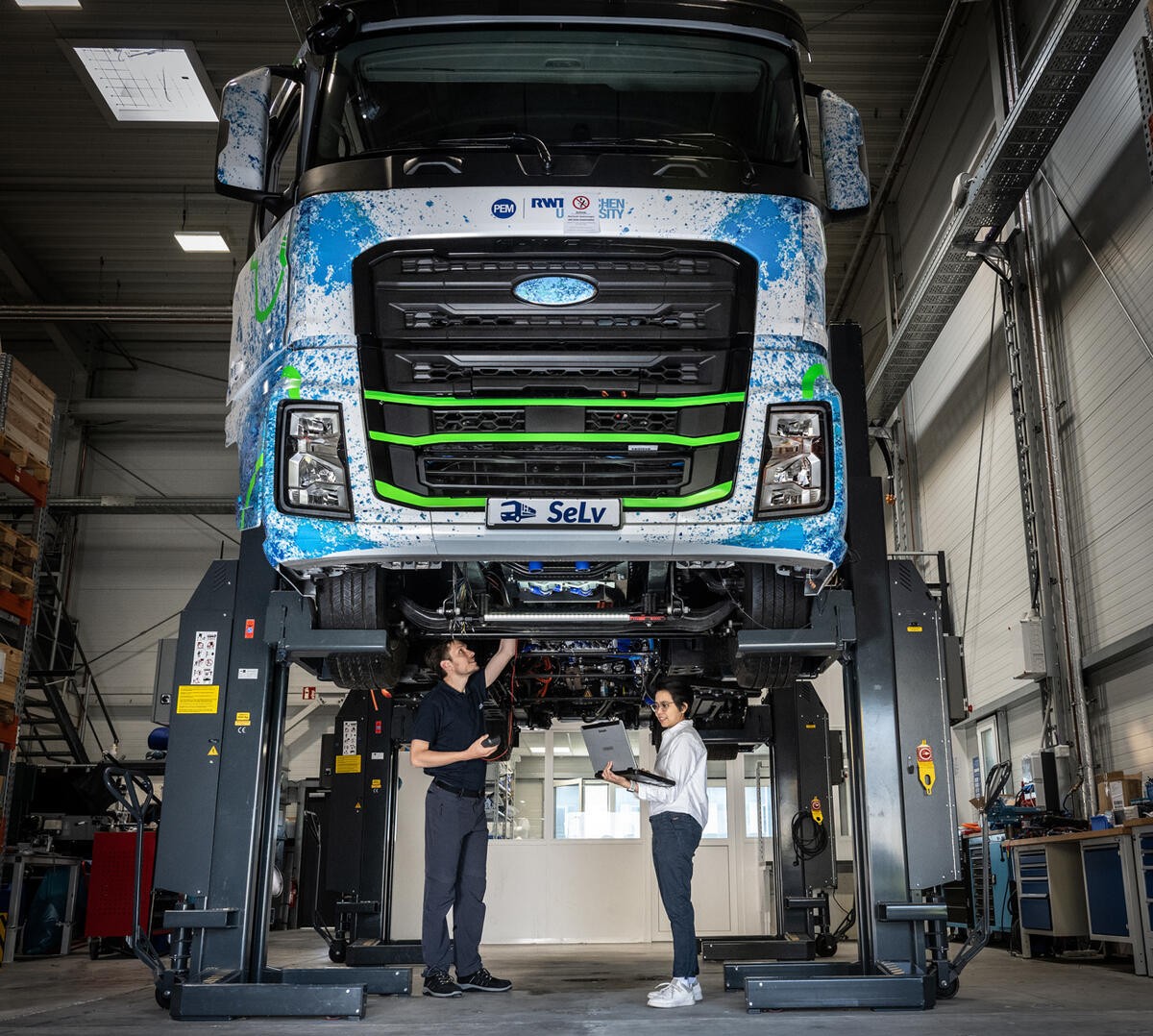
According to Kampker, the SeLv truck represents “a real platform with road approval,” enabling future users to integrate their own battery systems, hydrogen technologies, thermal management solutions or software applications, with support for series production development. PEM homologation officer Michael Betz said development was complicated by the limited availability of heavy-duty electrification components, many of which remained at prototype stage during the project.
See also: RWTH Aachen Launches Project to Develop Battery Cells with Over 80% Recycled Content
Depending on hydrogen tank configuration, the SeLv electric truck is expected to achieve a range of between 750 kilometres and more than 1,000 kilometres, the team said. The vehicle has a peak output of nearly 470 kilowatts and a continuous output of about 400 kilowatts, supported by a 170-kilowatt fuel cell. It is equipped with an intelligent energy management system and a navigation function that plans routes based on available hydrogen refuelling and battery charging infrastructure.
Project manager Michael Demming said the work aimed to reduce development and system complexity in the highly regulated heavy-vehicle sector. “A young research team and experienced development specialists have combined industrial standards with new scientific approaches in a unique way,” he said.
See also: RWTH Aachen’s PEM Finds Electrification of Road Construction Sites Both Feasible and Sustainable
Technical data for the second and third prototypes include a net battery capacity of 368 kilowatt-hours using lithium iron phosphate chemistry and a charging power of up to 250 kilowatts. Hydrogen storage options range from 35 kilograms at 350 bar to 70 kilograms at 700 bar, accounting for the differences in vehicle range.
PEM said the next focus will be on industrialising production processes for the modular powertrain to achieve cost advantages at scale, while further technical details remain undisclosed.


