



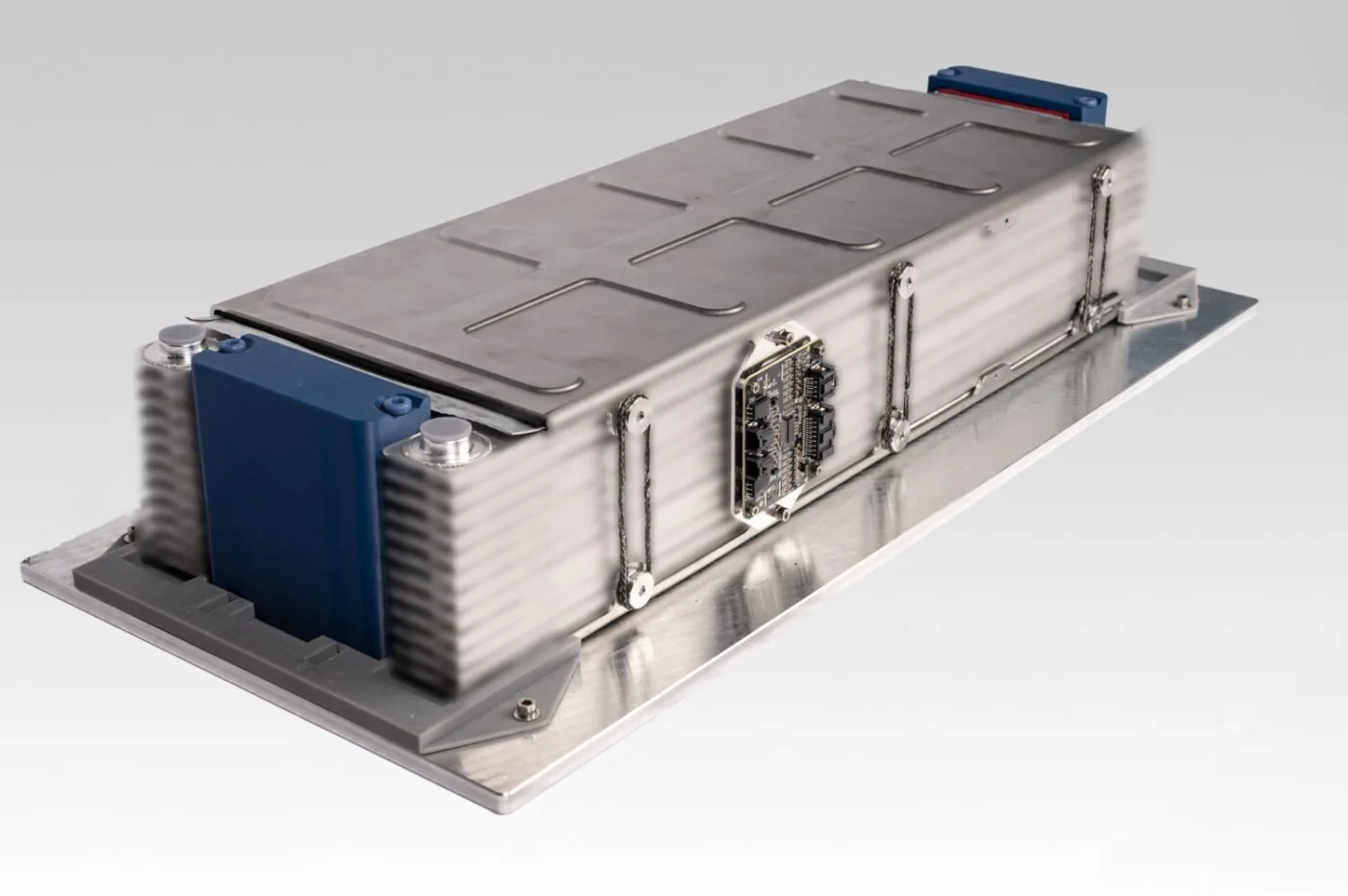
ProLogium Technology, a Taiwanese battery developer, and France’s CEA research organisation are jointly developing a solid-state battery module designed for easy disassembly and recycling in automotive applications. The prototype will be presented at IAA Mobility 2025 in Munich.
The module features a non-welded structure, allowing individual cells to be accessed and recovered for recycling. This design supports efficient separation of materials such as electrolytes and electrodes, while maintaining compact dimensions and high performance. The approach follows a “Design-for-Disassembly” principle, enabling cells to be replaced individually without dismantling the entire pack.
ProLogium said conventional liquid batteries using cell-to-pack or cell-to-chassis designs limit repair options, often requiring entire modules to be discarded if a single cell fails. Its ceramic solid-state cells are intended to combine high energy density with safety and fast-charging capabilities, while allowing repair and recycling.
The collaboration, which began in late 2024, aims to create a scalable solution that supports Europe’s goals for industrial autonomy and circularity in the battery sector. The CEA contributes engineering, prototyping, and validation expertise, while ProLogium provides its solid-state ceramic cells.
ProLogium has been active in France for several years, receiving 1.5 million euros in state aid in 2023 for its Prometheus R&D project focused on recyclable solid-state batteries. The company has also inaugurated its first overseas R&D center in Paris-Saclay and plans to build its first overseas gigafactory in Dunkirk, with construction expected to start next year.


