
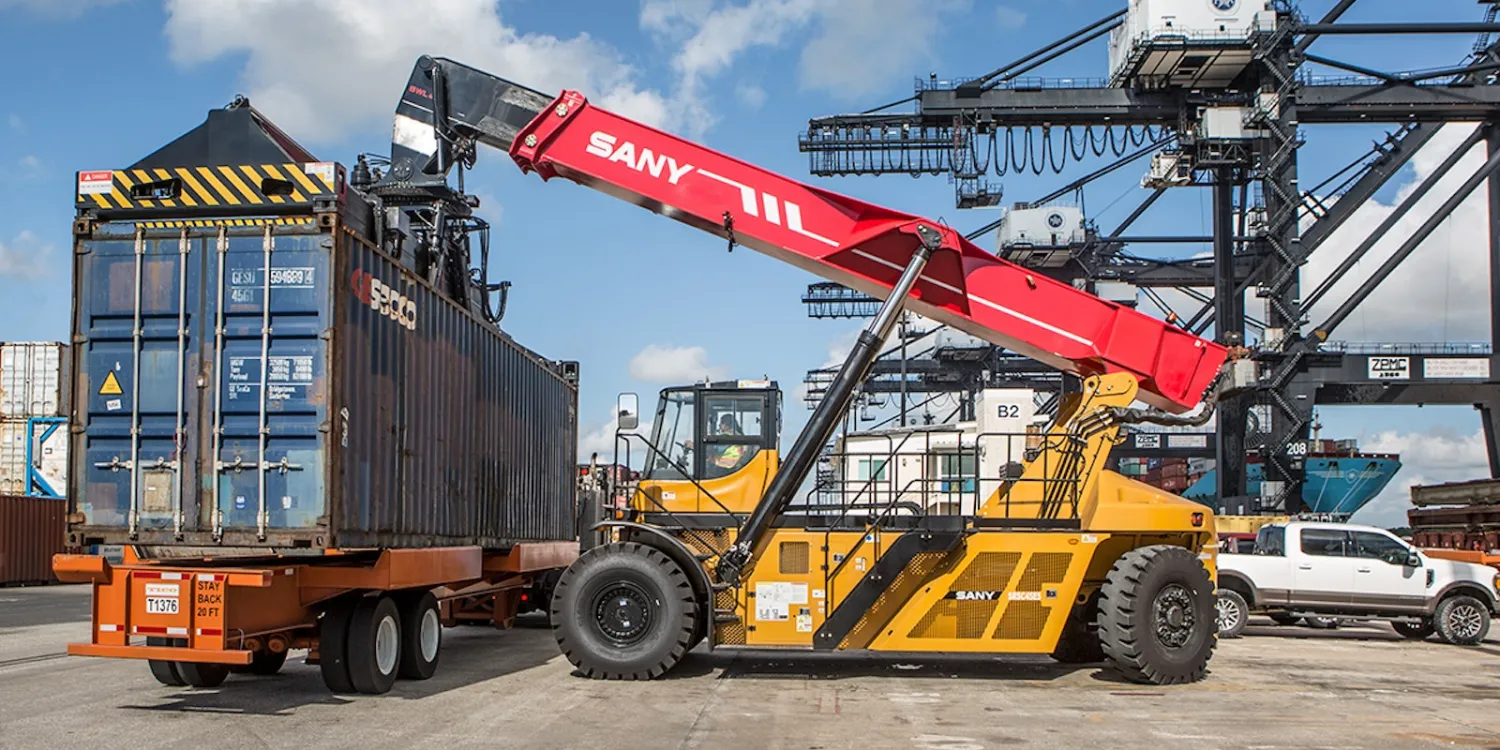
The Port of Houston this week deployed its first electric reach stacker as part of efforts to electrify cargo-handling operations and reduce emissions at one of the United States’ busiest seaports, according to Houston Terminal and equipment supplier Equipment Depot.
The new machine, built by Chinese heavy equipment manufacturer SANY, is a 50-ton electric reach stacker that uses a regenerative braking system integrated into its boom to generate electricity as loads are lowered, improving overall operating efficiency and reducing charging-related downtime. The unit was launched earlier this year and is the first of its kind to enter service at the Texas port.
See also: China’s Sany To Launch e263 Long-Haul Electric Truck In Europe From 2026
With the acquisition, Houston Terminal has begun replacing diesel-powered equipment as part of broader efforts to improve local air and water quality. “In this market, there’s a shift towards sustainable equipment,” said Greg Schertz, senior national account executive at Equipment Depot, which supplies and services equipment to around 85% of U.S. seaports. “Electric equipment is a growing trend, and it has become more than a conversation point. Actual machines are going into service and are proving their capability.”
Industry executives say the transition is being driven as much by global business pressures as by regulation. “The bigger picture is that the world has become more of a global market,” said Chad Larson, vice president of heavy trucks and port equipment at Equipment Depot, citing closer ties between U.S. port operators and international parent companies that already operate under stricter zero-emissions targets abroad.
Houston Terminal’s general manager Robert Marshall said electric cargo-handling machinery also offers operational benefits. “Electric equipment has a much easier, much simpler maintenance program, because basically you’re just maintaining tires,” he said.
See also: SANY Launches 50-Ton Reach Stacker With F1-Inspired Energy Recovery System
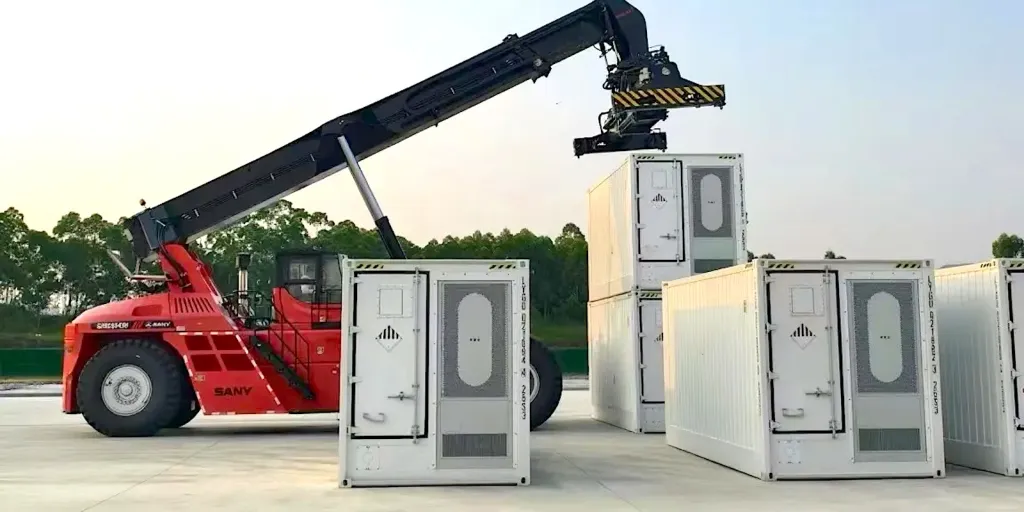
SANY said at the machine’s launch that the electric reach stacker is available with a 512 kilowatt-hour swappable battery pack, which can also be used across the company’s broader electric equipment range. The battery system supports both DC fast charging and integration with battery energy storage systems when idle.
Houston Terminal purchased the equipment with financial support from the Texas Emissions Reduction Plan (TERP) under its Seaport and Rail Yard Areas Emissions Reduction (SPRY) Program, which helps fund cleaner replacements for older port and rail yard machinery. The terminal plans to seek additional grant funding to acquire a second electric reach stacker in 2026.