
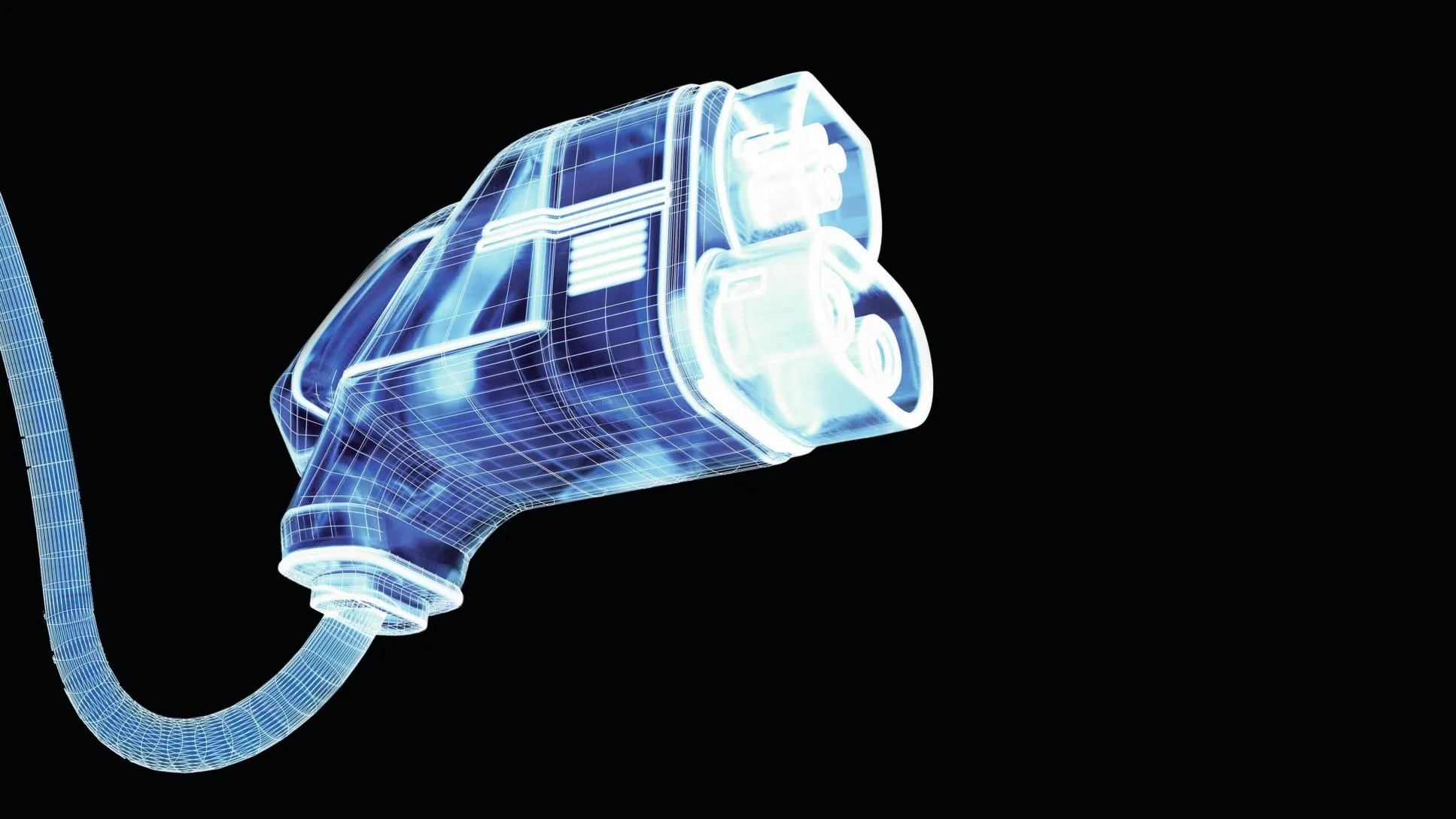
Porsche Engineering said it is offering car manufacturers a complete high-voltage charging management software system that supports all major global charging standards and enables intelligent charge planning based on electricity prices, solar power availability and planned departure times.
The modular software, developed continuously since 2011, is designed to help manufacturers accelerate the market launch of plug-in hybrid and battery-electric vehicles while managing the growing complexity of worldwide charging infrastructure. Porsche Engineering acts as the central development partner for high-voltage charging management across passenger vehicles with electrified powertrains within the Volkswagen Group, with the system already deployed across 13 vehicle variants.
The charging management solution follows the V-model development process, covering requirements definition through validation. Rather than relying on multiple software versions, the system uses adjustable parameters that are configured during vehicle assembly, allowing the same software release to be used across different models and simplifying updates throughout the vehicle lifecycle.
At its core, the software is built around six functional modules that together manage the entire charging process, including authentication, safety monitoring, communication with charging infrastructure and user-facing services. Porsche Engineering said this modular design allows manufacturers to tailor functionality while maintaining a consistent software backbone.
Global compatibility is a central feature of the system. The software supports charging standards including GB/T, GB/T+, Chaoji, CHAdeMO, ISO 15118 and DIN EN 62196, covering AC charging, DC fast charging and high-power charging at several hundred kilowatts. To address regional variations and interpretation differences in charging protocols, the system includes a compatibility mode that preserves basic charging functionality when communication with charging stations is inconsistent.
Intelligent charge planning is positioned as the system’s key differentiator. Once a vehicle is connected, the software prioritises reaching a minimum state of charge quickly to ensure short-notice mobility. It then creates a detailed charging plan based on time intervals and available electrical capacity, optimising for dynamic electricity tariffs, surplus photovoltaic energy, reduced grid load during peak periods and readiness at a user-defined departure time.
When a departure time is set, charging is divided into multiple phases. The main charging phase typically ends 30 to 60 minutes before departure, leaving a buffer to compensate for unforeseen delays. A final phase runs at reduced power to accommodate cabin pre-conditioning without compromising the target charge level. Porsche Engineering said additional monitoring calculations run in parallel during charging, improving accuracy in extreme temperatures where battery behaviour can vary significantly.
To ensure reliability, the software is validated using automated hardware-in-the-loop test benches. Between 2021 and 2024, Porsche Engineering completed a full redesign of the charging management codebase, consolidating previously separate functions into a more compact structure. The company said the redesign reduced memory requirements on the on-board charger control unit while improving computing speed and long-term scalability.