
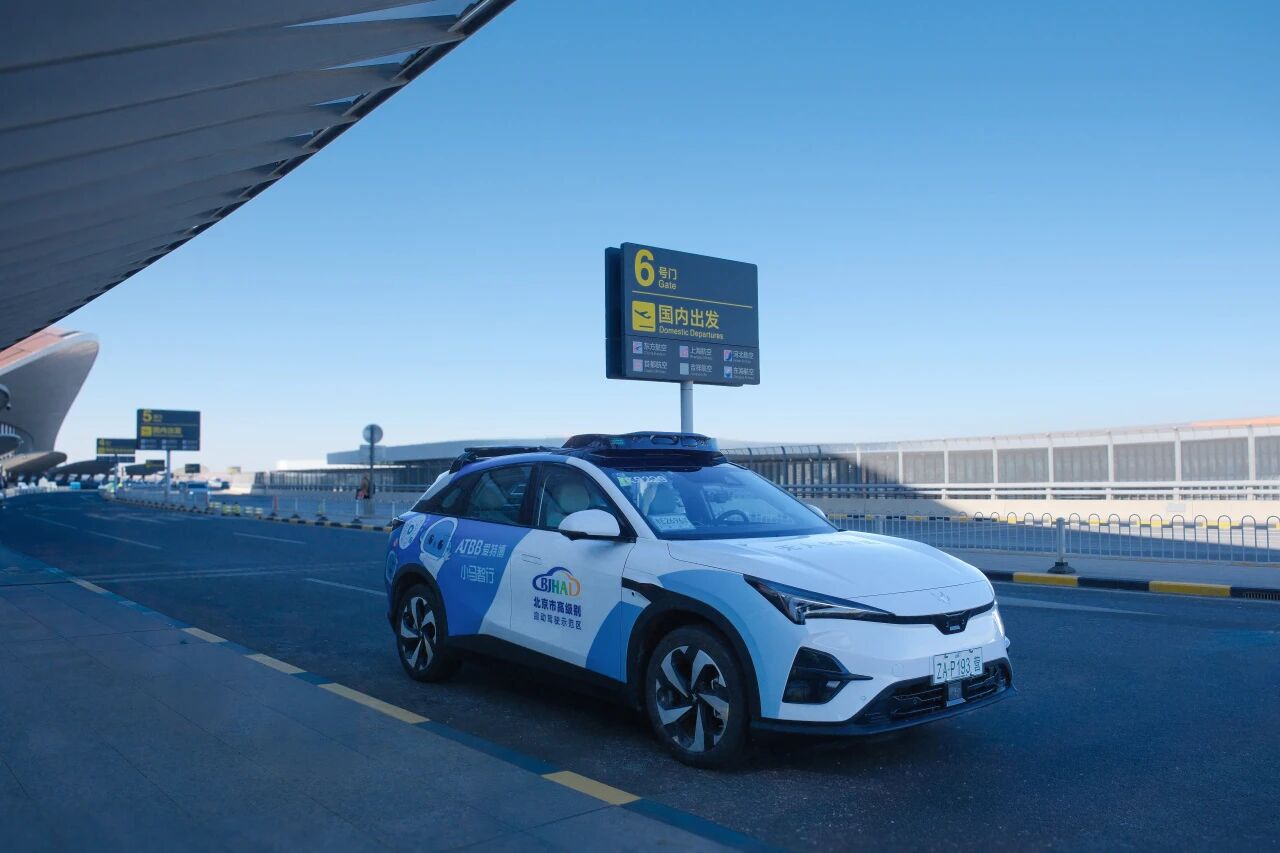
Chinese autonomous driving company Pony.ai has entered a strategic partnership with mobility service provider ATBB to jointly develop and operate a fully driverless ride-hailing fleet, accelerating the rollout of autonomous technology across urban transport and aviation-related travel scenarios, Pony.ai said in a statement on its WeChat account.
The partnership marks an expansion of autonomous ride-hailing into the premium mobility segment, combining Pony.ai’s Level 4 self-driving technology with ATBB’s high-end service capabilities, particularly in business and airport transfer markets.
See also: Pony.ai and BAIC BJEV Deepen Partnership to Scale Level 4 Robotaxi Operations
Under the agreement, the two companies will deploy a fully driverless fleet based on Pony.ai’s Gen-7 Robotaxi model, focusing on high-frequency routes such as city travel and connections between urban centres, airports and major railway stations. An initial batch of vehicles has already received regulatory approvals, including permits for Level 4 driverless testing and pilot operations, enabling public ride-hailing services in China’s tier-one cities.
Pony.ai said the collaboration would expand fleet capacity and improve network coverage, helping reduce passenger wait times and supporting a wider range of use cases, including commuting, leisure travel and airport transfers. Vehicles will be integrated into Pony.ai’s own ride-hailing platform as well as selected third-party services.
See also: Pony.ai Targets Tripling Robotaxi Fleet After Achieving City-Wide Breakeven in Guangzhou
ATBB brings experience in premium mobility through brands such as Xinghui Mobility, with a strong presence in aviation-related and corporate travel. As part of the partnership, Pony.ai’s self-operated robotaxis will be connected to Xinghui Mobility’s platform to create an integrated system linking bookings, vehicle dispatch and service delivery, with airport transfers positioned as a core application.
Pony.ai has been expanding its autonomous operations at major transport hubs since launching shuttle trials at Beijing Daxing International Airport in 2023. Its Robotaxi services have since been extended to locations including Guangzhou Baiyun International Airport, Guangzhou South Railway Station and Shenzhen Bao’an International Airport.
See also: SANY and Pony.ai Autonomous Heavy-Duty Truck Nears Mass Production
The company said its robotaxi fleet reached 1,159 vehicles by the end of 2025, surpassing its full-year target of 1,000 units as deployments accelerated in the second half of the year.
Pony.ai is also looking beyond China. The startup has partnered with Estonian ride-hailing company Bolt to explore integrating autonomous vehicles into Bolt’s European network. Bolt Chief Executive Markus Villig told Reuters that the companies aim to move forward quickly, saying: “We aim to do this within a year from the first deployments which are planned for 2026.”