
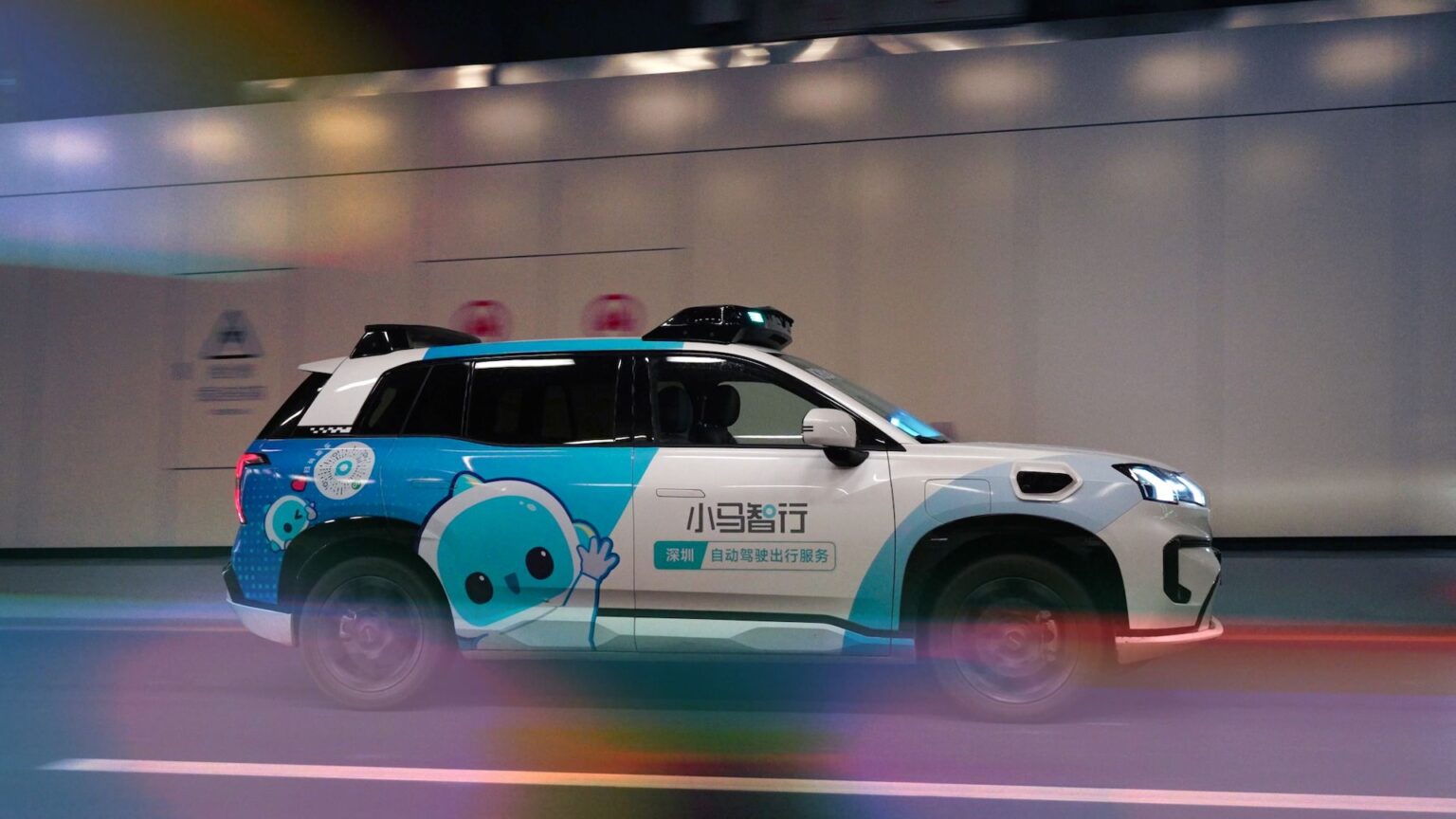
Chinese autonomous driving startup Pony.ai plans to triple the size of its robotaxi fleet next year, following the company’s announcement that its seventh-generation robotaxi has reached city-wide unit economics breakeven in Guangzhou.
The milestone demonstrates a “viable business model” and establishes a foundation for wider domestic and international expansion, the company said in its third-quarter 2025 earnings release.
See also: Pony.ai, Bolt Team Up to Bring Autonomous Driving to Europe by 2026
Pony.ai said it is on track to meet its target of operating 1,000 robotaxis by year-end, advancing toward its 2026 goal of deploying more than 3,000 vehicles. The company currently operates 961 robotaxis, including 667 seventh-generation models. Robust user demand and stronger operational efficiency have lifted activity levels, with the average vehicle now completing 23 orders per day in Guangzhou.
The breakeven achievement comes as competition intensifies in China’s autonomous ride-hailing market. Earlier in November, Baidu announced that its Apollo Go service surpassed 250,000 fully driverless weekly ride orders as of October 31. Pony.ai said its seventh-generation autonomous driving kits (ADK) will see a further 20 percent reduction in bill-of-materials (BOM) costs during the 2026 production cycle compared with its 2025 baseline.
See also: Pony.ai Deploys Seventh-Generation Robotaxi with 70% Cost Reduction and Expanded Operations in China
Financial results for the quarter showed strong revenue gains alongside higher losses. Pony.ai reported third-quarter revenue of $25.4 million (RMB 181.1 million), up 72 percent year-on-year, driven by growth in robotaxi services as well as licensing and application revenue. Robotaxi service revenue rose 89.5 percent to $6.7 million, with fare revenue more than tripling due to increased demand in tier-1 cities and refined pricing strategies.
Gross margin improved to 18.4 percent, up from 9.2 percent a year earlier. Net loss widened to $61.6 million from $42.1 million in the third quarter of 2024, while non-GAAP net loss increased to $55.0 million from $41.4 million over the same period.