
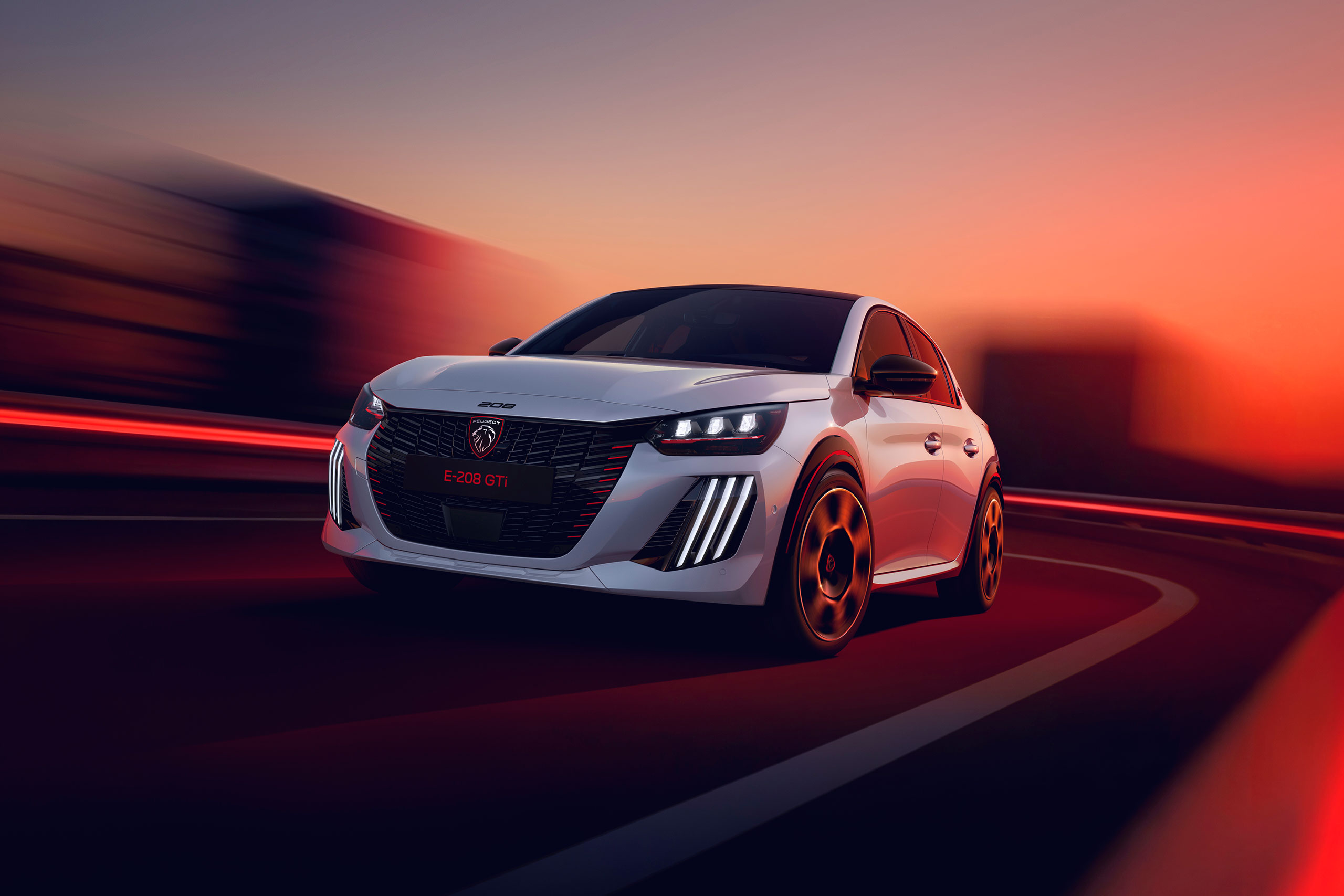
Peugeot has unveiled the production version of the E-208 GTi at the 24 Hours of Le Mans, marking the arrival of the first fully electric GTi model in the French automaker’s history.
The launch revives one of Peugeot’s most celebrated performance nameplates, bringing the GTi badge into the electric era nearly four decades after the debut of the iconic Peugeot 205 GTi. The new E-208 GTi was revealed at Le Mans as part of celebrations marking the 100th anniversary of Peugeot’s first appearance at the legendary endurance race.
Three production vehicles finished in blue, white, and red are on display in the Le Mans 24 Hour Village, while full technical specifications are scheduled to be presented by Peugeot Chief Executive Alain Favey during a press conference on June 12.
GTi Heritage Meets Electrification
The production E-208 GTi closely mirrors the concept version unveiled at Le Mans in June 2025, reflecting Peugeot’s decision to retain much of the original design following positive feedback from customers and performance car enthusiasts.
Developed jointly by Peugeot Sport and Peugeot Design in France, the E-208 GTi combines electric propulsion with the dynamic characteristics traditionally associated with the GTi badge. Peugeot describes the model as the beginning of a new chapter for its performance vehicle lineup.
The company said the vehicle builds on the commercial success of the existing Peugeot 208 range while introducing a more driver-focused electric offering.
Strategic Importance Beyond a Performance Model
The E-208 GTi represents more than the launch of a new variant. It signals Peugeot’s effort to demonstrate that electric vehicles can deliver the excitement and engagement long associated with performance hatchbacks.
The GTi badge carries significant heritage among European car enthusiasts, and its return in electric form addresses one of the key challenges facing automakers as they transition performance-oriented customers toward battery-powered vehicles.
Rather than positioning the E-208 GTi solely as an environmentally friendly alternative, Peugeot is emphasizing driving enjoyment, performance, and emotional appeal.
Serious Performance Credentials
Although Peugeot has yet to officially release the complete technical specification sheet, the company has confirmed several key performance features.
The E-208 GTi is expected to deliver 280 horsepower and will feature a mechanical limited-slip differential, a component typically associated with high-performance front-wheel-drive vehicles. The car will also be equipped with Michelin Pilot Sport Cup 2 tires, underlining Peugeot’s intention to create a genuinely capable performance hatchback rather than a cosmetic sporting variant.
These features place the E-208 GTi among the most serious electric hot hatches currently entering the European market.
Entering a Competitive Segment
The E-208 GTi joins a growing group of electric performance compact cars that includes the Alpine A290, the Abarth 600e, and the Mini JCW Electric.
While sales volumes in the segment are expected to remain relatively modest compared with mainstream electric vehicles, the category holds significant strategic importance for manufacturers seeking to preserve brand identity and enthusiast appeal during the transition to electrification.
For Peugeot, the launch represents an opportunity to reconnect with performance-focused customers while reinforcing its engineering credentials.
Delivering on a Promise
The decision to reveal the production model exactly one year after the concept debut also highlights Peugeot’s effort to demonstrate consistency between concept and production vehicles.
Automakers frequently face criticism when production cars diverge significantly from their concept counterparts. By bringing a model to market that remains largely faithful to the original show car, Peugeot aims to strengthen credibility among enthusiasts and consumers alike.
The E-208 GTi arrives at a time when manufacturers are increasingly searching for ways to make electric vehicles more emotionally engaging. For Peugeot, the return of the GTi badge suggests that performance and driver involvement will remain an important part of the brand’s future strategy, even as it accelerates its transition toward an all-electric lineup.