
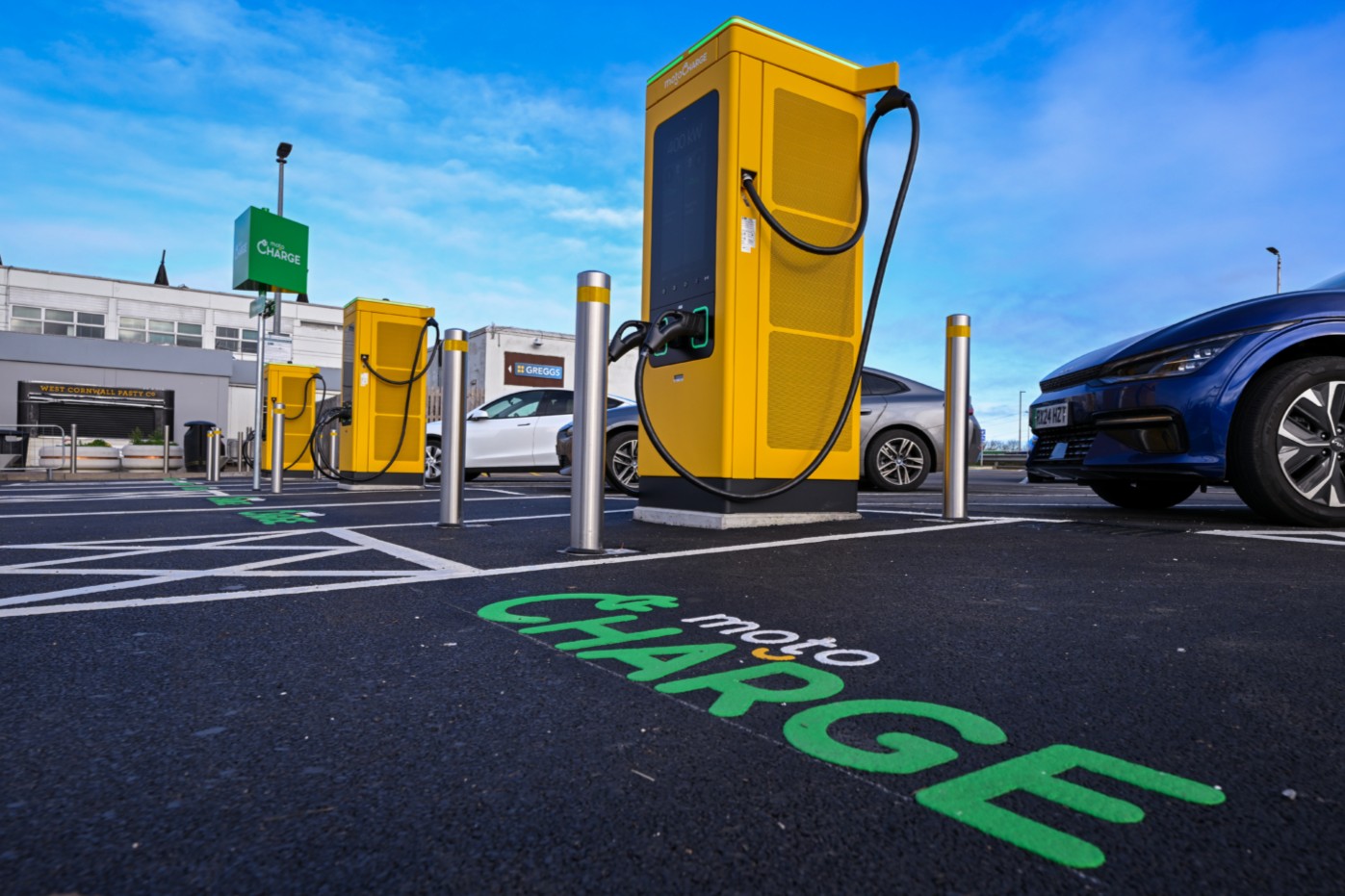
Moto Hospitality said it plans to significantly expand electric vehicle (EV) charging infrastructure across its UK sites, targeting a fourfold increase in charging bays over the coming years while developing dedicated hubs for electric freight vehicles.
The company, the UK’s largest motorway service station operator with more than 60 locations nationwide, said the expansion forms part of a broader £500 million investment programme aimed at upgrading its network to support growing demand for electric mobility. Its sites, traditionally offering fuel, retail, and rest services, have increasingly become key charging points for long-distance EV travel.
Moto said it has already installed more than 1,000 ultra-rapid charging bays over the past five years, primarily focused on passenger vehicles. It now intends to scale up capacity further while also entering the electric heavy goods vehicle (eHGV) segment through the development of 15 large-scale “superhub” locations.
Each planned eHGV hub is expected to feature more than 100 charging bays for electric trucks and will be positioned along major freight routes to support zero-emission logistics. The company confirmed it has secured planning approval for new sites in Swindon and at a dedicated truck stop in Wrotham, Kent, while also upgrading HGV parking facilities, including driver amenities and site security.
Moto said the investment push follows the extension of long-term lease agreements at more than 10 service stations, providing greater certainty for redevelopment and infrastructure expansion.
“Securing long term lease extensions at 10 of our key sites allows us to unlock our planned £500 million investment programme, [having] already invested more than £300 million over the past five years,” said Ken McMeikan, chief executive of Moto Hospitality.
National Highways said the agreement supports broader efforts to modernise roadside infrastructure. “We’re proud to have secured this long-term lease agreement with Moto, enabling us to further enhance these vital services that help drivers rest, recharge, and stay safe,” said Elliot Shaw, Chief Customer and Strategy Officer at National Highways. “It also paves the way for important upgrades, such as expanded electric vehicle charging and HGV driver facilities, supporting our vision for a cleaner, greener transport network,” Shaw added.